We have released our final report, outlining 6 years of experimentation, innovation, achievement, and original research! We've learned from the experience of running this international collaboration, in how to conduct research, how to bring together students and researchers to create interesting and innovative new games, and how to bring our discoveries to outside groups like industry and government.
The US instance of the Singapore-MIT GAMBIT Game Lab initiative has also recently announced the creation of the MIT Game Lab, where the staff and researchers will continue doing what they do best: combining cutting edge research with game development and rapid experimentation.
While there will no longer be any more news updates to this site, we will be updating our Read Me section with our research as it gets published and our Games and In The Press sections as our games continue to receive recognition.
The games made during the Summer 2012 session of The Singapore-MIT GAMBIT Game Lab are now online!
This year, we explored a diverse set of topics, and from that we created 7 games:
Bosnobo: Primate Change -- teach the Bosnobos the skills they need to survive! (an artificial intelligence experiment)
Fugue -- spend a day in the meadows using the Tarot (or your own will) to guide you
The Last Symphony -- explore the life and story of a composer through the objects he left behind (a design challenge to tackle how hidden object games work)
Movers and Shakers -- 2 players are tasked with keeping the world turning (a game with meaningful conflict)
Movmote -- control a moving object by slowing it down and changing its movement paths (it's up to you about how to interpret this - that's what our researchers want to know!)
Phantomation -- save someone from the evil spirits of a haunted house using your phantomation powers (a game where the UI for your powers will be used in an animation tool)
A Slower Speed of Light -- a first person challenge: pick up orbs that reduce the speed of light in increments (designed to help the player better understand relativistic effects when approaching the speed of light)
You might be aware that this was the final summer of the collaboration now known as the Singapore-MIT GAMBIT Game Lab. This collaboration between the Media Development Authority and the Massachusetts Institute of Technology started way back in 2006 and has had an excellent run: 55 games, over a hundred research papers, lectures, and other publications. We've hosted dozens of visiting scholars from all over the world.
We're not going away! As of October 1, 2012 the US lab (which maintained this site) will be called the MIT Game Lab -- more information will come up after our program wrap-up Symposium, "Games in Everyday Life" (which by the way, still has spots open! If you're in Boston on September 21st, come on down to see us!
More details about the wrap up of the GAMBIT initiative will come out later in October. Stay tuned at this website, the new MIT Game Lab site, http://gamelab.mit.edu, and on Twitter (@MITGameLab) for more information about our future projects!
In all of the madness at the end of the summer program, the beginning of the new school year, and the relocation of our US lab, we forgot to update the blog with this awesome news: A Closed World has been nominated for the 2012 IndieCade Awards! From Oct 4 to 7, 2012, the IndieCade international festival of independent games will feature our game in multiple locations in downtown Culver City, CA. We're in great company (full list of nominees) and greatly honored for being selected for the festival.
The Singapore-MIT GAMBIT Game Lab has seven games in early development, each one seeking to answer a different research question. We invite everyone - young, old, game playing, game developing, or even never touched a video game before in your life - to play our games and give us the early feedback we need to complete our games by the end of the summer.
What is an "Focus Test"?
During the open house, our development teams observe your game playing, answer any questions you may have, and record your comments and opinions about the games you are playing. Our games are in the fifth week of development, with early (unfinished) art and user controls that are still being worked on. By testing now, we get feedback we can use, with time left to use it. This is your big chance to actively influence our games in development!
Our doors are open from 6:30 pm - 8:30 pm. You are welcome to drop in at any time during those hours and play as many (or as few!) of our games as you wish. Each game takes around ten minutes to complete; some are longer than others. We do recommend that if you want to play all the games, you should arrive earlier rather than later! (There will also be light snacks available, to keep your game playing strength up.)
While we welcome testers of all ages, our games are not intended for the youngest players. Children under seven may have difficulty playing our games alone, but might enjoy sitting on a parent's lap and watching. We are an active research lab, so any minors (age 17 and under) need to have a parent or guardian fill out a consent form before playing any games. Forms will be available at the lab, or you can contact gambit-qa at mit dot edu and request forms that can be printed and filled out to bring to the test.
We are at 5 Cambridge Center, 3rd Floor. Tell the guard at the desk you are here for the GAMBIT Focus Test, then take the elevators up to the 3rd Floor. Turn towards the big glass doors as you exit the elevators, and come on in!
To keep up to date with our lab, follow us on Facebook or Twitter!
Our 2011 game The Snowfield is featured in the current issue of Game Developer Magazine's Game Career Guide. Matthew Weise provides candid insight into his research and the team's unique development process through a thoughtful postmortem. Read what went right, what went wrong, and how sucker punches can serve the greater good!
We got word that our game, Dark Dot, has been selected for the curated IndieCade showcase at this year's E3 at the Los Angeles Convention Center! Congratulations to the Dark Dot team at our Singapore-based lab!
Dark Dot is a shoot-em-up for the iPad where you draw shapes to move your shooters into formation. You can scale your formation on-the-fly to concentrate or spread your firing patterns, or rotate them to avoid enemies and obstacles. Or just draw a new shape to deal with new challenges! If you've got an iPad and haven't tried Dark Dot, it's free for download, so what are you waiting for?
Guess what, world? It's time for the first ever...
GAYME JAM
(Y? Because we like you!)
Wait, what? What the heck does that even mean?
In the past, GAMBIT has hosted game jams, digital and non, on a wide variety of subjects of social or political interest, such as the Occupy theme at Boston Game Jam or the recent Equal Pay Jam.
Well, that's what we're doing here, for the awesome glittery* rainbow that is the LGBTQ community. On May 12, 2012, the GAMBIT Game Lab will host a one day cardboard jam dedicated to exploring the many facets of being a queer person in the modern world.
* Note: glitter not compulsory, but highly recommended
What do you want us to make?
Games! Glorious, wonderful games. Life-changing, mind-blowing games!
The goal of this jam is to create board games that deal with or reflect some aspect of life as a queer individual. Now, I know what you're saying. "That's insane! That could be anything! What is wrong with you!" Fear not! We know how crazy huge that topic is. That's why we'll be giving you a few small rules -- a theme, a design challenge -- to help you focus your efforts. But really, the goal is to see just what great ideas you can pull out of that great big field.
Who's going to be there?
Everyone. EVERYONE.
We're very fortunate to have lesbian board game designer Andrea Meyer, published game designer and owner of Bewitched Spiele Games from Berlin, Germany as a keynote speaker to kick off the event and help get your minds racing with ideas.
Also included in 'everyone' are our two celebrity "judges," Jason Toups and Jeremiah Bratton, hosts of the popular gay gaming podcast GaymeBar, who will also be on hand to offer ideas, thoughts, and good-natured ribbing to all and sundry.
But I can't be in Boston! What should I do?!
Embrace existential despair. Alternately, you can participate as a satellite site! All you need is a group of participants, your own materials for the jam, and internet access! GAMBIT will have a live feed of the jam, complete with our keynote and the rules of the jam. To participate as a satellite site, you merely need to keep watch of our live stream!
If you're interested in participating as a satellite site, please email me at tlharper@mit.edu for more information.
Do I need to identify as LGBTQ to participate?
Of course not! The event is welcome to everyone with an open mind and a desire to get creative. However, you must be 18 in order to take part.
Will... will participating make me gay? D:
Yes. Yes it will. :D
What time is the event?
We start at 9am and end at 10pm. More details about what happens in between will be sent to participants.
What do we do for food?
GAMBIT will be providing breakfast, lunch, and dinner to registered participants. If you can't eat what we have, there are plenty of local options we can point you toward.
What diabolical minds thought this up, anyway?
Todd Harper is a postdoctoral researcher at GAMBIT and the product owner of GAMBIT's own LGBTQ-focused game, A Closed World. His research interests range from the performance of play in the fighting game community to representations of sexuality in games and other media.
Scott Nicholson is a visiting professor at GAMBIT and was the host of Board Games with Scott, a video series about board games, for 5 years and is a regular voice on the On Board Games podcast. He is the designer of Tulipmania 1637, a published board game about a bubble stock market, and the author of Everyone Plays at the Library. He is on the faculty of the School of Information Studies at Syracuse University, and his research blog is at http://becauseplaymatters.com.
GAMBIT's Crappy Game Complaining Marathon Raises Over $4500.00 For The Boys and Girls Club Cambridge Clubhouse
On February 18th, 2012, The Singapore-GAMBIT Game Lab ran their first ever "Crappy Game Complaining Marathon" to raise money for The Boys and Girls Club Cambridge Clubhouse. In total we raised over $4,500 for The Clubhouse. On March 7th, 2012, the Executive Director of the Middlesex County Boys and Girls Club, Mechilia Eng-Salazar and the Director of Operations and Program Development, Dana Benjamin, along with Boys and Girls Club members Shane Thorpe and Jhanelle Bynoe, stopped by The GAMBIT Game Lab to accept a check of $4535.00 from me and GAMBIT Marketing Intern Lily Tran on behalf of GAMBIT.
This "BEST OF" video features some of the funniest moments from the marathon and was produced as a thanks to all who volunteers and all who donated that day. You can still donate at the Crappy Game Complaining Marathon website. Video produced by Generoso Fierro, edited by James Barrile.
MIT ranked in the Princeton Review for Game Design
The Princeton Review has released their latest annual rankings of top schools to study game design and MIT is #2 for undergraduate education and #3 for grad school! It's an honor to be in such good company.
PC Gamer has printed more details from the annual ranking, specifically calling out the Singapore-MIT GAMBIT Game Lab in its look at the top-ranked colleges. There's more information there about each individual program, for folks who are interested.
Thank you to all of the GAMBIT staff, faculty, researchers, students, alums and friends for making this an awesome place.
Application deadline extended to February 27th for US students to our Summer Program
We're Looking For A Few Good Game Developers!
Program Dates: June 11th - August 10th, 2012
Where: Massachusetts Institute of Technology, Cambridge, MA
Local Area Applications Accepted: January 9th, 2012 - February 27, 2012
GAMBIT's Summer Program is a nine week, full time, intensive game development experience. Students from Singapore join students from the Massachusetts Institute of Technology (MIT) to create video games at the Singapore-MIT GAMBIT Game Lab, in Cambridge, Massachusetts. Development teams are composed entirely of student interns, who are responsible for all aspects of the project -- production to programming, game design and art, music and sound, and of course, thorough testing to create a robust, engaging game.
Eligibility Requirements
You must be a current college undergraduate; however, those graduating in the academic year 2011 - 2012 are still eligible to apply for our 2012 summer program.
Your home institution must be within 50 miles of the Massachusetts Institute of Technology, in Cambridge, Massachusetts, to be eligible to apply.
Please note that when selecting our local interns, the GAMBIT program strongly favors those students who have worked with us during the school year.
More info about the summer program can be found at our application site.
A few weeks ago our summer 2011 game The Snowfield was chosen as a Student Showcase Finalist at the Independent Games Festival. I was Product Owner on the project, I want to share some of responses we've gotten so far.
There's a lot of good praise here, and a lot of valid criticism. Two things stand out for me.
The goals of the project was to create an open and emergent system, the theory being that this would encourage players to tell their own stories. In the end we weren't able to implement a lot of the depth and complexity we'd planned for, but we did try make the few simple mechanics and behaviors we had as evocative as possible. The going assumption in commercial game development is usually that narrative evokes emotion, but we wanted emotion to evoke narrative, to motivate players to dramatize their experience in the retelling. This quote from the SPACE-BIFF! blog does exactly that:
At one point I brought a soldier the letter he had been muttering about (or was it just any old letter, written by some other sweetheart to some other brave boy?). He stood there for a few seconds with the paper pressed to his face while I trembled and hoped to return to the warmth of the fire. He took so long that I turned away and began to head up to the bombed-out house where a few fellow soldiers had congregated. My conscience caught up to my numbness and I turned back to retrieve him. But he was gone, disappeared into the bitter grey.
I was also heartened by the write-up at The Nocturnal Rambler, for mentioning that The Snowfield reminded him the devastating final episode of Blackadder Goes Forth. Aside from real historical research, the two main inspirations on The Snowfield were the British sitcom Blackadder and Stanley Kubrick's Paths of Glory, both wickedly damning portraits of an especially damnable war. They are the two pieces of popular media that made me aware of WWI as a great human tragedy, and we tried to imbue some of their uncompromising sensibility into the game.
The Snowfield was an overly ambitious project, but that's typical of a lot of experimental games. Even though we accomplished a fraction of what we envisioned, it's nice to see the release version having impact on people. You're always so close to a project you're involved in that it's hard to know whether it works for an audience at all. Though I feel there's still a lot of untapped narrative potential in the project, the feeling evoked is apparently so strong for some it hardly matters. Also context, the fact that The Snowfield is being read against commercial war games, seems to lend it additional impact. It had never occurred to me, as one blogger mentioned, how few games (if any) deal with the aftermath of battle.
The Snowfield: Experimental WWI Video Game Combats "Over-Engineered" Storytelling
A new video game from the Singapore-MIT GAMBIT Game Lab takes interactive storytelling trends to task. Developed by student interns over the summer, "The Snowfield" has just been announced as a finalist in the Student Showcase of the 2012 Independent Games Festival.
The game challenges the notion that simulation-driven interactive stories -- the sort depicted in Star Trek's Holodeck -- require highly advanced technology to evoke strong emotional and dramatic experiences.
Instead, "The Snowfield" provides evidence for the opposite: that limited tech is an opportunity to address such challenges artistically, leaving space for players to find their own meaning in the workings of a simulation. This approach is more accessible for casual players, even for war games, which are typically the realm of hard-core gamers.
The game was created by team "M.I.A.", a group of ten student programmers, designers, and artists who worked together as part of GAMBIT's 2011 summer program, which brings in students from top universities in the U.S. and Singapore to conceive, research, and make a game in just eight weeks.
"'The Snowfield' intends to simulate a World War I scenario at the right level of fidelity and abstraction," says Matthew Weise, GAMBIT's Game Design Director. Research on interactive storytelling has moved in the direction of simulating a storyteller, an approach called 'drama management'. But the problem, Weise says, is in the assumption that players cannot find drama for themselves. "The Snowfield" just tries to give players an optimal amount of raw material for their imaginations to assemble a compelling experience.
"Because WWI was an especially horrible, insane, sad war," says Weise, "we wanted an emotional, dramatic situation that didn't lend itself to heroics. War in general -- contrary to what is seen in most video games -- doesn't lend itself to heroics, but WWI particularly so. We liked the concept of trenches as a way to constrain player movement, even though we mostly ended up using cold as our main constraint in the end. Even the German/English language barrier gave us a way to limit character interaction in a believable way."
Singaporean student Teng Chek Lim says his time at MIT offered insight into life in the game industry, especially team-based efforts. He praised how the program advanced his job prospects, adding that as the game designer of 'The Snowfield', "actually seeing players 'getting' the idea of the game and enjoy playing it was the best part of making the game for me."
About the team's IGF acknowledgment, Jason Beene, Game Director for "The Snowfield", says they are thrilled and honored to be selected for the Student Showcase. "I couldn't think of a better reward for such a hard working and talented team. Knowing that 'The Snowfield' resonated with the panel of judges is prize enough. To be a part of the showcase provides the unique privilege of being shown directly on the Game Developers Conference expo floor this March in San Francisco, exposing our game directly to those whom we desire most to experience it: other inspired game makers. 'The Snowfield' is in great company historically and this year is no exception. We at GAMBIT are delighted."
Additional Information
Singapore-MIT GAMBIT Game Lab (gambit.mit.edu)
The Singapore-MIT GAMBIT Game Lab is a research collaboration between the Massachusetts Institute of Technology and the Interactive Digital Media R&D Programme Office hosted by the Media Development Authority of Singapore. The lab experiments with the theory, aesthetics, culture, craft, legacy, technology and play of games, developing, sharing, and deploying prototypes, findings and best practices to challenge and shape global game research and industry. GAMBIT builds collaborations between Singapore institutions of higher learning and MIT departments to identify and solve research problems using a multi-disciplinary approach that can be applied by Singapore's digital game industry.
Media Development Authority (www.mda.gov.sg)
The Media Development Authority of Singapore promotes the growth of globally competitive film, television, radio, publishing, music, games, animation and interactive digital media industries. It also regulates the media sector to safeguard the interests of consumers, and promotes a connected society.
Contact
Andrew Whitacre
Communications Manager
Singapore-MIT GAMBIT Game Lab
Massachusetts Institute of Technology
(617) 324-0490
awhit@mit.edu
MIT Undergrads: make games as a UROP with us this Spring!
Would you like to make games as a UROP at the GAMBIT Game Lab this Spring semester?
All of our UROP positions are 6-10 hours of work per week in a team environment and on-site at the GAMBIT Game Lab. You can work for credit (6-12 credits) or pay (the standard UROP rate of $9.75/hour). All positions are open to anyone eligible for an MIT UROP.
All of the work our UROPs do this Spring will help us create successful games in our Summer program this year.
Please email Rik Eberhardt with the following:
- Statement of interest in this UROP
- Resume
- your known schedule for Spring & your available hours to work
More information about our program can be found here:
https://gambit.mit.edu/urop
More information about MIT's UROP program and eligibility information can be found here:
http://web.mit.edu/urop
------------
We are hiring for the following positions for either pay or credit:
7 Programmers
- Languages/environments we'll be using this semester include: Actionscript, Javascript, C#, and Unity
- previous experience preferred, either on the job/UROP experience with the language in use, or relevant coursework
12 Game Designers
- previous experience preferred, either through coursework (CMS.608, CMS.611), previous UROP at GAMBIT or with STEP/EdArcade, or personal projects
- we will be creating both paper and digital prototypes
2 Producers
- split between two projects, responsible for organizing tasks and packaging deliverables
- previous team project experience preferred, or relevant coursework
2 Quality Assurance Interns (half-time)
We are hiring for games that involve the following topics this Spring:
- Metaphor in Abstract Games
- Identity Representation and LGBT issues
- Narrative Design & Emergent AI
- Hidden Object Games
- Learning
- Serious Games
- Demonstrating Relativity
Want to know more about our Summer Game Development Program for Undergraduates?
We recently had an information session about our Summer Game Development program and how to apply. Watch this now and let us know if you have any questions!
Program Dates: June 11th - August 10th, 2012
Where: Massachusetts Institute of Technology, Cambridge, MA
Local Area Applications Accepted: January 9th, 2012 - February 13, 2012
GAMBIT's Summer Program is a nine week, full time, intensive game development experience. Students from Singapore join students from the Massachusetts Institute of Technology (MIT) to create video games at the Singapore-MIT GAMBIT Game Lab, in Cambridge, Massachusetts. Development teams are composed entirely of student interns, who are responsible for all aspects of the project -- production to programming, game design and art, music and sound, and of course, thorough testing to create a robust, engaging game.
Eligibility Requirements
You must be a current college undergraduate; however, those graduating in the academic year 2011 - 2012 are still eligible to apply for our 2012 summer program.
Your home institution must be within 50 miles of the Massachusetts Institute of Technology, in Cambridge, Massachusetts, to be eligible to apply.
Please note that when selecting our local interns, the GAMBIT program strongly favors those students who have worked with us during the school year.
Local (Cambridge, MA) Applications open for the GAMBIT Game Lab Summer Program
We're Looking For A Few Good Game Developers!
Program Dates: June 11th - August 10th, 2012
Where: Massachusetts Institute of Technology, Cambridge, MA
Local Area Applications Accepted: January 9th, 2012 - February 13, 2012
GAMBIT's Summer Program is a nine week, full time, intensive game development experience. Students from Singapore join students from the Massachusetts Institute of Technology (MIT) to create video games at the Singapore-MIT GAMBIT Game Lab, in Cambridge, Massachusetts. Development teams are composed entirely of student interns, who are responsible for all aspects of the project -- production to programming, game design and art, music and sound, and of course, thorough testing to create a robust, engaging game.
Eligibility Requirements
You must be a current college undergraduate; however, those graduating in the academic year 2011 - 2012 are still eligible to apply for our 2012 summer program.
Your home institution must be within 50 miles of the Massachusetts Institute of Technology, in Cambridge, Massachusetts, to be eligible to apply.
Please note that when selecting our local interns, the GAMBIT program strongly favors those students who have worked with us during the school year.
More info about the summer program can be found at our application site or attend our information session this Friday:
STUDENTS:
Come visit the GAMBIT Lab on Friday, January 13th from 2-4pm to find out how you can work at the GAMBIT Game Lab this Spring and Summer. See eligibility requirements below.
Global Game Jam at the GAMBIT Game Lab - tune in January 27 at 5pm!
For the past 3 years, the GAMBIT lab has been a host site for the Global Game Jam, an international gathering of game developers (both professional and amateur) who meet for 3 days to make games together. Each year the Global Game Jam has a theme that all of the games follow. Last year, 1482 games were made at 169 various locations, all based around the theme, 'EXTINCTION'.
This year, we already have 75 people registered for our site. Check back with us January 27th at https://gambit.mit.edu/ggj to see the progress of the games as we make them. We'll have a live video stream and reports from our coordinators.
In September, Adam Szymczyk wrote an article on three GAMBIT games for the Technopolis blog on the Polish website Polityka. With the help of translator Karolina Michalska, Adam has provided us with the English version of the same article. The full text is below the jump.
It's GAMBIT, so, while you're having fun, try not to think about how awesomely you're helping the Singapore lab answer game research questions. Don't think about: shape manipulation features, intuitive tilting controls for your iPhone, or using games to provoke awareness of environmental issues.
We're looking for a financial assistant to join us in the Cambridge, MA offices of the Singapore-MIT GAMBIT Game Lab! If you have three or more years of financial/accounting and administrative experience, and the idea of working at an MIT game research lab sounds exciting, check out the details here. Apply through MIT's Staffing Services website.
"Robotany" Puts Artificial Intelligence in the Mind of the Beholder
When it comes to directing a video game's characters ("If x happens, do y"), there is only so much current artificial intelligence (A.I.) can do.
And while their skills are specialized and prized, A.I. programmers can devote years to a single game. They have to consider all the events that might occur and map out characters' possible reactions. In a first-person shooter, for example, the A.I.-controlled character needs to know how to collect ammunition, seek his target, get within range to fire, and then escape.
What if making certain kinds of A.I. didn't have to be that laborious? What would happen if an algorithm, extrapolating from a few decisions made by players, could figure things out for itself--and even reuse those lessons from one game to the next?
And what if all this could be done by someone with no A.I. training at all?
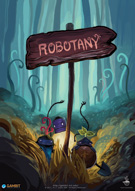
Those are questions that our game prototype "Robotany" wants to answer.
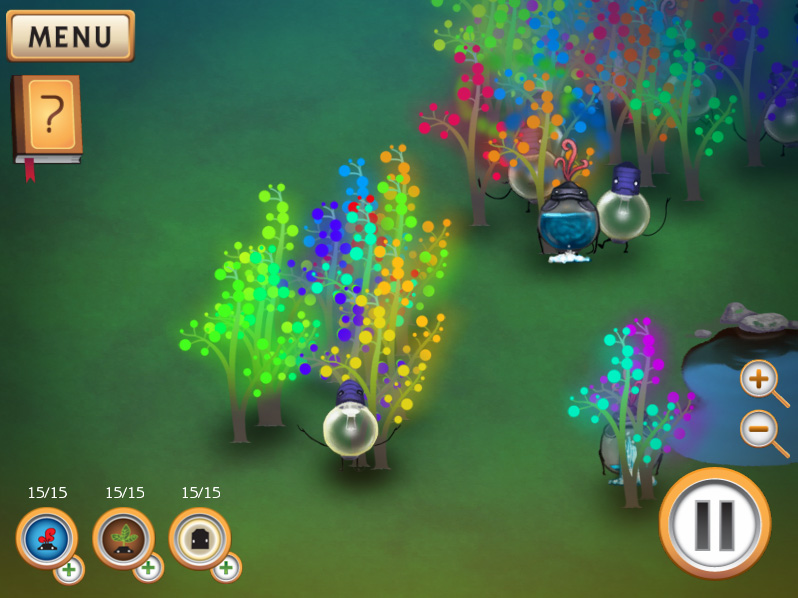
Set in a garden, the game features small robot-like creatures that sustain the lives of plants. The player manipulates graphs of the robots' three sensory inputs--three overlapping A.I.'s--and these manipulations teach the A.I.'s how to direct characters in new situations.
"The scheme behind Robotany requires that we ask the user to describe what the A.I. should do in just a few example situations, and our algorithm deduces the rest," said the game's product owner, Andrew Grant. "In essence, when faced with something the user hasn't described, the algorithm finds a similar situation that the user did specify, and goes with that."
The game was developed as part of GAMBIT's eight-week summer program, which brings together young artists, programmers, and project managers from U.S. and Singaporean institutes.
Robotany's team of eleven pushed game research in a unique direction by taking advantage of the human brain's ability to identify patterns.
"If we ask the user about a bunch of random example situations and draw conclusions from that," said Grant, "it turns out that you still need a really long list of example situations. With our approach, we can drastically reduce the number of examples we need to make an interesting A.I., well before you'd traditionally get anything good."
Added game director Jason Begy, "The player can effectively give the characters some instructions and then walk away indefinitely while the game runs."
Other A.I. developers have been enthusiastic about this new approach.
"Robotany represents a great new direction for game A.I.," said Damian Isla, who was the artificial intelligence lead at Bungie Studios, makers of the Halo franchise. "It's one in which the A.I.'s brains are grown organically (with help from the player), rather than painstakingly rebuilt from scratch each time by an expert programmer."
MIT Media Lab researcher and GAMBIT summer program alum Jeff Orkin suggested solving this kind of challenge would be "one of the holy grails of A.I. research." He said the video game industry spends an incredible amount of time and money micromanaging the decisions that characters make. "It would be a boon to the game industry, as long as the system still provided designers with an acceptable degree of control."
Rethinking the visual interface to the AI was a key component for addressing these technological questions. Begy described the need for more effective visual design as "absolutely necessary if the project is to succeed," because A.I.'s can handle countless variables while human players training the A.I. cannot. For similar projects, he would recommend having a skilled user interface staffer on hand and testing interfaces with players as much as possible. "In the final design, we went for many robots, each of which was only paying attention to two variables," said Begy. "This is reflected in the training system in Robotany, which is made up of simple two-dimensional graphs."
The Robotany team, honored as a finalist in the student competition at the upcoming Independent Games Festival, China, was also comprised of producer Shawn Conrad (MIT); artists Hannah Lawler (Rhode Island School of Design), Benjamin Khan (Nanyang Technological University), and Hing Chui (Rhode Island School of Design); quality assurance lead Michelle Teo (Ngee Ann Polytechnic); designer Patrick Rodriguez (MIT), programmers Biju Joseph Jacob (Nanyang Technological University) and Daniel Ho (National University Singapore), and audio designer Ashwin Ashley Menon (Republic Polytechnic).
Additional Information
Singapore-MIT GAMBIT Game Lab (gambit.mit.edu)
The Singapore-MIT GAMBIT Game Lab is a research collaboration between the Massachusetts Institute of Technology and the Interactive Digital Media R&D Programme Office hosted by the Media Development Authority of Singapore. The lab experiments with the theory, aesthetics, culture, craft, legacy, technology and play of games, developing, sharing, and deploying prototypes, findings and best practices to challenge and shape global game research and industry. GAMBIT builds collaborations between Singapore institutions of higher learning and MIT departments to identify and solve research problems using a multi-disciplinary approach that can be applied by Singapore's digital game industry.
Media Development Authority (www.mda.gov.sg)
The Media Development Authority of Singapore promotes the growth of globally competitive film, television, radio, publishing, music, games, animation and interactive digital media industries. It also regulates the media sector to safeguard the interests of consumers, and promotes a connected society.
New MIT Game Research Explores Singapore Culture from the Inside Out
With student and faculty exchange programs, research alliances and the development of a brand new university, MIT has a long history of collaboration with the country of Singapore.
One such partnership, the Singapore-MIT GAMBIT Game Lab, considers how that strong relationship has created a unique need: how does someone reflect Singaporean culture to those on this side of the Pacific without resorting to rough, if well-intentioned, stereotypes?
A team in the GAMBIT Game Lab's demanding summer program takes on the challenge with its new title, "Stranded in Singapore", a point-and-click adventure game featuring a player "forced by circumstances to complete tasks for the eccentric Auntie MeeMaggi."
"We wanted to see how a game player's values can be mirrored in another culture," says Dr. Clara Fernández-Vara (SM '04), the game's product owner, who along with game director Richard Eberhardt oversaw the work of ten interns over the eight-week summer program. "Singaporean culture was pretty much ideal in that sense. It's distinctive and it offers the parameters needed to design a game in such a short time. It also facilitated the creation of a story: we could present Singapore almost as a character in itself."
In fact, much of the gameplay features Singapore's famously heterogeneous cuisine.
"Food in Singapore is very modular," says Eberhardt. Culinary components of Chinese, Malay, Indian, and other dishes find themselves mixed and matched in creative ways. Similarly, the quests in "Stranded in Singapore" are modular, obliging players to create new combinations of found objects to make their way through the game.
Such permutating puzzles are central to Fernández-Vara's research. The game is procedurally generated, which means it's dependent on algorithms to create and re-create the story. "You can play it multiple times, solving new puzzles with each play-through," describes Eberhardt, illustrating why such games are appealing for players.
Procedural generation can make a game uniquely hard to design. Where traditional adventure games are mapped out in detail, the puzzles in procedurally-generated games change every time you play, even during development. "Our designers and programmers would make a change to an object in the game, and that change would ripple out," remembers Fernández-Vara. "Adventure games are already challenging to make, but when they can be played in many different ways, dependencies get complicated."
When featuring Singaporean culture, those dependencies can get especially complicated.
"We're dealing with dialects, for example," says Fernández-Vara. "We're dealing with mixed vocabularies -- like 'Singlish'. How do you get a game to work well when the same word can have different meanings for different people, when an ambiguous phrase can change the game's whole direction?"
As an example, Fernández-Vara cites "can can".
"In the game, we have a can as an object. But in Singlish, can can is like saying no problem or can do. These language problems are tough."
"It's curious, though," adds Eberhardt, "our Singaporean students learned new Singlish phrases they never heard before -- from each other and from resources we used for the game, such as local guidebooks."
The game development team, which included several Singaporean tertiary students, found technical and design solutions for designers in the game industry. The researchers caution developers working with permutating content to allocate additional planning time. Misconceptions in the team can cause weeks of development delays for a procedurally-generated game. Fernández-Vara describes the dilemma, "everyone on a team envisions the game a little differently, but you can't have changing content if you don't already have content."
Eberhardt backs up that sentiment with a practical solution. "Working in the same room is really important," whether the team member is a programmer, artist, or audio designer. The team's producer, Nicholas Garza '11, echoes the need for open communication from a cultural standpoint. "Every summer we're suddenly grouped with nine strangers and asked to create something unique and amazing together. Working with familiar mentors lent me some solid footing, but when half your team represents the culture featured in your game, communication is especially important. They are not only your subject matter experts, they also reflect your potential audience."
Fernández-Vara describes her satisfaction from building upon her research from GAMBIT's 2010 award-winning adventure game "Symon". "'Stranded in Singapore' features more complex puzzles and locations. To do that, we had to create a set of tools to facilitate the design of procedurally-generated narrative puzzles." The long-term impact of this research will extend beyond point-and-click adventures. GAMBIT plans to to release a version of these tools for general use to programmers and designers of all sorts of games.
Additional Information
Singapore-MIT GAMBIT Game Lab (gambit.mit.edu)
The Singapore-MIT GAMBIT Game Lab is a research collaboration between the Massachusetts Institute of Technology and the Interactive Digital Media R&D Programme Office hosted by the Media Development Authority of Singapore. The lab experiments with the theory, aesthetics, culture, craft, legacy, technology and play of games, developing, sharing, and deploying prototypes, findings and best practices to challenge and shape global game research and industry. GAMBIT builds collaborations between Singapore institutions of higher learning and MIT departments to identify and solve research problems using a multi-disciplinary approach that can be applied by Singapore's digital game industry.
Media Development Authority (www.mda.gov.sg)
The Media Development Authority of Singapore promotes the growth of globally competitive film, television, radio, publishing, music, games, animation and interactive digital media industries. It also regulates the media sector to safeguard the interests of consumers, and promotes a connected society.
Contact
Andrew Whitacre
Communications Manager
Singapore-MIT GAMBIT Game Lab
Massachusetts Institute of Technology
(617) 324-0490
awhit@mit.edu
Improviso goes to IndieCade 2011 and draws some attention from the good folks at ShackNews who go on to talk about other new indie titles, Hohokum and BasketBelle.
It has been quite the news week for our Summer 2011 Game, "A Closed World". Let's look at what's been created, both pro and con.
Strong reviews by the games press from such notable publications as Kotaku, indiegames.com, jayisgames.com and pcgamer.com who picked "A Closed World" as one of the week's best PC games.
Many LGBTQ web publications such as AfterEllen, The Advocate and GPhilly have positively endorsed the game with AfterEllen going as far as to "applaud the team for crafting something sensitive, compelling and important"
And a few not so flattering reviews of the game have arisen as well, including something unique for our game lab: a Stencyl created parody of "A Closed World" from the folks at auntiepixelante.com called, "A Closed Mind".
More Undergraduate Research Positions available at the US lab! (UROP)
The US lab is hiring undergraduate researchers through MIT's UROP program for the Fall semester! Only students eligible for an MIT UROP can apply.
Apply by sending the following to Rik Eberhardt
- the position you're interested in
- resume & statement of interest -- Why do you want the position? What do you bring to it? How does this fit with your MIT education?
- your current schedule (specifically, hours you CANNOT work)
Our home department opens two faculty searches: tenure-track in games studies and tenured position in Comparative Media Studies
As a great sign that game studies is taking on a strong role at MIT, GAMBIT's home department of Comparative Media Studies has just announced two faculty searches...one explicitly for games studies and another for which games studies is a key component.
Descriptions, requirements, and deadlines are below. You'll want to act fast -- or share these with colleagues soon -- as the deadlines are almost here.
(1) Tenure-Track Assistant Professor of Comparative Media Studies/Game Studies, MIT
MIT's Program in Comparative Media Studies in the School of Humanities, Arts and Social Science is seeking a tenure-track assistant professor of game studies to start in the fall of 2012.
Candidates should have a Ph.D. with a record of significant publication (or the promise thereof), research activity and/or design experience relevant to game studies. We seek a candidate who will connect the work of our GAMBIT and Education Arcade research labs to the classroom, and who can direct innovative and multidisciplinary research. Relevant areas of specialization include the history, theory, sociology, psychology and criticism of games and play, and expertise in one or more of the following areas: game design; game engineering; player, playing and assessment methodologies; user behaviors and game economics; data analytics; and visual, narrative, and audio design. Fluency in a broader array of humanities-based media studies and experience in game production will be considered a plus.
Applicants should have teaching experience.
Please submit a letter of application, C.V., three letters of recommendation, and work samples online by December 1, 2011 at: https://academicjobsonline.org/ajo/jobs/1032. Hard copies of works samples may be sent to Prof. William Uricchio, Director, Program in Comparative Media Studies, MIT, 77 Massachusetts Avenue, E15-313, Cambridge, MA 02139. MIT is an affirmative action, equal opportunity employer.
(2) Tenured Associate/Full Professor, MIT Comparative Media Studies
MIT's Program in Comparative Media Studies seeks applications for a tenured Professor beginning in September 2012.
A Ph.D. and an extensive record of publication, research activity and leadership are expected. We encourage applicants from a wide array of disciplinary backgrounds. The successful candidate will teach and guide research in one or more of the Program's dimensions of comparativity (historical, methodological, cultural) across media forms. Expertise in the cultural and social implications of established media forms (film, television, radio, audio and visual cultures, or print) is as important as scholarship in one or more emerging areas such as games, social media, media literacies, digital arts and culture, internet research, network cultures, software studies, media industries, and transmedia storytelling.
The position involves teaching graduate and undergraduate courses, developing and guiding collaborative research activities, and participating in the intellectual and creative leadership of the Program and the Institute.
Candidates should demonstrate a record of effective teaching and thesis supervision, significant research/creative activity, relevant administrative experience, and international recognition.
CMS offers SB and SM programs and maintains a full roster of research initiatives and outreach activities [see cms.mit.edu]. The program embraces the notion of comparativity and collaboration, and works across MIT's various schools, and between MIT and the larger media landscape.
Applications consisting of a curriculum vita, a statement of teaching philosophy and experience, a statement of current and future research plans, selected major publications 3 letters of recommendation should be submitted online by November 1, 2011 at: https://academicjobsonline.org/ajo/jobs/1036. Hard copies of work samples may be sent to: Professor William Uricchio, Director, Comparative Media Studies, MIT, 77 Massachusetts Avenue, E15-313, Cambridge, MA 02139 USA. MIT is an affirmative action/equal opportunity employer.
Congratulations goes out to Andrew Grant, Jason Begy and Team Planterra for becoming one of the six finalists in pool that amazingly contains no less than three teams from Singapore's DigiPen Institute of Technology.
The awards ceremony will take place on November 12th, 2011. Best of luck!
We've been in the news lately! Check out the following links:
Pierrec runs the excellent French game blog L'Oujevipo and he takes a look at Robotany and discusses his strategies for keeping the sandbox play going and his garden alive. (Google Translate to English)
For the Polish website Polityka, Adam Szymczyk picks and analyzes three GAMBIT games that he finds "interesting in concept, execution and theme" for the Technopolis blog: Symon, Poikilia and Elude. (Google Translate to English)
GamePolitics, Craig Takeuchi at Straight.com and Pete Davison at GamePro picked up Todd's interview on A Closed World featured by the MIT News Office, which features some epic thumbnail-resizing Javascript. Seriously, click on that poster and watch it zoom.
Congratulations to Jeff Orkin, Tynan Smith, and Team Dramatics! Improviso has made it to the finals of IndieCade 2011. Out of 446 games submitted, 36 were chosen.
IndieCade's 2011 finalists continue to raise the bar on quality, innovation and diversity. Indie developers continue to amaze us with their creativity and resourcefulness as they redefine the video game platform and expand our minds through play. Whether, creating new twists on old mechanics, bringing new meaning to familiar genres, or inveting entirely new mechanics, this year's indie continue to push the envelope on established platforms, as well as exploring the play affordances of new technologies such mobile phones, Kinect, as the iPad, stereoscopic 3D, as well as some novel interfaces we haven't seen before.
All of the finalist games will be playable by attendees of IndieCade which takes place on October 8th and 9th. The festival will be held in multiple locations across downtown Culver City (Los Angeles). The lineup looks pretty awesome. Improviso will be in great company!
The Feed at G4TV.com is running a series called "G4 University", with lots of articles and video interviews about starting a career in the game industry. They just ran an article about GAMBIT, featuring lots of photos from our recent appearances at PAX East and the MIT Museum.
You'll learn how to apply, what we look for in our grad students, and about opportunities to bring your passion to fields like civic media, games, computational expression, education, digital humanities, and more.
On-Campus Thursday, September 22, 2011 9:30 AM - 7:00 PM Thursday, November 10, 2011 9:30 AM - 7:00 PM
If you would like to attend an on-campus info session, please RSVP to cms-admissions@mit.edu.
The Final Update Of The 2011 US GAMBIT Lab Summer Program
All of the team's games went "gold" and the students presented their games at the GAMBIT Summer Program Post Mortem on August 5th. Thanks to everyone for a sensational and successful summer program! Read about how it all wrapped up from the view of our GAMBIT mentors, , Jeremy Kang (Republic Polytechnic), Douglas Finnigan (Temasek Polytechnic) and Mark Gossage (Singapore Polytechnic). From June 6th to August 8th, 2011, the US Lab of Singapore-MIT GAMBIT welcomes over 40 interns from various Singaporean Universities as well as interns from Berklee College of Music, Rhode Island School of Design and of course, MIT to participate in a nine week intensive program creating videogames from research begun at MIT and in various Singapore universities. We have also invited mentors from Singapore to assist and observe the interns so during this summer's program we can update you on the intern's progress through their notes and photographs.
Symon, the Best Browser Game from the 2010 Indie Game Challenge, has been updated with new features and is now free to play at Kongregate. The thought-provoking video game invites players to walk through the dreams of a paralyzed patient. Developed by the Singapore-MIT GAMBIT Game Lab, Symon will receive 1 million free ad impressions, courtesy of Kongregate (part of the GameStop network).
Symon is an unusual game in its theme as well as how it plays. The player is in the head of the eponymous Symon, dealing with his regrets and yearnings. The goal is to help Symon sort out his problems in his dreams. As described by Dr. Clara Fernández-Vara, who led the project, "It's a game about thwarted hopes, but it tries to remain optimistic."
Traditionally, puzzles in point-and-click adventure games never change; once a player has figured them out, the same solutions will always work. Symon is unusual because it can be replayed many times with new puzzles. Each time the game is started, the player experiences a unique fragment of all the possible combinations that the game can generate.
Dr. Fernández-Vara explains, "The system that produces the game is based on Symon's personality. For instance, he'll never give children something that would hurt them. By figuring out the puzzles, the player learns more about the system, which is actually the character's mind. It takes a few playthroughs to figure out the system. There are also some characters and items that only appear on rare occasions."
Under the direction of Dr. Fernández-Vara at MIT, a team of nine students from USA and Singapore worked together to develop Symon during an intense 8-week 2010 GAMBIT Summer Program. Their challenge was to design a game that modeled how dreams work, presenting players with puzzles that were "logical, but not quite," in the same way that a dream makes sense while asleep but becomes nonsensical upon awakening.
As the elements of the puzzles could not be entirely random and required consistency for the game to be playable, this posed a significant design and technical hurdle. The Symon team rose to the challenge by developing computer algorithms that could generate puzzles with different solutions.
The design research of Dr. Fernández-Vara looks for new mechanics for adventure games. She is currently working on a new game that extends the same design and technological solutions to create even more complex puzzles and locations. At the Singapore-MIT GAMBIT Game Lab, her team has created a set of tools to facilitate the design of procedurally generated narrative puzzles. She hopes that "this work could be the foundation for a new paradigm to design and play adventure games."
The Kongregate Award for Best Browser Game at IGC will allow Symon will reach a much wider audience beyond university researchers and students. For Dr. Fernández-Vara, winning the award was a surprise and a testament to the talent of the whole team. "Seeing that our experimentation was significant enough not only for research papers but also for game competitions was very rewarding. Hopefully, Symon will also show that there are many themes one can make games about, starting with what makes us human."
For more information, please contact Patti Richards at the MIT News Office at +1 617-253-8923.
Week Eight Update Of The 2011 US GAMBIT Lab Summer Program
During Week Eight our teams are working hard to finish their games and "Go Gold". Find our how they have done by reading the observations of GAMBIT mentors, Douglas Finnigan (Temasek Polytechnic), Jeremy Kang (Republic Polytechnic) and Mark Gossage (Singapore Polytechnic). From June 6th to August 8th, 2011, the US Lab of Singapore-MIT GAMBIT welcomes over 40 interns from various Singaporean Universities as well as interns from Berklee College of Music, Rhode Island School of Design and of course, MIT to participate in a nine week intensive program creating videogames from research begun at MIT and in various Singapore universities. We have also invited mentors from Singapore to assist and observe the interns so during this summer's program we can update you on the intern's progress through their notes and photographs.
Week Seven Update Of The 2011 US GAMBIT Lab Summer Program
Week Seven saw the arrival of three new mentors to assist with the Summer 2011 GAMBIT Summer Program. Douglas Finnigan (Temasek Polytechnic), Jeremy Kang (Republic Polytechnic) and Mark Gossage (Singapore Polytechnic). They will be sharing their views on how the summer has been progressing, including the what happened leading up and during the last focus test for the summer! From June 6th to August 8th, 2011, the US Lab of Singapore-MIT GAMBIT welcomes over 40 interns from various Singaporean Universities as well as interns from Berklee College of Music, Rhode Island School of Design and of course, MIT to participate in a nine week intensive program creating videogames from research begun at MIT and in various Singapore universities. We have also invited mentors from Singapore to assist and observe the interns so during this summer's program we can update you on the intern's progress through their notes and photographs.
Week Six Update Of The 2011 US GAMBIT Lab Summer Program
Week Six of the Summer 2011 GAMBIT Summer Program has the teams working on their games armed with the comments gathered from the first focus test. They now hustle to make the changes needed before week seven's final focus test happening July 21st. Visiting Singaporean Lecturer, Andrew Tan, gives you his view of the fourth week of the 2011 GAMBIT Summer Program. From June 6th to August 8th, 2011, the US Lab of Singapore-MIT GAMBIT welcomes over 40 interns from various Singaporean Universities as well as interns from Berklee College of Music, Rhode Island School of Design and of course, MIT to participate in a nine week intensive program creating videogames from research begun at MIT and in various Singapore universities. We have also invited mentors from Singapore to assist and observe the interns so during this summer's program we can update you on the intern's progress through their notes and photographs.
Week Five Update Of The 2011 US GAMBIT Lab Summer Program
Week Five of the Summer 2011 GAMBIT Summer Program featured two successful events, The GAMBIT Summer Summit and the GAMBIT Open House Focus Test! A huge crowd packed the US GAMBIT Lab this past Thursday to try the games our interns have created and the feedback was so helpful. Visiting Singaporean Lecturer, Andrew Tan, gives you his view of the fourth week of the 2011 GAMBIT Summer Program. From June 6th to August 8th, 2011, the US Lab of Singapore-MIT GAMBIT welcomes over 40 interns from various Singaporean Universities as well as interns from Berklee College of Music, Rhode Island School of Design and of course, MIT to participate in a nine week intensive program creating videogames from research begun at MIT and in various Singapore universities. We have also invited mentors from Singapore to assist and observe the interns so during this summer's program we can update you on the intern's progress through their notes and photographs.
Week Four Update Of The 2011 US GAMBIT Lab Summer Program
Week Four of The GAMBIT Summer Program is over and the interns have created their first playables and are getting ready for their first focus test in week five! Visiting Singaporean Lecturer, Andrew Tan, gives you his view of the fourth week of the 2011 GAMBIT Summer Program. From June 6th to August 8th, 2011, the US Lab of Singapore-MIT GAMBIT welcomes over 40 interns from various Singaporean Universities as well as interns from Berklee College of Music, Rhode Island School of Design and of course, MIT to participate in a nine week intensive program creating videogames from research begun at MIT and in various Singapore universities. We have also invited mentors from Singapore to assist and observe the interns so during this summer's program we can update you on the intern's progress through their notes and photographs.
Week Three Update Of The 2011 US GAMBIT Lab Summer Program
In Week Three of the GAMBIT Summer Program, Visiting Singaporean Lecturer, Andrew Tan, from the Ngee Ann Polytechnic School of InfoComm Technology shares his thoughts about the third week of the GAMBIT Summer Program. This week the QA process has begun. See how it all went. From June 6th to August 8th, 2011, the US Lab of Singapore-MIT GAMBIT welcomes over 40 interns from various Singaporean Universities as well as interns from Berklee College of Music, Rhode Island School of Design and of course, MIT to participate in a nine week intensive program creating videogames from research begun at MIT and in various Singapore universities. We have also invited mentors from Singapore to assist and observe the interns so during this summer's program we can update you on the intern's progress through their notes and photographs.
Learn about our recent research and game development activities at the GAMBIT Summer Summit GSS 2011 on July 6 at the Massachusetts Institute of Technology
While others are going on vacation the research and game development at the Singapore-MIT GAMBIT Game Lab ramps up. Right now students from Singapore and the US are working with our researchers and development team on novel game concepts, and visiting researchers are wracking their brains on different gaming related topics across a variety of fields. For the first time, we will draw back the curtains in the middle of the summer to provide insights into our current game development and research activities. We invite all interested and curious parties to join us for a day full of games and research.
On July 6 Scot Osterweil from the Education Arcade will open the stage with a keynote "Educational Games: Stop Being Serious". He will be followed by a panel discussion about the games that are currently under development at GAMBIT. There will be scientific talks on AI, educational and theory-based game design, visualization and animation tools, presented by game researchers from the MIT Media Lab, CSAIL, and GAMBIT's Singaporean collaborators. A further highlight is the GAMBIT alumni panel tracing the careers of our former students. To top off the GSS 2011 Jeff Orkin (MIT Media Lab / Cognitive Machines) completes the GAMBIT Summer Summit with his keynote talk "Next Generation A.I. & Gameplay: Big Data, Big Opportunities".
Venue: MIT Campus E51-325, Cambridge, MA (map) Date and Time: July 6 2011 from 9am - 6pm Registration: Free entry (wow); Please register ASAP via email: k_mitgut@mit.edu
09:00 GSS 2011 Opening (Philip Tan, Singapore-MIT GAMBIT Game Lab)
09:15 Keynote: Scot Osterweil (Education Arcade): "Educational Games: Stop Being Serious"
10:15 Singapore-MIT GAMBIT Game Lab Game Projects 2011 Panel:
· Mia Consalvo "The Social Social Game"
· Todd Harper "Gender and sexual identity game project"
· Clara Fernández-Vara "Aunt MeeMaggi's Cleaning School"
· Mark Sullivan "Softbody Physics"
· Matt Weise "Narrative Design"
· Andrew Haydn Grant "Human Trainer AI"
11:15 Break
11:30 Owen Macindoe, Singapore-MIT GAMBIT Game Lab: "Cooperative planning for AI in games"
12:00 Li Zhuoru, National University of Singapore: "Context-sensitive Markov Decision Processes"
12:30 Bai Haoyu, National University of Singapore: "Planning and Decision Making under Uncertainty in Complex Worlds"
13:00 Lunch
13:45 Fredo Durand, MIT / CSAIL: "Volumetric shadows, motion blur and depth of field."
14:15 Nguyen Thi Nhat Anh, Nanyang Technological University: "Interactive multi-view image segmentation"
14:45 Shu Ke, Singapore Management University: "K-Sketch: A simple animation tool using in game design"
15:15 Konstantin Mitgutsch, Singapore-MIT GAMBIT Game Lab: "Afterland Revisited. A theory-based game development research circle"
15:45 Break
16:00 Jason Haas, Education Arcade / MIT Scheller Teacher Education Program :"The More We Know: Inside NBC News' iCue, and Why It Didn't Work"
16:30 Singapore-MIT GAMBIT Game Lab Alumni panel
· Mark Sullivan (Singapore-MIT GAMBIT Game Lab)
· Sharat Bhat (Fire Hose)
· Genevieve Conley (ImaginEngine)
· TBA
17:15 Closing Keynote: Jeff Orkin (MIT Media Lab / Cognitive Machines) "Next Generation A.I. & Gameplay: Big Data, Big Opportunities"
Weeks One and Two of the 2011 US GAMBIT Lab Summer Program
From June 6th to August 8th, 2011, the US Lab of Singapore-MIT GAMBIT welcomes over 40 interns from various Singaporean Universities as well as interns from Berklee College of Music, Rhode Island School of Design and of course, MIT to participate in a nine week intensive program creating videogames from research begun at MIT and in various Singapore universities. We have also invited mentors from Singapore to assist and observe the interns so during this summer's program we can update you on the intern's progress through their notes and photographs.
Registration for the 2011 Complete Game Completion Marathon is now open! The marathon will take place from April 15 - 17th.
MIT Community Members
What is the marathon you ask? It is a charity event run by the GAMBIT game lab in which participants play mini-marathons of games to various degrees of "completion". The event is streamed on the internet and donors are encouraged to contribute to causes as they spectate and witness the madness!
This year we have added a new donor partner in ACCION International. They are a great organization, and we will be working closely with local partners to make this a great event. Supporters will also still be able to donate to Partners in Health for the event.
So you want to participate eh? Well here are some details about the event:
- We are looking for groups of players for the Main Stage! This year we are building a Main Stage schedule, where for 48 hours we will have scheduled mini-marathons that will be streamed online complete with color commentary
- Requirements for Main Stage Submission
- A wacky or innovative play session that will last 4+ hours
- Must be local to GAMBIT Cambridge Offices
- A group of people willing to participate in the play session as players and color commentators
- Access to the game disk/cart/software you are interested in playing
- Flexible schedule the weekend of April 15th-17th
- We are looking for general participants! We will also be having events that will not be explicitly broadcast on the main stage.
- Requirements for General Submission
- A play session you would like to participate in
- Must be local to GAMBIT Cambridge Offices
- Flexible schedule the weekend of April 15th-17th
- Access to the game and hardware that can output to our projectors (VGA, Component Video, Composite Video)
- WE WILL NOT BE ABLE TO PROVIDE TECHNICAL TROUBLESHOOTING DURING THE EVENT, IT IS A REQUIREMENT THAT YOU HAVE A WORKING GAME/SYSTEM THAT CAN PLUG INTO OUR PROJECTORS ON SITE!
Examples of WACKY Ideas
Finishing a game with your feet
Playing a game you hate
Playing a game in a foreign language you don't understand
Playing a game with an unorthodox configuration of characters
Playing a very "bad" game
Role Playing while you Role Play (Pretend you are somebody while playing a video game)
Playing consecutive versions of a game
etc.
If you are interested in participating please fill out the CGCM 2011 Application form, save it with a unique name, and email your submission to cgcm@mit.edu. Submissions due April 1st!
Thanks!
We will have space available in GAMBIT for you to play. There will be a live stream of your game!
Not part of MIT?
Not part of MIT, but still interested in participating? You still can! We are encouraging remote participation: setup a live a/v stream of your game via ustream, and send us a link to the stream! We will aggregate all CGCM streams on our website during the event. To participate, fill out the CGCM 2011 Application form and make a note that you wish to participate remotely. Then when the time comes email us at cgcm@mit.edu with a link to your stream and we will add you in!
The Complete Game-Completion Marathon is back! This year we are running it to coincide with the Boston Marathon, April 15-17th.
This year we have added a new donor partner, ACCION International. They are a great organization, and we will be working closely with local partners to make this a great event. Supporters can still donate to Partners in Health if they so choose, and all donations will be put towards furthering Haiti's reconstruction efforts.
The Complete Game Completion Marathon is a 48 hour event where participants come to GAMBIT to play games for charity! Players will come in teams to play games in weird, strange, or interesting ways! Play Mario with your toes! Complete the original Final Fantasy using a party of four white mages! Play the Starcraft 2 campaign only using SCVs!
Games being played will be streamed live, complete with (mostly) expert commentary!
If you have any questions please email us at cgcm@mit.edu
Watch this space and our website for more updates!
At PAX East this weekend, we will be introducing an art project led by some of our staff and students regarding their observations of hate speech in online game communities. We have put together a video that examines forum posts and in-game chats that marginalize different groups: Muslims, African Americans, gays, and women.
Some of the interactions we noted were outright hateful and confrontational, some were much more subtle and insidious, and some were positive. Our aim is not to demonize the individuals spouting examples of hate speech; none of the content reveals any personal information. Our goal is to show how commonplace it is.
It should come as no surprise that this project was motivated by the recent Dickwolves debacle in the Penny Arcade community. We felt that the vicious harassment directed at rape survivors was an example of an enduring atmosphere surrounding online interactions between game-players, where hate speech is tolerated, accepted, and barely recognized in day-to-day play. Some writers argue that the use of such language is commonplace among gamers. We agree that it is all too common.
Many of our staff and colleagues will not be presenting their work at PAX East this weekend because they feel uncomfortable attending the expo this year. However, as a research lab in a university, we felt it was also important to seize a teachable moment.
The video will be presented in our booth in the PAX East exhibit hall along with some of our latest research-based games. Because the video contains offensive material, we will provide headphones for anyone interested in viewing the 12-minute piece at the back of our booth. The GAMBIT staff who have put together our art project will be present to discuss the piece.
We believe that the pervasive reality of exclusionary speech in online game communities stands directly against the inclusive ideals of PAX. We need to recognize this and work together to build a shared culture in which anybody who loves games can feel part of a community that plays together. We hope that our small project will encourage discussion about how we can make online game communities a more welcoming and sensitive environment for players of every stripe.
Monsters In My Backyard is a puzzle-action platformer game featuring automatic rigging technology for 3D asset production developed by researchers from MIT's Computer Science and AI Lab. Players help a 3D monster solve challenging puzzles, manage resources, and collect power-ups in his quest to change a 2D, planar nightmare back into his beautifully vibrant 3D home.
Symon wins the Kongregate Award at Indie Game Challenge!
Congratulations to ZZZ Games! The 2010 GAMBIT summer team was responsible for developing Symon, which just won the Kongregate Award for Best Browser Game at the Indie Game Challenge, part of the D.I.C.E. Summit in Las Vegas. Kyle Orland from Gamasutra reported from the award ceremony, "Kongregate's Jim Greer came on stage during the ceremony to present a special award to Symon, a procedurally generated puzzle game set in the dreams of a paralyzed man. The award comes with prominent placement on the Flash game portal and one million sponsored views provided by the site."
CarneyVale: Showtime now available on Games for Windows and Windows Phone 7
CarneyVale: Showtime is now available for Games for Windows - LIVE! Introducing new props and more power-ups, fling Slinky across deadly hazards and complex arenas. Help Slinky the Ragdoll restore lifeless cities back into their full vibrancy as he performs gravity-defying stunts through insane levels!
Create and share your very own levels and try out maps from other players with our new and improved Map Editor. Unlock bonus levels and our secret character!
We're also proud to be one of the Singapore developers selected for the global launch of Windows Phone 7! Now you can carry the circus in your pocket. Launch Slinky into the skies with the cannon, activate trapeze-like Grabbers to fling him around increasingly complex and hazardous arenas, deftly avoid perilous elemental obstacles of fire and electricity, while bursting trails of balloons along the way, grab on to Rockets for exhilarating rides!
Perfectly execute acrobatic tricks to unlock achievements and boost your gamerscore. Soar through the Ring of Fire before the time runs out! Every successful show is rated with stars by the Carneyvale Press. Gain their approval by finishing with a flawless run, bursting all balloons, finding the secret star start hidden in the level-all within the time limit of the performance. Earn more stars to increase your rank and become the true legendary acrobat!
Finding Meaning in Michigan: GAMBIT Wins Awards at Meaningful Play Conference
Well, we're back. After four days in East Lansing Michigan, the GAMBIT group has returned to the relative normalcy of the office (which by any standard is not so very normal). The Meaningful Play conference has come and gone, and we return to our desks, fingers to keys, pens to pads, to make sense of the newly created mess of thoughts in our heads.
I think the quality of any conference experience can be measured in an economy of ideas. I have returned with many more ideas than I had when my tiny commuter jet from Detroit landed on the runway in Lansing. I met some great people, doing truly amazing work in the game space, and I re-entered the GAMBIT-sphere with a renewed sense of purpose.
Our games were very well received by the Meaningful Play Conference audience and jury, and for this we are eternally grateful. Recognition is weird, and I loath the notion of using acclaim to motivate work. That said, the awards presented to Afterland, Elude and Yet One Word are welcome and much appreciated.
More than anything, the awards recognize the dedication and hard work of our student-interns. With most projects, and especially in the case of these three projects, the interns are asked to engage in game design from a unique and relatively unorthodox perspective. Designing a subversive game, a game about clinical depression, or a game about personal reflection requires a degree of maturity and thoughtfulness that would be a tall order for any group, let alone a team of relatively inexperienced developers. I think it can be said of all three teams, that their commitment to the projects was at times surprising, and continuously impressive.
So, Gapapa Games, Birdy Inc., and Team on Fire, congratulations. We are all so very proud of the work you did, as you should be too.
GAMBIT Presenting at Powered Up Boston October 14th and 15th
Members of the GAMBIT will be presenting at Powered Up Boston (14-15 October) which is a 2-day international conference that will bring together independent game developers to share best practices and address the challenges and opportunities facing the video game industry. On October 14th at 9:30AM, GAMBIT's lab manager, Rik Eberhardt will be moderating a panel on Getting the Most Out of Your Team - Digital Distribution. At noon, GAMBIT Visiting Associate Professor Mia Consalvo will be a panelist on the Women Leaders in the Boston Gaming Industry discussion and Matthew Weise, GAMBIT's Lead Game Designer, will be speaking on the subject of Educating Tomorrow's Gaming Leaders at 3PM. On October 15th, GAMBIT will be manning a table on the expo floor which is being held at the Boston Design Center on Channel Street on Boston's Waterfront. For more information on the Powered Up Boston 2010 check out the website at Click here for Powered Up Boston Website
I am pleased to announce that Pierre: Insanity Inspired has recently been updated to include several new features. These features were implemented during the Fall of 2009 with a small team consisting of Ruben Perez, Anne Szbala, Abe Stein, and myself. Changes to the game include:
Two new levels featuring new art and music.
Character animation.
A new scoring system which can be used to restore lost health.
A hidden bonus level.
A new ending to Pierre's quest.
We hope you enjoy the new version of Pierre: Insanity Inspired!
GAMBIT's parent department, Comparative Media Studies, has a couple of new job openings, so we're signal-boosting the details. Do note that each of the following positions have different application procedures, so read them carefully.
Open Source Contract Web Developer
The Education Arcade is looking for a contract web developer to design and build a site for an upcoming science game for middle school kids. The game will have kids across the country collaborating on mystery puzzles, flash games, and science challenges in the context of an unfolding story over the course of two months in the spring of 2011. The website will be players' central hub for the experience.
Term: Present - Summer 2011 (Urgently required!)
Experience Desired:
Recent website development for compatibility with modern browsers.
Using and modifying open-source content management systems such as Drupal.
Database architecture and utilizing open source databases such as MySQL.
Development of all parts of a modern website including graphic design and backend programming.
Plusses:
Work with websites for youth (understanding of COPPA rules)
Experience with tight integration/communication between Flash and the websites hosting them.
Applicants should contact Caitlin Feeley at cfeeley AT mit DOT edu.
Development Officer
MIT's Program in Comparative Media Studies in the School of Humanities, Arts and Social Science is seeking a development officer to meet the program's resource development goals of supporting faculty research and funding graduate students, primarily by focusing on institutional sources of giving: corporate, foundation, and government grants. The ideal candidate will be an experienced grant writer with a clear understanding of how to work both independently and in coordination with a variety of key players -- faculty, administrators, and, as needed, other development staff -- to identify potential funding opportunities, produce strategies and proposals, and steward ongoing grants. Experience with media-related content strongly preferred.
General Duties: Will collaborate with faculty members and research staff to develop their research ideas into fundable projects; will assess and target development options and opportunities; will work with the director, faculty members, administrative officer, School resource development staff, and MIT Central Resource Development to identify, cultivate, and steward prospects and potential funders.
Specific Duties: Will identify relevant funding opportunities and gather relevant background and application information; develop and oversee proposal submission process including gathering and preparing materials to accompany grants such as needs analysis, goals, objectives, timelines, budget narrative, evaluation strategies, and other supporting data; assist in reporting process for specific grants, including periodic and final reports and renewal applications submitted to funders; plan and execute cultivation events; assist the Assistant Dean with stewardship process when needed, including drafting acknowledgement and stewardship letters and reports; and related duties as needed.
Qualifications: A bachelor's degree, advanced degree preferred; outstanding persuasive writing skills as well as ability to clearly articulate complex information and funding priorities; five or more years experience in grant writing, including familiarity with funding opportunities and application processes; experience in higher education and in media-related areas strongly preferred; documented success securing funding from foundation, corporate, and government sources including new funders; working knowledge of research resources for foundation, corporate and government funding sources; exceptional organizational, interpersonal, and oral and written communication skills; and strong diplomacy skills. Must be able to work efficiently both independently and as part of a team, sometimes under tight deadlines.
MIT's Program in Comparative Media Studies in the School of Humanities, Arts and Social Science is seeking a tenure-track assistant professor of media studies to start in the Fall of 2011.
Candidates should have a Ph.D. with a record of significant publication (or the promise thereof), research activity and/or experience relevant to civic media. Relevant areas of specialization include the contemporary practice, history, or theory of one or more of the following: user-generated content; forms of civic engagement such as citizen journalism, journalism and new media, and location-based social networks; innovative uses of media technology; media and democracy; youth culture and media literacies. Fluency in a broader array of theories, histories and practices associated with media studies will be considered a plus.
Applicants should have teaching experience. Please send a letter of application, C.V., three letters of recommendation, and hard copy samples of your research and publications to:
Prof. James G. Paradis
Interim Director
Program in Comparative Media Studies
Room E15-331
Massachusetts Institute of Technology
Cambridge, MA 02139
The application deadline for the Assistant Professor position is December 9th, 2010. MIT is an affirmative action, equal opportunity employer.
Singapore-MIT GAMBIT Game Lab releases seven games developed that buck tradition
By Andrew Whitacre and Daria Gilfanova
What's possible with video games as a medium? The game industry may obsess over the next blockbuster first-person shooter, but can games communicate the frustration of depression? Can they teach the themes of Greek plays? These are questions the Singapore-MIT GAMBIT Game Lab are answering.
Today, GAMBIT released seven games, created in large part by visiting Singaporean university students who strive to push gaming's traditional boundaries.
Each summer, GAMBIT welcomes dozens of gifted higher-education students — most from Singapore — for nine weeks of game programming, visual and audio design, and project management experience. Divided into teams, they are given a clear goal: with an MIT-based game director, create a video game, start to finish, that answers a specific research question.
Rik Eberhardt, GAMBIT's Studio Manager, was game director for "Elude," a game exploring feelings of depression that he developed with Doris C. Rusch and a team of students from Singapore, Berklee College in Boston, and the Rhode Island School of Design.
"Depression isn't necessarily something a game can cure," Eberhardt said. "But with a gameplay metaphor, we can, for example, communicate what it feels like to lose agency — one of depression's symptoms." The game was based partly on video of interviews with those affected by depression, allowing the players to volunteer descriptions of their reactions to the game and, based on that, helping developers improve it.
Singaporean student Tay In Ing, the "Elude" team's designer, worked with Eberhardt, Rusch and a set of "really enthusiastic teammates."
"This experience has changed my perspective toward game design," she said. "In these short nine weeks, the learning curve had been steep. But amidst GAMBIT's conducive environment, I really got to learn team dynamics." Contrasting GAMBIT's development environment with others, Tay added, "Even with a tight schedule, GAMBIT makes room to learn from mistakes."
Another team, led by GAMBIT Audio Director Abe Stein, created two games — "Seer" and "Yet One Word" — based on the work of Sophocles. But Stein and Game Director Sara Verrilli took up their own research challenge: making games about Oedipus Rex and Antigone without ever saying as much to the player. Instead, their team insisted that their adaptations not impose a given interpretation on players. They should be able to explore the plays' themes — Oedipus' burden of knowledge, for example — in a way that encourages continued engagement.
"Every player interacts with the game," Stein said. "He adds something simply by playing it."
Verrilli added that different players engage to different extents, and that games can be designed to respect that. "If a player chooses to ignore something, our game should let him ignore it in order to explore something else."
Gina Chow, quality assurance lead on "Yet One Word," e-mailed GAMBIT about her experience as a summer program student.
"I knew nothing about the overall game-development process before coming to GAMBIT. It meant a lot to me -- I worked with awesome people in an amazing environment, learned a ton of stuff, and sparked a passion for game development I never knew I had before. Best. Summer. Ever!" she wrote.
Other GAMBIT Summer Program games are also available to play for free at gambit.mit.edu.
"GAMBIT is a great demonstration of a successful collaboration, not just between countries, but between students, faculty and industry," says Professor William Uricchio, director of the MIT Comparative Media Studies program, of which GAMBIT is a part. "More than just teaching students how to develop games, GAMBIT provides an opportunity to rethink the types of games that can be made. More than just taking a course, the students are an integral part of the research process. Research publications, new start-up companies and ongoing collaborations with the Singapore-based games industry all work together to push the envelope of games with the GAMBIT imprint of innovative thinking."
A new video series, Making a GAMBIT Game, begins next week!
elude, the game I served as Game Director on this past summer, has been described as 'terrifying and beautiful'. I'm glad someone out there was able to play the game and glean this experience from it, because at times, the process of developing it felt like that! Luckily, starting Tuesday, September 7th, you'll be able to witness the process in a 10-part series we call Making a GAMBIT Game which captures the 10-week process, from the interns' orientation in Singapore through the 9 weeks spent at MIT in Cambridge, MA developing the game.
An interpretation of the Classics requiring less twitch-skill: Try Yet One Word
Figuring it all out all by yourself: Try Afterland
The dev teams of our summer games did a big reveal of the games in Singapore yesterday, and you can read the press release here. It details some of the achievements of GAMBIT in the past year, including startup companies in Singapore, competition awards, and a high rate of employment. Meanwhile, our US alumni at Fire Hose Games are preparing to demo Slam Bolt Scrappers at PAX 2010 this weekend. And the academic year is just getting started.
It's an exciting time at GAMBIT!
CarneyVale: Showtime is coming to Windows Phone 7!
If you're following the news coming out of Gamescom 2010, you may have caught Microsoft's announcement that they will be publishing CarneyVale: Showtime to their new mobile gaming platform!
Microsoft's mobile gaming portfolio also will appeal to Xbox's millions of gamers, he said. Popular games like "CarneyVale: Showtime" will be ready to play this fall when the phone launches, for example. But going beyond bringing Xbox games over to Windows Phone 7, Microsoft is building mobile experiences that connect with and complement the Xbox 360 experience, Unangst said.
We're super excited to be working with Microsoft to bring our XNA game to Windows phones, and it seems like they're really happy with our game too. As Michael Klucher writes on The Windows Phone Developer Blog:
CarneyVale first showed up on my radar when it was submitted for an entry in our second annual Dream.Build.Play contest circa 2008. As a member of the judging team that year, I was simply blown away at how polished the game was and how fun it was to play....
For the Windows Phone 7 port of CarneyVale: Showtime, Team GAMBIT partnered with Microsoft Game Studios to integrate Xbox LIVE services available on the platform. In order for us to succeed, we want all types of content on Windows Phone 7, including games that are innovative and introduce concepts that are new to players. CarneyVale: Showtime is just that type of game.
The Windows Phone version we're working on will be as close to the Xbox Live Indie Games version as we can possibly make it, obviously with some tweaks it for optimal performance, functionality, and resolution for a portable platform. Our aim is to bring the original award-winning CarneyVale experience to as many people as we can possibly reach.
Also, remember the PC version of CarneyVale: Showtime we announced at PAX East? We'll be serving up a couple of twists with the PC game, levels, and circus props. So if you're a fan and can't get enough CarneyVale, expect to find different maps and different controls on the phone and on the PC, but it will all be married to the same high-flying acrobatics, circus music, and bizarre worlds you've come to love on the Xbox 360.
The editors at Adventure Classic Gaming invited me to write an article about research in adventure games. This was my opportunity to explain adventure game fans what I do and, more importantly, why they should care too. What I explain in the article, although focused on adventure games, is my understanding of what games research may be (we games researchers are still figuring that out).
An excerpt from he article:
The academic study of videogames has become an interdisciplinary research field. Game studies scholars come from a variety of disciplines, such as education, sociology, game studies, and computer science. The objects of their studies are just as diverse: specific genres (e.g., casual games (1) or role-playing games (2,3)), players, formal aspects of game design, to name but a few. Adventure games are also part of this rich research landscape, and their status in the field of game studies remains to be defined. This article is an introduction to the study of adventure games and how research can inform not only scholars but also game developers and fans of the genre. [...]
There is much that can be learned from adventure games and their long history (by videogame standards). Developed between 1975 and 1976, Adventure (Figure 1), also known as Colossal Cave, is commonly cited as the first adventure game (6). Decades later, adventure games are still released both commercially by development studios and non-commercially by dedicated enthusiasts. Computer technologies have evolved, and adventure games along with them, going from text to mouse input to touch screens. The evolution of the genre has not been linear, but rather has branched into different subtypes of adventure games. This has led to new interactive fiction (also known as text adventure games) being released along new point-and-click adventure games, both by commercial developers and by aficionados of the genre.
The editors at Adventure Classic Gaming invited me to write an article about research in adventure games. This was my opportunity to explain adventure game fans what I do and, more importantly, why they should care too. What I explain in the article, although focused on adventure games, is my understanding of what games research may be (we games researchers are still figuring that out). My own work with Rosemary is one the examples of hands-on research on adventure games.
An excerpt from he article:
The academic study of videogames has become an interdisciplinary research field. Game studies scholars come from a variety of disciplines, such as education, sociology, game studies, and computer science. The objects of their studies are just as diverse: specific genres (e.g., casual games or role-playing games), players, formal aspects of game design, to name but a few. Adventure games are also part of this rich research landscape, and their status in the field of game studies remains to be defined. This article is an introduction to the study of adventure games and how research can inform not only scholars but also game developers and fans of the genre. [...]
There is much that can be learned from adventure games and their long history (by videogame standards). Developed between 1975 and 1976, Adventure, also known as Colossal Cave, is commonly cited as the first adventure game. Decades later, adventure games are still released both commercially by development studios and non-commercially by dedicated enthusiasts. Computer technologies have evolved, and adventure games along with them, going from text to mouse input to touch screens. The evolution of the genre has not been linear, but rather has branched into different subtypes of adventure games. This has led to new interactive fiction (also known as text adventure games) being released along new point-and-click adventure games, both by commercial developers and by aficionados of the genre.
I had the chance to write about the Lucasfilm / Lucasarts SCUMM games (e.g. The Secret of Monkey Island, Loom, Day of the Tentacle, Sam and Max Hit the Road) for Design Aspect of the Month. The article is a defense of these games in terms of their game design, which encourages the player to explore the world. The writing in these games is certainly excellent, but it would not be as enjoyable or famous if it weren't supported by the design.
You can read the article in two posts: Part I and Part II.
Monsters In My Backyard is a puzzle-action platformer game featuring Pinocchio, an automatic rigging technology for 3-D asset production developed by researchers from MIT CSAIL. On a distant planet of weird creatures, a mad scientist schemes to turn the whole universe boring and flat with a super bomb that turns everything into paper and cardboard. No one escapes the scientist's villainy, except one: a certifiable dork named Domm. Help Domm solve challenging puzzles, manage resources, and collect power-ups in his quest to change a 2-D, linear planar nightmare back into his beautifully vibrant 3-D home.
You can read more about Monsters in My Backyardhere. Enjoy the trailer below and download the game!
The International Game Developers Association (IGDA), in partnership with the U.S. Department of Agriculture, has announced it is organizing game jams in at least six major U.S. cities on the weekend of May 21st to harness the creative and technical capabilities of video game developers in support of the Apps for Healthy Kids competition (www.appsforhealthykids.com).
The game jams will draw game developers, graphic artists, and local youth together to brainstorm ideas and produce video game prototypes from scratch in just 48 hours. The prototypes will be displayed at the sixth annual Games for Health Conference, to be held May 26-27, 2010 in Boston, further refined, and submitted to the Apps for Healthy Kids competition before the June 30th deadline.
The game jams, hosted by the IGDA and the U.S. Department of Agriculture, are a joint initiative of the Games for Health Project and Health Games Research. The Games for Health Project (www.gamesforhealth.org) works to build the overall field of games for health through a variety of activities including the annual Games for Health Conference, which brings together game developers, technology experts, health professionals, researchers, policy-makers and investors. The Health Games Research national program (www.healthgamesresearch.org), headquartered at the University of California, Santa Barbara, provides resources and scientific leadership to the field and supports 21 research projects across the U.S., all focusing on the research and design of effective health games aimed at improving players' physical activity and or their prevention and self-care behaviors. Both Games for Health and Health Games Research are supported the Robert Wood Johnson Foundation's Pioneer Portfolio, which seeks out innovative ideas that may lead to significant breakthroughs in the future of health and health care.
We here at GAMBIT are pleased to announce the release of the Flash implementation of Tipping Point. While the board game has been available for some time now, the Flash version saw several delays, mostly due to a lack of time on the part of myself (something about a thesis needing to be written).
I won't go into too much detail in this post, but Tipping Point is a cooperative, abstract puzzle game designed with four players in mind. In the new release we implemented "hot seat" multiplayer, meaning that the game assumes all four of you are sitting together and playing through the same connection.
However, the game works equally well with fewer players, and even as a solo game it makes for a compelling experience (objectively speaking, of course). Watch this space in the next few days for a more detailed post-mortem of the design and development process.
The faculty over at the National University of Singapore (NUS) have made some modifications to Shadow Shoppe, in which you help a town recover their lost shadows. They've added some new shadows and traits, and now we need lots of people to play their version!
So if you've got a couple of minutes to kill, why not play a Flash game and help out university research?
You may already be familiar with Shadow Shoppe, the game prototype we made last summer. We featured it at Games Convention Asia and some of you may have played it at PAX East. A few months ago, we exchanged code and assets with the researchers at NUS so that they could adapt it for their purposes. They're using the game to collect data on how different people associate character traits with body shapes. By playing the game, you are actually helping researchers better understand cultural differences in character design and visual aesthetics!
This does mean that we're collecting information on your choices during the game, but we're careful to make sure that the data we're collecting doesn't personally identify you in any way. Basically, you'll have to enter your age, your gender, and where you're from before you start the game. That's it, and any other information that we could track (IP address, for instance) isn't recorded in any way.
CarneyVale: Showtime promotion continuing through April 2010
We reduced the price of CarneyVale: Showtime on Xbox Live Indie Games to 240 MS Points (US$3) for PAX, and we realized that folks might actually want to, y'know, get back home before downloading new games to their consoles. So we're keeping the promotion going until the end of April! If you played CarneyVale: Showtime during PAX, there's a lot more to unlock in the game: Rocket rodeos, mid-air boosts, accelerators, plus different cities and music!
Pick it up from the Xbox Marketplace today. Tell your friends! Let everyone know!
PAX East is only 7 days away?!? I'm back in Cambridge and GDC is but a memory to me now; I vaguely remember having a great time in San Francisco. I haven't been able to process any of the great talks, panels, and parties I went to, I've got work to do!
If you weren't already aware, PAX East is the East Coast edition of the Penny Arcade Expo, a 3-day long gaming convention, that is being held at the Hynes Convention Center in Boston, MA on March 26-28, 2010. Over 60,000 people from across the nation will converge to play together: video games, board games, tabletop roleplaying games, LARPs (Live-Action Role Playing games), card games - basically, anything that has 'game' in the description is fair game.
The Lab is going to have an amazing presence on the Expo Hall. We'll have students, staff, and a few special guests at our booth and at the Boston Indie Showcase booth during each hour the Expo Hall is open.
Boston Indie Showcase
Two of the games made at the lab this summer by our students will be demonstrated at the Boston Indie Showcase booth: Dearth and Waker. I don't think there's a link available to the official press release yet, but it's been reported at DIYGamer and Bytejacker so far. We'll post the official link when it's live. Current MIT students who worked on these games will be at the Boston Indie Showcase booth to talk about the process of making games based on research, and how (or if!) their studies at MIT prepared them for it. Two of the staff members will also be present to talk about the challenges they gave the student team and why they were so mean to them.
Special Guests
Special Guests? How special are they? We are featuring five other independent game developers at our booth: Dejobaan Games, Firehose Games, the Learning Games Network, MacGuffin Games, and Pangea Online! Two of these companies, Dejobaan and Firehose are also in the Boston Indie Showcase for their games AaaaaAAaa... and Slam Bolt Scrappers. How exciting! But why are they at our booth? We at the Lab pride ourselves in collaborating with the local game development scene in Boston and New England: everyone from independent developers to larger companies, individual academics and researchers to other institutions' departments, labs, and centers (that's DLC's for all you MIT people out there).
Our booth will be the place to be if you want to see how people in the research and education sector (faculty, researchers, students) can collaborate with the game industry. Each group that we've given space to in our booth is different from the rest and collaborates with us in different ways.
Featured Games
We will also have a number of our games featured and playable at our booth. I'll be posting about them in the days that lead up to PAX East. You can play them all from home today:
PAX POX
We are also going to be playing a live-action 'big game' during the convention called PAX POX. We've teased about it in a previous post and will have more information about the game (and the live website) in the next week. If you love booth swag, playing this game will be the only way to get ours! (Don't worry - it's fun and it won't hurt a bit.)
It's going to be an exciting three-days and I can't wait for just get it over with! While I was at GDC getting my nails done and enjoying myself, three of the students on my PAX POX team were plugging away making badges for use during the game. We'll have pictures of their travails in the future, but for now, feel my pain. I've been locked in a room for the past week with various people coming up and yelling at me all while I've been trying to set up all of the computing equipment we need for the booth:
Rik says 'HALP?'
Generoso, our outreach coordinator and otherwise loveable guy, has been driven to beating up on defenseless Mass Art students like Garrett (see picture below). True we've got a great amount of video footage that we'll be featuring in our booth as well as in our Research Video Podcast, but that's no way to treat starving students!
Generoso and Garrett in a Bonding Moment
Please come by the booth and visit us! We'll be in booth 1119, right next to an admittedly odd (but kinda awesome) crew of exhibitors: Disney, Alienware/Dell, and AMD. Unlike the rest of the exhibitors, we aren't looking to sell anything - we just want to get the word out that Boston is the place for innovative game development and game studies.
Be sure to check out the Boston Indie Showcase on the other side of the hall (booth 117), where another friend of the Lab, Marc ten Bosch, will be demonstrating his IGF-nominated game, Miegakure!
The Expo Hall hours are Friday, 2pm to 7pm, Saturday 10am to 6pm, and Sunday 10am to 6pm.
GAMBIT Inks CarneyVale: Showtime Distribution Contract
In a press release issued yesterday by the Singapore Media Development Authority, it was announced that a new distribution contract has been inked with Microsoft Games for Windows-LIVE for a modified version of the XBOX Live Indie Game hit CarneyVale: Showtime.
Slated for release later this year, the PC version of CarneyVale: Showtime will be
slightly modified to improve the game play for PC gamers, including enhanced game features such as a built-in map editor for players to create and share custom maps
with family and friends worldwide.
Of this latest achievement by CarneyVale: Showtime, Dr Christopher Chia, CEO, MDA said: "We are delighted that Carneyvale: Showtime has scored yet another triumph. The research collaboration with MIT has indeed benefited our local games sector in terms of research and development and such positive result underscores the commitment between us and MIT. We hope that more of GAMBIT's projects will lead to commercialization. We also appreciate Microsoft's continuous support of our games. We hope this relationship with Microsoft will open doors for more made-by-Singapore
games to be published on such international platforms."
Mr. Erik Ford, Senior Regional Marketing Manager of Xbox 360 in Southeast Asia, said: "We are proud of Team GAMBIT's achievements on the Xbox LIVE platform and are excited to see CarneyVale: Showtime coming onto the Windows platform. Team GAMBIT has set a standard in gameplay design for budding developers to aspire to and all this would not have been possible without the strong support of MDA."
Check back here for more information about CarneyVale: Showtime in the near future.
GAMBIT Named 8th Best Game Design Program by The Princeton Review!
The Princeton Review "surveyed 50 collegiate game design programs in order to handpick the best schools you should attend if you're interested in going into game development" (so sayeth GamePro magazine, who published the results), and of these 50 American and Canadian undergraduate programs GAMBIT came in 8th! This is particularly awesome since, as GamePro also notes, "MIT doesn't offer a game-specific degree; it only has degrees in disciplines like computer science and media studies. Through these programs, however, students can access the Singapore-MIT GAMBIT Game Lab to work with other schools in collaboration to create games."
The complete Top 8 list is as follows:
University of Southern California, Interactive Media Division
DigiPen Institute of Technology
Drexel University, RePlay (Digital Media & Computer Science)
Becker College, Game Design and Game Programming
Rensselaer Polytechnic Institute, Games and Simulation Arts and Sciences
The Art Institute of Vancouver, Game Art & Design/Visual & Games Programming
Worcester Polytechnic Institute, Interactive Media and Game Development (IMGD)
Massachusetts Institute of Technology, Singapore-MIT GAMBIT Game Lab
"Our core mission is providing parents and students with good admission advice," says David Soto, director of content development at The Princeton Review. "We're hoping this can add legitimacy to an emerging market."
In all, The Princeton Review surveyed 500 schools before arriving at its top 50 with game design studies.
Programs were evaluated on four main criteria: academics (courses and skills fostered), faculty (especially the percentage who had worked in the industry), infrastructure (technology and game laboratories) and career (internships, job placement). "The schools that scored exceptionally well, the top eight, were really top-notch when it came to all four," he says.
Snap Escape has been nominated for "Best Social Game" for the Mochis, an industry award for the Flash game industry! The award show will be held in San Francisco on March 8th as part of Flash Gaming Summit 2010.
Snap Escape is our follow-up to Picopoke, our IGF Mobile finalist in 2009. Like Picopoke, you upload photos into the game and vote on photos submitted by your friends. Only now, you get to go shopping... and run from dinosaurs!
Snap Escape was developed by alumni of our GAMBIT Summer Program, working for 4 months from the Singapore lab. All you need is a Facebook account and Flash, so sign up for free and start playing, or vote for Snap Escape as your choice for the Mochis People's Choice Awards!
We are excited to announce that Waker has been selected as an Indie Game Challenge finalist! There are so many good games nominated as well, it is truly incredible and an honor for our lab to have Waker in the mix! You can go over to IGC and vote for Waker in the "Gamer's Choice" award category.
You know one of the cool things about working at GAMBIT? There's all these neat people, making games for me to play. Case in point, I just heard Ahmed Wali Aqeel, one our interns from last summer, worked on a game for the iPhone called The Shady Puzzle. For only 99 cents! So of course I bought it.
Anyone who's ever played Griddlers or the like will immediately get it. Wikipedia tells me this class of puzzle is called a "Nonogram". That's your vocabulary word for the day. You're welcome.
A cell phone picture of a cell phone. How recursive.
All in all, it's a fine little app. The puzzles are fun and well suited to the iPhone. There's some nice polish there in terms of page turn animations and such. I bought the game around 9:30am and had it completely finished by the time I went home at 5pm. Yes, I did do some work that day too, so I'd guess it took me about 2-3 hours to beat all the puzzles. Note I was already an expert in these puzzles before I started, so your mileage may vary. There's replay potential there as well, where it keeps track of your best time on solving a particular puzzle. It's been about three days, and I've beaten all the boards a few times now.
This is what the main menu looks like when all the puzzles are beaten. I am mighty. Or neurotic. Perhaps both.
A few gentle suggestions for the next version.
More Puzzles! Ahmed tells me more are coming in the next release, which is scheduled for next (this?) week.
Usability Improvements. While actually playing the game is fairly simple, there's some other interactions around it that could use a bit of work. It took me a while to figure out how to start a puzzle, for example, and I find the achievements page to be rather inscrutable. Clearly I achieved something, but what I don't know. Also, the guess feature is hard to use. Which is perhaps as it should be, since guessing is for WIMPS, but somehow I don't think that's what the developers were going for.
The Gygax family has begun raising funds to erect a monument in honor of the late E. Gary Gygax. Current plans are to seek a location in Library Park, located on the lakefront in Lake Geneva, Wisconsin.
GYGAX MEMORIAL FUND is a non-profit charity and will seek donations from corporate and individual donors.
A bronze bust of Gary, facing the lake, is the proposed memorial. We hope to incorporate gaming elements into the design, with a bench for viewing and reflecting. Final details of the design and site are pending, and will go forward after being approved by the Lake Geneva City Council. We hope to break ground in 2011.
Gary encouraged millions of men and women to excel in literature, math and science all by making it fun for them to open a book in order to excel at the game. Please take a moment to tell us how Gary affected your life as part of the testimonial we will be presenting to the Lake Geneva City Council with our request for the site.
Marleigh and Philip's paper on fun in the workplace, submitted to CSCW 2010 Conference workshop "Fun, seriously?" got a nice little shout out from Henriette Cramer out in the blogosphere.
Marleigh and Philip's paper, cheekily titled "You Get Paid to Do That?" can be read here along with the other papers accepted to the workshop. It is about how much fun we have at work, and it uses verbiage culled from noted scholars Bill S. Preston, Esquire and Ted "Theodore" Logan. It is a hoot. You should go read it.
And Henriette, so glad you liked the paper. Thanks for the mention!
Gamasutra has posted Christopher Hyde's list of "best" free games of 2009 and Waker/Woosh made the cut.
I put "best" in quotes because it is not really Mr. Hyde who is saying they are the best, it was an editorial change by Gamasutra to the article originally published by Mr. Hyde on Critical Distance.
Well, whoever is calling it "best" we'll take it. If you haven't played Waker/Woosh yet, head on over and check it out already. Jeeze.
Last week, as part of the Open Government Initiative, Agriculture Secretary Tom Vilsack announced the Department of Agriculture (USDA) would launch the Innovations for Healthy Kids Game Challenge, a national contest for the development of creative nutrition games that motivate kids to make healthy food choices. In the spirit of openness, we want to engage all of you in designing the Challenge for success.
The Innovations for Healthy Kids Challenge hopes to harness the creativity and ingenuity of the American people to promote the growth and healthy development of our youth. [snip] We know that this is just the tip of the iceberg when it comes to the power of digital games to help children learn and develop healthy eating habits.
Given the immense potential, we are looking to you to help us design the contest to elicit the very best nutrition games from developers across the country. In particular, there are four questions where we would greatly appreciate your feedback between now and January 6, 2010.
It is a great review of Jesper's equally great book. The review talks a bit about the Wii, and the development of the controller over the years. There is even a bit about the Contra Code.
Congratulations on the review Jesper, and we are looking forward to getting our crate of 1,000 free copies of A Casual Revolution in the mail for Christmas!
UPDATE: You can also now read some excerpts from the book, interviews specifically, on kotaku.
Hey folks, our final GOTW from the summer is now up:
Camaquen!
It is a dandy of a little game all about dialog. Well, it is also about a god named Alux, two feuding brothers, an ancient South American civilization, the downfall of humanity, and the fate of a sacred grove. But mostly it is about dialog.
There's only one way to really find out about it though, and that is to go play for yourself. Head here to play!
When you are done, click here to check out the video podcast with Marleigh and to see other behind the scenes content from the making of Camaquen.
This week's Game of the Week is Dearth. Click the banner up top, or click here to check out great behind-the-scenes art and documentation from the game, including a new video podcast featuring our Technical Director Andrew Grant!
"Video games are hard,'' said Eric Klopfer, the director of MIT's Education Arcade, which studies and develops educational video games. "People don't like to play easy games, and games have figured out a way to encourage players to persist at solving challenging problems.''
"Until now, people have been asking can you learn anything from games?'' MIT's Klopfer said. "That's a less interesting question than what aspects of games are important for fostering learning.''
Klopfer is currently conducting research to determine how important narrative is in an educational physics game: Do students learn more with a more narrative game?
Play Waker and Woosh, the latest pair of educational games GAMBIT developed for the Education Arcade!
MIT's Undergraduate Research Opportunities Program Celebrates its 40th Anniversary
The MIT UROP program celebrates its 40th anniversary this month on October 29th! What's a UROP you ask? It's more than just another MIT acronym. It stands for Undergraduate Research Opportunities Program. The program is designed to provide undergraduates the opportunity to contribute to vital and cutting-edge research during their studies at MIT as research assistants, via direct funding from the UROP office, sponsored funding from MIT departments, labs, and centers, or for credit. Amazingly, many students supplement their already large course load with hours working on research with MIT faculty and research staff.
The Singapore-MIT GAMBIT Game Lab has hired all of its MIT (plus 1 Wellesley and 1 Harvard) student game developers through MIT's UROP program. Since the lab began developing game prototypes in 2007, we have employed 46 undergraduate students each semester, IAP period, and summer (many of whom multiple times) to work on our games and research projects. In the lab today, 23 MIT undergrads are working on projects as UROPs (yes, acronyms at MIT can apply to people too!). Many of these students are new this semester and do not yet have a development credit to their name; this will change come December when we publish their work from the Fall. Some of the students graduating in 2010 will have worked with us through all four years of their undergraduate career!
I would like to express my thanks to both the MIT UROP Office for their work with providing research opportunities to MIT undergraduates and the 46 undergraduates who have worked with us these past three years. These students have been the heart and soul of the US Lab - serving as a valuable constant (of quality, of morale) as the lab transitions each year from Fall to IAP to Spring to the Summer program and to the next year.
Information about applying for a UROP with us and a list of our past and current UROPs are after the break!
Our Game of the Week series continues with a look at Shadow Shoppe, our survey-in-a-game featuring character silhouettes and the personalities we associate with them. We'll have more concept art, design documents, and more behind-the-scenes stuff uploaded to the Game of the Week section every few hours.
Also check out our YouTube Channel for video podcasts from GAMBIT staff!
GAMBIT is kicking off our Game of the Week extravaganza today, highlighting Waker and Woosh this week.
We are offering behind the scenes content from the making of all of our summer prototypes, highlighting each game one week at a time. There will be tons of great concept art, design documents, commentaries, videos... tons of stuff. You can see it all here. Or just click on the awesome banner on our home page.
Check back often as we will be posting new stuff just about every hour.
Oh, and of course go play the games if you haven't already!
The 2010 Global Game Jam comes to Boston, Jan 29-31, 2010!
The Singapore-MIT GAMBIT Game Lab is proud to be the Boston-area host for the 2010 Global Game Jam. We'll post more details about how to participate in the next few months.
We hosted the Global Game Jam last year and had a ton of fun! We had a good mix of local developers, students who've worked with us in the lab, and students, staff and researchers from other local schools, including MIT, Berklee College of Music, and the Worcester Polytechnic Institute. They made 6 games that are currently available to download from the Global Game Jam site. We webcast video and text during the 48-hour session, and archived the presentations made at the end of the event.
More information about the 2010 Global Game Jam can be found at their official site, globalgamejam.org, and in the press release below.
MIT's Program in Comparative Media Studies seeks applications for a tenured position beginning in September 2010. A PhD and an extensive record of publication, research activity and leadership are expected. We encourage applicants from a wide array of disciplinary backgrounds. The successful candidate will teach and guide research in one or more of the Program's dimensions of comparativity (historical, methodological, cultural) across media forms. Expertise in the cultural and social implications of established media forms (film, television, audio and visual cultures, print) is as important as scholarship in one or more emerging areas such as games, social media, new media literacies, participatory culture, software studies, IPTV, and transmedia storytelling.
The position involves teaching graduate and undergraduate courses, developing and guiding collaborative research activities, and participating in the intellectual and creative leadership of the Program and the Institute. Candidates should demonstrate a record of effective teaching and thesis supervision, significant research/creative activity, relevant administrative experience, and international recognition.
CMS offers SB and SM programs and maintains a full roster of research initiatives and outreach activities [see http://cms.mit.edu] The program embraces the notion of comparativity and collaboration and works across MIT's various schools and between MIT and the larger media landscape.
MIT is an affirmative action/equal opportunity employer.
Applications consisting of a curriculum vita, a statement of teaching philosophy and experience, a statement of current and future research plans, selected major publications, and names of suggested references should be submitted by November 1, 2009 to:
Professor William Uricchio
Director, Comparative Media Studies
MIT 14N-207
77 Massachusetts Avenue
Cambridge, MA 02139 USA
Run, don't walk your browser over to Bytejacker where you can vote for Waker as "Indie Game of the Week!" You can also watch this video with footage and discussion of Waker:
True to award show form, "We are honored just to be nominated alongside such great games as Alchemia, and Station 38." If we win we will be eternally grateful for all of your votes. We would not be surprised however if Kanye West runs through our office, grabbing the award out of our hands proclaiming, "ALCHEMIA IS THE BEST GAME OF THE YEAR!"
Singapore lab unveils 3 upcoming games at Games Convention Asia 2009
From 17th to 19th September, GAMBIT will be showcasing seven games, including three upcoming games, at Games Convention Asia 2009 (GCA) at the Suntec International Convention and Exhibition Centre in Singapore (Level 3, Concourse).
GCA is one of the major platforms for the electronic game market in Singapore and the Asia-Pacific, focusing on digital media, computer games and entertainment. Over the course of three days some 125 exhibitors will be representing 20 countries. Key activities include the GCA Conference featuring the Academy of Interactive Arts and Science's Design Innovate Communicate Entertain (D.I.C.E.) Summit Asia, online matchmaking, and such networking opportunities as the Students' Day for the industry to recruit local talents.
At GAMBIT's booth (Business Centre, Booth R113) GCA visitors will be able to preview three exciting new games developed by GAMBIT's Singapore lab. A public beta of the first of these, Snap Escape, is being launched at the convention and can now be played on Facebook.
Snap Escape Snap Escape is a fun and interpretative social game on Facebook that revolves around inter-complementary player experiences. Players upload photographs to grant cavemen elemental powers to keep their friends from being devoured by Mr. T-Rex, then contribute to others' powers by voting on their photographs while earning time bonuses for themselves. Snap Escape is developed by the creators of Picopoke, 2009 Independent Games Festival Mobile Finalist: Next Great Mobile Game, and is currently available for playing at http://apps.facebook.com/snapescape. For more about Snap Escape, please see https://gambit.mit.edu/loadgame/snapescape.php.
Snap Escape
Playable demos of the two other upcoming games, Monsters In My Backyard and the PC edition of CarneyVale: Showtime, will be available at the GAMBIT booth.
Monsters In My Backyard
In Monsters In My Backyard, players help a 3-D monster trapped in a 2-D world by solving puzzles, managing resources, and collecting power-ups. As gameplay continues, a linear planar world is converted into a vibrant 3D environment using the automatic rigging research technology Pinocchio.
Monsters In My Backyard
CarneyVale: Showtime (PC Edition) CarneyVale: Showtime returns on the PC platform in an encore performance extraordinaire featuring updated graphics and new levels!
CarneyVale: Showtime (PC Edition)
GAMBIT will also be showcasing four game prototypes from the 2009 Summer Programme: Abandon (on experimental auto-rigging technology) Pierre: Insanity Inspired (on communicating failure in games), Shadow Shoppe (on associating character traits with body shapes) and Waker (on velocity and acceleration). These games and others are downloadable from https://gambit.mit.edu/loadgame.
Posted by Pei Shan Chai on September 17, 2009 8:30 AM
|Permalink
September 16, 2009 9:00 AM
Akrasia selected for IndieCade 2009!
Akrasia, GAMBIT's arthouse prototype game from the summer of 2008, has been selected to be showcased at IndieCade 2009: The International Festival of Independent Games!
Here's the official IndieCade mission, courtesy of indiecade.org:
IndieCade supports independent game development and organizes a series of international events showcasing the future of independent games. It encourages, publicizes, and cultivates innovation and artistry in interactive media, helping to create a public perception of games as rich, diverse, artistic, and culturally significant. IndieCade's events and related production and publication programs are designed to bring visibility to and facilitate the production of new works within the emerging independent game movement. Like the independent videogame developer community itself, IndieCade's focus is global and includes producers in Asia, Latin America, Europe, Australia, and anywhere else independent games are made and played.
Akrasia is a single-player game that challenges game conventions and is intended to make the player think and reflect. It is based on the abstract concept of addiction, which is expressed metaphorically throughout the game.
Spoiler Warning! The game is set in a maze that represents the mind. The maze has two states – a normal and a psychedelic state. To enter the game, the player has to collect a pill-shaped object and thus enters the game as "addict". From "chasing the dragon" and the experience of dependency to working your way through "cold turkey stage" where willpower is mapped onto navigation skills, this game models the essential dimensions of the addiction gestalt as identified by its creators.
Depending on player behavior and choice, the game can have various outcomes that reflect this behavior. Someone who tries to shake the habit as quickly as possible will find herself in a different situation at the end of the game than someone who indulged in chasing the high. Unlike many other games where the player is forced to learn a specific behavior in order to win the game, this game gives the player a lot of freedom in regard to the realization of the game as text. The interpretation of the game is different depending on how the game is played, thus Akrasia is a prime example of a dynamic, player-dependent meaning generation.
The game is meant to be played several times until all the connections between its various elements – the high-score, the life bar with its symbols, the two creatures that inhabit the maze in its two states, etc. – are decoded and its underlying meaning reveals itself. But although every single element in the game supports one specific reading, the beauty of Akrasia is its interpretative richness. All the elements in the game make sense in regard to one reading, but it is not the only possible one. The experiences that shall be conveyed in every single stage of the game do not only fit one experiential gestalt, but a variety of structurally similar experiences.
Akrasia takes the notion of "meaningful games" to the next level. Play it, experience it and put on your thinking cap.
Many of our summer games have been getting some great press, about which we are very excited. Since half of our lab is in Singapore, a good amount of that press is not in English.
Waker and the Poof team got a terrific write up in Lianghe Zaobao, one of Singapore's largest Chinese language newspapers - photo, caption, the whole shebang!
Chuang Xuejin, the Poof producer, was kind enough to offer a self-admitted "bad translation" to English, and best of all, photo-shopped it into the original format for the paper! We at the Cambridge lab were left laughing, shaking our heads, and wondering aloud, "Arial?" Great work Poofers, and, uh, thanks for the translation Xuejin.
I recently had the pleasure of sitting down with Dr. Mia Consalvo, who is rejoining the GAMBIT US lab as a visiting associate professor this year, for an hour and chatting about her research interests. The resulting transcript has been published in the Fall 2009 issue of In Medias Res, the Comparative Media Studies newsletter.
Here are the first few paragraphs as a preview:
Geoffrey Long: First of all, welcome! Where are you coming from?
Mia Consalvo: I'm coming from Davis Square, but I most recently come from Ohio University's School of Media Arts and Studies. I'm an associate professor there, and I teach classes in new media, media criticism and analysis, and videogame studies. I wrote a book with MIT Press in 2007 about cheating in videogames, and right now I have two big projects going. One is on the role of Japan in the formation of the game industry and its status now, and the other relates to casual games and casual game players and casual game player culture and those kinds of things.
GL: What stage are you in with these projects?
MC: I've written a few smaller pieces that have been articles or chapters for other things that are eventually going to be collected into a book. One of the pieces, which I wrote when I was here at MIT last summer as a visiting scholar, was on the business aspect of Japanese videogame industries and how they're trying to push more for globalization.
Interestingly, even though Nintendo kind of resurrected the videogame industry in the 1980s after it went bust, and most Western kids grew up playing Nintendo, once Western companies got back up and going there was a decline in sales of Japanese games, so that now Japanese games aren't quite as dominant in the West. In Japan, it's still almost completely Japanese games on the top sellers list, but in North America and Europe it's much more split, and you see Japanese companies trying to figure out how to get that global dominance back. They have plans for different kinds of localization, transnational products, those kinds of things.
GL: When you're talking about the East and the West, you're not talking about just Japan and the United States. What is the game sale breakdown like in the rest of the world?
MC: There are three major game markets that companies look at: North America, Europe (and mostly that's Western Europe) and Japan. Korea has its own special thing with online games, but otherwise they're kind of too small. North American bestseller lists are clearly mixed as to what games are made where, and Europe is the same. There are few local European products that wouldn't sell somewhere else, like football games, and the Germans prefer PC games over console games, particularly strategy games.
In Japan, there's been this dominance of Japanese companies. When I was there in 2005 for a few months, it took me a while to realize, looking at the bestseller lists, "Wait a minute, there are no Western games here!" There were a few, like Halo and The Sims, but it was almost completely dominated by Japanese game developers. Now, because of the downturn in the economy and the declining birth rate in Japan, they've seen some declines in their sales, and Japanese companies are more motivated to look globally for other markets.
The complete article can be read online on the CMS site. Alternatively, the full Fall 2009 issue of In Medias Res can be downloaded as a 1.4 MB PDF for on-screen reading or as a 42 MB PDF for high-quality printing. Check it out!
Faculty and post-doc researchers from Singapore and MIT are invited to submit proposals for consideration to the Singapore-MIT GAMBIT Game Lab. Funding is available for projects to be run between September 2010 to September 2011, inclusive.
Researchers participating in GAMBIT-funded projects will be expected to encapsulate and present their work within an academic context, such as presenting at conferences or publishing in respected journals, websites, or magazines. Research projects must also include an applied component to be used in game development during the GAMBIT summer program in 2010 or 2011. Proposal requirements are explained in greater detail in Join Game.
PDF submissions for research collaborations seeking funding through the Singapore-MIT GAMBIT Game Lab must be sent to gambit-proposal@mit.edu by 30 November 2009 for consideration by the Projects Steering Committee. Proposal submitters may be contacted after the deadline for revision requests and clarifications. Approved projects will be announced in February 2010 to begin funded research in Fall 2010 at the latest. Approved projects may be able to get an early start by nominating a Singaporean researcher to participate in the GAMBIT Summer Game Development Program in 2010, allowing collaborators to meet regularly at MIT for the summer.
In a press release issued today, the Media Development Authority of Singapore announced that more than half of the students working in our first two summer programs have since found employment in the Singapore game and media industries. The rest are still completing their military service. Of the 77 Singaporean students trained in 2007 and 2008, 41 are now employed in Singapore, helping to foster and build a rapidly growing games and media industry.
"Hired as artists, programmers or game designers in games and media companies such as Ubisoft, Boomzap, Double Negative and NexGen Studio, these students have put their internship experience at GAMBIT to good use and their employers generally agreed that the students have brought value to their companies."
We here at the Cambridge office are very excited by this announcement, and look forward to working closely with our partners across the ocean to find more job placements for our highly skilled and talented students.
After several long, glorious months of chaos, code and camaraderie, GAMBIT is proud to unveil our Summer 2009 GAMBIT Prototypes! This year we've highlighted the research questions for each of our games so our players get a greater idea of the thinking behind each project – and there's some genuinely amazing research in these games. For example:
Abandon uses some new automated rigging software to fill the screen with animated objects
Camaquen explores new interfaces for affecting character conversation in games
Dearth examines how to create AI-controlled sidekicks automatically
Shadow Shoppe examines the character attributes we assign to people based on only their silhouettes
Waker and Woosh are two educational games sharing the same mechanics but offering different experiences – story versus abstract – to examine how these experiences affect student engagement
Here's the rundown of all the summer 2009 GAMBIT prototypes!
Abandon
Abandon is a game about running away. Step into the shoes of a girl lost in a surreal dreamscape, and escape from the encroaching darkness before it consumes everything, including you. Objects strewn about this dream world are brought to life by your light, but they seek only to bring darkness. No place is safe. Can you abandon these objects; can you abandon the night? Or are you the one who has been abandoned and left… alone?
Abandon showcases a large array of animated objects. The development team utilized experimental, automated rigging software to enable rapid creation of animated models. The direction for the project was motivated by the desire to create a game featuring a large number of unique animated models, not normally feasible with a small team size and short development time frame. The team strived to create a world for the player where just about anything can come to life.
Camaquen is a casual puzzler in which players guide two characters through a heated argument. As part of a research project examining user interfaces for conversation in games, Camaquen models the effect of emotions in dialogue, enabling players to affect the emotional dynamics of the conversation and thus affect the outcome of the characters’ debate – even though the script remains the same. The actions of the player interact with the personalities of the brothers to determine one of five different Fates.
Players take on the role of Alux (Ah-loosh), the guardian spirit of the Sacred Grove. When the Great King dies and his kingdom is split between his sons Ban Amaru (Bahn A-mah-roo) and Huamanapu (Wah-nam-a-pu), the brothers begin to bicker over what to do with the Grove. Using Alux’s ability to command spirits of emotional energy (or "camaquen"), players change the meaning behind their words and sway the two kings to their destiny.
Does Huamanapu build his enormous stargazing tower, or does Ban Amaru move forward with his plans for a golden palace? And what happens to Alux when her Grove is transformed?
Dearth is an exciting co-operative action-puzzler. The Tribal Lands have been suffering through the worst drought in many lifetimes. Plant life is withering away, and people fear the approach of a great famine. Rumors spread of the awakening of monstrous creatures who the ancestors warned would one day rise to drain the land and its people of their water. As the thirsty beasts emerge, worried villagers turn to the Tribal Lands' two great shamans and ask them to restore the water to the land.
Play as the tribal shamans. Force the mysterious water-sucking creatures to smash into each other, allowing stolen water to gush from their engorged bodies and be returned to the land. Plan movements with your partner carefully or be ready to make split-second decisions if things don't go according to plan. The future of the Tribal Lands will depend on how well you work together!
On the verge of creating his greatest masterpiece, Pierre suddenly runs out of inspiration. Undaunted, he sets out to recover his lost creativity - but the path to completing his magnum opus is treacherous and filled with both dangerous obstacles and equally dangerous critics. Can he survive the challenge? Will Pierre finish his grand masterpiece? Who knows? The only thing certain is that Pierre is one strong-headed feline.
Pierre: Insanity Inspired is a unique combination of action and puzzle-solving. Players guide Pierre around a spinning circular platform to collect inspiring items, but only when they align with the right symbols! Making matters worse, Pierre must dodge falling spiked balls and - like all great artists - contend with the critics' gentle encouragements or savage insults.
Can you help Pierre finish his noble sculpture before he's driven completely insane?
Welcome to the Shadow Shoppe, located in a small town where people have lost their shadows.
As a temporary apprentice to the shadowmaker, your goal is to help create and return the shadows to your townspeople so that life can go back to the way it was.
To create complete shadows, you must pick the most suitable word out of those presented to you. When a customer request (or requests) comes in, these shadows are revealed again. This time round, you have to pick the shadow that best suits the customer's description.
Waker is a puzzle/platform game set in the world of a child's broken dream. As the Waker, the player uses both mind and reflexes to solve puzzles, creating platforms to form a safe path through the dream worlds. Forming the paths, however, is the trick - it is up to the player to figure out how to create each path, and to manipulate the Waker and the world to travel safely through each level. With dynamic obstacles and three difficulty modes, the game offers continuing challenges even for experienced players, while allowing beginners an easier path to the end.
Waker was developed in tandem with Woosh, its abstract variant. Waker offers the same gameplay as Woosh, but also includes a rich narrative and a story that is reflected in its art and cutscenes.
Come explore the world of dreams. Will you awaken your dreamer, or leave her to drift forever?
Woosh is a challenging puzzle/platform game that engages players in twelve levels of ever-increasing difficulty. Using concepts from physics, players draw platforms to explore the abstract world of Woosh and encounter dynamic obstacles and other challenges along the way. Woosh features three levels of difficulty: perfect for experienced platform players and more casual players alike.
Woosh was developed in tandem with Waker, its narrative version. Both games are intended as educational games for middle and high school students (age 12 and up), to complement an introductory physics class.
Do you have the wits, agility and finesse to play Woosh?
So what are you waiting for? Get going! Get downloading! Get playing! Let us know what you think – leave us a comment, email us, tweet about us, or post about us on your blogs and Facebook! Check out the bios of the developers behind these games in Credits and be sure to check back here on our blog as we start posting their thoughts and postmortems! But most of all, have fun!
Organizers have chosen the 10 best games from over 150 submissions to be showcased at Penny Arcade's PAX consumer event this year, including CarneyVale: Showtime and Osmos.
Now in its second year, the PAX 10 is designed to highlight the efforts of indie game creators working on original, self-funded and self-published, fully playable, non-mod game projects across all platforms.
The developers of the top ten games will be given four exhibitor passes each to the Penny Arcade Expo to be held September 4 to 6, and will showcase the games in a special booth at the show.
The PAX 10 selections are as follows:
CarneyVale: Showtime by the Singapore-MIT GAMBIT Game Lab (Xbox 360) Closure by Tyler Glaiel and Jon Schubbe (PC) Fieldrunners by Subatomic Studios (iPhone) Liight by Studio Walljump (Wii) Machinarium by Amanita Design (PC) Osmos by Hemisphere Games (PC) Puzzle Bloom by Team Shotgun (PC) Tag: The Power of Paint by Tag Team (PC) Trino by Trinoteam (Xbox 360) What is Bothering Carl? by Story Fort (PC)
PAX, organized by popular Penny Arcade comic creators Jerry "Tycho" Holkins and Mike "Gabe" Krahulik, first featured the PAX 10 last year, with finalists whittled down from more than 80 submissions. Last year, Expo attendees chose Twisted Pixel's The Maw as the overall champion.
As longtime fans of Gabe and Tycho, what can we say other than... Woo-hoo!
Moki and Rooki are back! Moki Combat 2.0 features a brand new design built around a unique physics engine. It's been a fascinating experience to take the original demo and gradually transform it to the current state. Moki Combat 1.0 was based around arena combat, but as we implemented the new physics we transitioned towards slower almost puzzle-like jousting, switched from arenas to linear levels, and eventually de-emphasized the combat itself. Hopefully I can shed some light on our process and the challenges we encountered along the way.
More Than Just Ragdoll
The core feature of Moki Combat 2.0 is the physics engine developed by Computer Science graduate student Yeuhi Abe. You may be familiar with "Ragdoll Physics" which is frequently used to simulate falling or unconscious bodies. Instead of being stiffly posed, the limbs of the body move freely. Yeuhi's engine experiments with active control of the character through physical means. This allows a body to support itself and move naturally when force is applied. In other words, rather than having an animation ready for when Moki gets hit by a spear, Moki will procedurally bend and try to right himself in the saddle.
Though it often results in impressively lifelike motions, this model is challenging for several reasons. First, control over the character has to be seriously rethought. Physically simulated characters are restricted to physically plausible motion. As a result, the character will not always respond immediately to user inputs. It's not just a matter of triggering the "Swing Spear Animation." You might notice some of the actions in the game feel a bit sluggish as result. We saw this physical lag as part of the challenge for the player, but some players will likely find it to be frustrating that the character doesn't respond as they might expect.
In order to implement the new physics engine, the physics from the summer had to be pulled completely. Despite parts of the framework remaining, the programmers chose to scrap everything related to physics and basically start from the ground up. For the first few weeks of work on Moki Combat 2.0, there was little more than boxes and balls bouncing around. Yet the framework that resulted was much better than the original. Not being afraid to start over and develop a stronger foundation brought our more complex goals within reach.
The Design Evolution
It was around this time that I joined the team as a designer to better incorporate the new physics into the gameplay. The early prototypes combined the arena combat of Moki 1.0 with object manipulation puzzles. While play-testers enjoyed the look of the game, the actions were too imprecise for most of the object manipulation puzzles. The most consistently praised element was running through a block wall and watching the cubes fall down on top of Moki, pushing him around. I proposed a new jousting mechanic that would show off the natural movement of characters in the engine while adding more precise interactions.
The zooming, slow-motion joust took many iterations to get right and persisted through all the designs that followed. Yet the challenges surrounding the joust changed a great deal. Given our lack of satisfaction with how the arena combat meshed with the physics, the next idea was to make the game a series of one on one jousting matches. The player would maneuver Moki into position and charge at the enemy. My original designs for the jousting developed into an almost puzzle-like challenge with the player having to observe how the enemy reacted to each blow in order to determine their weak spots. But as we began trying to implement this mechanic, certain challenges arose.
Size Matters Not. Usually.
During the Fall semester, our development team consisted of two programmers (Mark Sullivan III and Igor Kopylov), myself on design, Yeuhi as the product owner, and of course QA testers Jose Soto and Ruben Perez. When implementing new features, we quickly ran into the limitations of having such a small team. In particular, not having an artist meant that we had to make do with existing assets, only tweaking the models' poses slightly. The puzzle-like jousting idea became an impossibility just given the shape and size of Moki and Chawi (the NPC enemy). As we came up with new ideas, we had to find ways to reuse assets in new ways. To create a circular track, a single hut was placed in the center of the arena level and enlarged to fill most of the space.
We lost a coder after Winter Break, but picked up a level designer and 3D artist in Randy O'Connor. Finally we could add new models and levels! His addition to the team came just in time for another major design overhaul. To better emphasize the excitement of jousting and to keep the player always moving, we decided to trade arena combat for gauntlet runs. Dashing through a narrow mountain pass, trying to hit as many targets as possible was an instantly exciting new mode. As soon as we had a minimal demo of this idea, we had our own tournament to see who could score the most points in 2 minutes. We knew we were on to something.
Yet the limitations of our team size still created a hurdle. Not having the resources to develop our own level editor, Randy and Igor hijacked Maya. Rather than hardcoding all the collision geometry and objects, they created some tools to utilize specially named 3D objects in Maya that would export into the relevant information. A smooth pipeline was created for level design allowing complex levels to become feasible. A difficulty that arose was having to use primitive objects such as cubes, cylinders, and spheres to create free form terrain. Panda3D has limits on stacking material effects so we had to make certain decisions about having shadows, normal maps, or other effects. Despite the limitations, Randy made some great looking levels. A general theme of the development process was finding ways to overcome (or at least work around) our limitations.
As a demonstration of Yeuhi's physics engine, and as a quick, fun, lighthearted experience, we feel that Moki Combat 2.0 certainly succeeded. Throughout the last semester we tossed around various ideas for further small games utilizing these physics controls. Some early prototypes are already underway. Don't expect Moki Combat 2.0 to be the last you've seen of this engine.
Next up in our series of games from the Spring 2009 semester is The Bridge, another arthouse game from Doris C. Rusch, the product owner of last summer'sAkrasia. This game, a rumination on loss and mourning, is now available to play. You may want to check it out before reading the following reflection from Doris on the game's creation - there are spoilers ahead! - but definitely do come back and give the following essay a read, to share in Doris' experiences with game design as its own personally reflective, insightful process. -Geoff
The Bridge: Game Design as a Tool for Reflection and Self-Exploration
The Bridge is a short, single player Flash game, made during the spring semester of 2009 by a team of students. I was the product owner and lead designer of this project. Although I have my doubts regarding The Bridge's qualities as a game (for which I take full responsibility), I still regard it as one of the most interesting works I've ever done. The focus, however, is on "work" as in "process", not the result. Working on The Bridge showed me what a wonderful tool for self-reflection and insight game design can be. The following is an account of how using the tools of my craft helped me and two of my team members to more clearly map out our emotional landscapes. Feel free to try this at home!
Guided by Images
Saying I wanted to make a game about "mourning" or the connection between "love" and "fear of loss" would be bullshitting (Def. bullshitting: terminus technicus for making a process appear intentional and focused in hindsight when it actually was not). So, let's just stick to the dirty truth of how it really went.
It started with an image of an empty tire swing that suddenly bubbled to the surface of my subconscious but never quite made it into the more analytical realm of my mind. The image didn't come with an explanation, only with an emotional overtone of loss, frustration and hoping against hope. A bit like a cone without ice cream, a tire-swing is a sad affair when it just hangs there without a child on it. Of course, one can take either image both ways: as a promise for future fun or as the memory of past pleasures. In the moment my mind decided to release the tire swing from its swampy depths, I gravitated towards the darker reading of it. But why a tire swing? Why not a more traditional metaphor for loss, such as a gravestone or a couple dressed in black, huddled together under an umbrella?
How I would love to be able to give a clever and coherent explanation now. But I vowed to adhere to honesty and will thus further refrain from bullshitting. The best I can do is share the stream of associations with you that (to me) accompanied the tire-swing metaphor.
Imagine being the one pushing the swing with the child on it. You push, you watch the swing perform the familiar motion, you wait for it to come back to you, and you push it again. The "here-gone" dichotomy strongly resonated with me. The necessity of letting go of the swing in order for it to fulfill its purpose (i.e. provide a pleasurable experience for the child) and at the same time distancing yourself from the precious freight it carries, experiencing a moment of anticipation (anxiety?) before the swing starts to come back, and the relief upon its safe return. But this relief is not really due to the return of the swing, but to the return of the child on it. In most cases, these two things are coupled. While the cycle of the swing will not be interrupted as long as one keeps pushing (what goes up must come down, right?), it is possible to lose a person forever. Fate is less predictable than physics. If the swing is "gone" it will transform into "here" again. A person, once dead, will remain gone. Child and swing - once fused together - are indeed separate entities; they can part ways. The stubborn mind, however, is reluctant to dissociate the two. The swing has always brought the child back, so maybe pushing an empty swing will magically return what has been lost. But some things cannot be changed, no matter how hard we push...
The Initial Idea
The interactive piece I initially envisioned (I wasn't even going to call it a game!) was strongly inspired by this crude image of an empty tire-swing and the foggy feelings of loss and mourning I associated with it. The player would enter an empty space with nothing but a swing in it and nothing to do but to push it. Pushing the swing would produce faint laughter and the transparent outline of a child would become visible on the swing. The implied goal would be to push until the child materialized completely. In truth, no such thing would be possible, though. The player would have to realize that all her efforts were for naught, that there was no way of bringing the child to life and that the only way to "win" was to accept that and walk away. In order to make this (emotionally) difficult for the player, every time she stopped pushing, the child would fade again, the laughing would grow faint at first, then maybe turn into whimpering (good audio would be required for this or instead of inducing guilt, the whining would create the wish to quickly leave the wretched child behind).
Using "The Tools" for Self-Exploration: A Conversation With The Inner Game Designer
When I talked to my friends Jaroslav and Eric about this initial idea - both very game savvy - they saw the potential for an emotionally compelling experience. However, they thought it should be more "gamey". I was reluctant at first. The simple tire-swing sequence felt so right that I wanted to do it exactly as I had described above. And then, they popped the Question (yep, it deserves the capital letter): "But what exactly is this about?" Mourning, clinging, loss, attachment - whatever I said to explain it didn't quite capture it. I couldn't put it in words. Since I'm strongly advocating purposeful design, not knowing my own mind was a problem. How can I purposefully create an experience for someone else if I don't understand my own feelings?
This had to change. I decided to follow my friends' advice and make it more "gamey". Because although the game itself can be ambiguous and allow multiple interpretations, coming up with the rules forces the designer to be precise and concrete. I started to explore what I already had in mind in terms of game elements. Here's a rough transcript of the dialogue I had with what I call my "Inner Game Designer" (IGD):
IGD: What exactly is the GOAL?
Me: To "let go".
IGD: A goal without CONFLICT makes for a lousy game. So what is the conflict? What makes "letting go" difficult?
Me: Attachment makes it difficult.
IGD: What creates attachment?
Me: Hm...love?
IGD: So, the way to overcome attachment is to overcome love?
Me: I don't think so. That would be terrible. Love is important.
IGD: Are you sure it is love, then, that bothers you? Maybe it's fear?
Me: Oh yeah? Well, what do YOU know?
IGD: I'm you, remember?
Me: Attachment and fear. Fear of losing love. You cling because you are afraid...
IGD: What exactly are you afraid of?
Me: Haven't I just said that? Afraid of losing love! Isn't that obvious?
IGD: Aren't you a bit negative?
Me: Don't play the Eliza trick on me!
IGD: All right, I'm sorry - couldn't resist. Seriously now, why would losing love be bad? It sounds like love serves a purpose.
Me: It protects...makes you feel good.
IGD: And since you don't want to lose what makes you feel good, love itself creates fear. It is both the curse and the cure, it seems.
Me: That's right. Fear creates clinging, you want to stay close to the "love object".
IGD: May I point out that you don't seem to have internalized love? It's this outside thing on which you depend. That attitude will always kick you in the butt.
Me: You're my inner game designer, not my freaking therapist.
IGD: Seems like pretty much the same thing to me...
I will spare you the rest of the conversation because it involved giant flying puddings and the monster with 14 toes, neither of which had any relevance to The Bridge. But you can see how the concept had dramatically evolved from the simple initial idea to a system that tackles the mechanisms of a certain kind of love and the problems that come with it. What was still lacking was an idea of how to overcome those problems, to get "unstuck" and break the pattern. Obviously, you had to fight your fears so you weren't dependent on your love object anymore and could love it in a more selfless way. And then what?
It was at the speakers' party at this year's Game Developer's Conference in San Francisco when Trey (the game's producer) and Jamie (code and animation) approached me with the words: "we have been thinking." Sitting in front of cocktails called "The Game Designer" or "Achievement Unlocked", they spoke to me of closeness, emancipation and sacrifice in a serious and insightful way. We pondered how the game could end. We knew the goal, we had grasped the conflict. Now we had entered the final stage of the process: finding a solution. What happened when you killed the monsters that represented your fears? What happened to the girl that represented your love object? What exactly would "letting go" look like? It was Jamie who dumped the solution in my lap: every monster you killed would help form a bridge across the river that divided the playground (the game's main space) from the untended field (representing an unknown future). I loved the symbolism that the road to a better future was paved by one's conquered fears. We further entertained the rather disturbing idea that the girl would sacrifice herself to complete the bridge, that her (self-inflicted) death would produce the last missing piece. We let this sink in. Nah...no good, since it would undermine the emancipation process which depends on taking responsibility for one's actions. So, maybe the player had to kill the girl before the bridge solidified? No, no, no! Not reconcilable with the idea of selfless love! We finally agreed that to win the game, one would have to kill all the monsters in the playground and refrain from "reclaiming" the girl on the tire-swing. The bridge would solidify upon the death of the last monster and one could cross it. Crossing the bridge would "free" the girl (she'd dissolve into a could of particles). This should not mean that one abandoned love itself, but had overcome functionalizing it.
The True Reward Was The Journey
My team had an equivalent of two 40-hour work weeks to develop this game. This is not a lot of time, but they did an amazing job. Our biggest problem, however, was that the theme was so personal. If a project is too big, you can always scope it down. But if you are very invested in the concept you want to convey, to do it justice and get it right, the problem starts much sooner than scope. It starts with understanding what exactly you want to model.
We tried something big with The Bridge. Too big, maybe, for the given timeframe. I felt bad for a while after our last official work session, because how can you close the book on "love" and walk away feeling like you've accomplished anything? Also, eighty hours of development time do not leave a lot of room for tweaking and polishing and thus many of the ideas in the game are still latent and could be communicated to players more clearly.
But then again, I have learned a lot. The process of designing this game made many things apparent to me, helped me map out some of my emotional landscape. In that regard, The Bridge was a huge success. It confirmed my belief that while making profound games that tackle the human condition is a worthy goal which I will keep pursuing, game design itself can be a wonderful tool for insight that greatly enhances our understanding of ourselves.
During the past academic year, I had the pleasure to work with a group of very talented students on a new GAMBIT game, Rosemary. It's been an exercise in nostalgia: nostalgia as a theme in the game, and nostalgia for a genre that had its heyday more than 15 years ago.
Rosemary is a point-and-click adventure game whose core mechanic is remembering events of the past in order to uncover a mystery. The protagonist, Rosemary, has discovered a photo of her childhood friend Tom, whom she had come to believe was imaginary. Determined to find out what happened to him, she returns to her hometown of New Rye. Her memories of the place are all she has in order to find Tom.
Rosemary is a game about returning to the place where one grew up, but haven't been back to in a long time. As in real life, buried memories resurface when the player revisits such places, changing how one perceives the location. Part of these game mechanics were based on Quintillian's Memory Palaces, where arranging one's memories in a space is what facilitates remembering people, events and facts in a speech. You can read more about the premise of the game and a short statement on the game's homepage. Rather than having me spoil the game any further, please just go ahead and play it. It's rather short, especially if you've played adventure games before.
At GAMBIT we research games, and we learn by making them and thinking about the whole process. What follows are four of the things that I learned while making Rosemary.
1. We Need to Support Story Tracking
When I proposed this game, I was well aware that we would not be able to follow the development methods and timelines that had worked well for previous games made at GAMBIT. An adventure game requires not only a set of mechanics but also a fleshed-out story, and that takes time. Having everybody in the team know the story well is an additional challenge. As the story grows and changes while the game is being developed, it becomes increasingly difficult to keep all team members on the same page, which is critically important since the story is intertwined through every aspect of the game. When a game is made by one person, or a small team of people working in close proximity, the unified vision is relatively easier to keep. When the developers are a team of students with disparate schedules who are only available to work 10 hours a week, maintaining a unified vision becomes a serious problem. Nobody re-reads the design document (remember: we don't have that much time), so the story evolves but not in a unified way.
I was lucky to work with a team of very talented and engaged students who not only lived up to the challenge but did a great job of working together and getting things done. However, there were some issues resulting from this work situation which could have been palliated with tools to keep track of the story of the world and its audiovisual representations. This experience has provided me with a new research goal: developing tools that will help teams working on story-based games by keeping track of the story and structuring and relating the information effectively.
2. Interaction Design and Writing are Related But Different Parts of Development
Over the course of development, our designer, Sarah Sperry, served as both writer and designer. Although writing and design go hand in hand in this genre, it was difficult to juggle between writing the story, designing the puzzles and working on the interface. I asked her to focus on the worldbuilding, because that was the main challenge of making the game at GAMBIT. However, given that we were trying to introduce new mechanics, we should have put more care in designing the interaction.
The UI in our first playable was based on mock-ups, but the design document did not include a detailed description of how the interaction worked. Since I insisted on focusing on having a world that the player could interact with as soon as possible, I thought that the conventions of adventure games would help the player through. That meant that at least we had something to show as early as possible at the end of the Fall semester, which is still pretty late in comparison with other GAMBIT projects. The downside is that the UI still needed a lot of work. The remedy was having a UI pass in January (thanks, Marleigh!), which fixed a lot of issues. Improving the UI allowed us to get rid of an opening tutorial, which forced the player to solve two puzzles in a specific order before being able to explore the world.
As you play, you may notice that there are some things here and there that still need some polish, particularly in the photo album, but through playtesting we saw that players could make sense of what they had to do with little trouble (except for a few notable exceptions listed below).
What I've learned is that although related, separating the tasks of interaction design and writing may be a more effective approach in future story-based games. I also realized that relying on the conventions of a genre only goes so far. When the mechanics of your game are veering away from the conventions, as was the case here, interaction design bridges the gap between the convention and the innovation.
3. Players Can Make Sense of Very Broken Games
The version of the game at the end of the Fall semester was very broken. The basic puzzles were there, although the last module had been implemented in a hurry. I was also rather skeptical about a couple of the puzzles, because I did not think players would make sense of it. The UI still needed a lot of work. Some of the placeholder art assets were squiggles that Alec, our programmer, had drawn in 15 seconds with the mouse:
Instead of me telling the students how broken the game was, I wanted them to see it for themselves. So we used one of our Friday Games@GAMBIT sessions to invite people who were new to the game to play it.
Surprisingly, most of these playtesters finished the game in spite of the weird puzzles, the broken UI, and the squiggles. Of course, a couple of people gave up early, and a couple more got stuck, but basically around six people successfully finished the game. There was a catch – a couple of them were veteran adventure game players, who probably had endured twisted designer puzzles for years. Our playtesters were also players who gave elaborate feedback about what worked and what didn't (and gave suggestions about what to fix, which is an exceptional circumstance). So perhaps the game was not so broken after all.
I was ready to give up on the development of the game after one semester, because I thought I had enough evidence of all the extra challenges that we faced when making an adventure game. Seeing players complete this utterly broken prototype and, more importantly, seeing how the team was willing to take up the challenge to fix it, convinced me that it was actually worth continuing to work on it. If players had the patience to play through the game at that stage, what would they not do if it was actually fixed?
Lesson learned: do not underestimate the effort that your players are willing to put into your game. Players like challenges, and a broken game can be a challenge in itself.
4. Some Players Have Difficulty Understanding Adventure Game Conventions
Playtesting also revealed some interesting information about our potential game demographic. We realized that some 13-15 year olds were not familiar with the conventions of point and click adventure games. A couple of them started playing, and immediately said "It doesn't work!" They would then demonstrate how our game was "broken": they clicked on the verb 'walk' and said: "See? She doesn't walk!" They assumed a different model of how point and click worked, learned from games like The Sims, rather than following a pseudo-grammatical model to control the character. We had to explain to them that they had to click where they wanted the character to walk to.
Another eye-opening experience was a retired couple who came by our lab. We thought that they would like to play Rosemary because it's a puzzle game, and they found it intensely frustrating. The type was too small and it disappeared too quickly for them to read. They did not know what to do and wanted a tutorial (a tutorial that I was so proud of having cut before). However, they wanted to learn to play the game without spoiling the puzzles, because they still wanted to solve them. The best thing is that they really wanted to play, they loved puzzle games, and they felt frustrated that they couldn't find games that they could play. They showed us another exciting avenue for game development: games for players over age 65.
All in all, the development of Rosemary was a challenge throughout, but it was also tremendously enjoyable thanks to the wonderful students that stepped up to the challenge. Every discipline made wonderful contributions, making the game rich and enticing despite its brevity. The students were the ones who made this happen, and produced the game that you can now play. We hope you like it!
A few months ago, a group of Boston University students invited some members of our lab to appear in an episode of ThirtyOn10, "a weekly news program produced by the Broadcast Journalism Graduate Students of 2009". The episode, which focused on the video game industry and its impact upon Boston, featured not only GAMBIT people Philip Tan, Clara Fernández-Vara, Matthew Weise, Marleigh Norton, Shota Nakama and Jonathon Georgievski, but a ton of B-roll footage from the lab and an entire segment interviewing friend of the lab Darius Kazemi. All five parts of the episode have been uploaded to YouTube, and you can check them out below.
Nice work, folks, and thanks for including us in your project!
For those of you lucky to be running around at the Electronic Entertainment Expo in Los Angeles this week, keep an eye open for our summer 2008 prototype game Phorm, which is being featured in the IndieCade Independent Games Showcase! Posted below is the official press release from IndieCade.
IndieCade @ E3: An Indie Games Showcase
What is the IndieCade International Festival of Independent Games?
IndieCade is the only stand-alone Independent Game Festival in the Nation. It is also the only event of its type open to the public. It is a completely international event.
IndieCade holds an annual juried competition that culminates in its annual Festival.
The 2009 Festival will be held in Culver City, California, October 1- 4, 2009.
The festival will include an interactive exhibition of finalist games, premiere screenings, live gameplay, a conference, salons, workshops, artist talks, performances, and more.
The IndieCade 2009 Festival is programmed to serve the gamemaking community, the industry, consumers of independent media, digitally energized youth, and the general public. Culver City is located between Hollywood, Santa Monica, and Downtown Los Angeles.
What are the IndieCade Showcase Events?
IndieCade holds multiple showcase events at larger venues throughout the year including its IndieCade Europe event. These are either individually juried or curated depending upon the requirements of the venue.
The 2009 series of showcase events include:
IndieCade@E3, June 2-4
IndieCade@SIGGRAPH Sandbox, August 3-7
IndieCade@OIAF Canada, October 14-18
IndieCade Europe @ GameCity, October 26-31
What is IndieCade's Mission?
IndieCade supports independent game development and organizes a series of international festivals and showcase exhibitions for the future of independent games. It encourages, publicizes, and cultivates innovation and artistry in interactive media, helping to create a public perception of games as rich, diverse, artistic, and culturally significant. IndieCade's events and related production and publication programs are designed to bring visibility to and facilitate the production of new works within the emerging independent game movement. Like the independent developer community itself, IndieCade's focus is global; it includes producers in Asia, Europe, Australia, and wherever independent games are made and played. IndieCade was formed by Creative Media Collaborative, an alliance of industry producers and leaders founded in 2005. Advisors to IndieCade include Dave Perry, Will Wright, Eric Zimmerman, Neil Young, Tracy Fullerton, and Keita Takahashi, among many other storied industry veterans and rebels.
What do we mean by independent?
Simply put, independent games are games that come from the heart, that follow a creative vision, rather than a marketing bottom line. Independent developers are not owned by or beholden to a large publisher. This means that they generally have smaller budgets than mainstream games (often no budget at all!), but they also have the freedom to innovate and to enlarge our conception of games and game audiences. Indie developers can run the gamut from artists, to academic researchers, to students, to emerging development studios striving to make the next big indie hit. They can be one person or a large team. They may be internally funded, funded by grants or private investors, or not funded at all! The key is that they create games based on their own unique vision.
What is IndieCade doing at E3?
We were invited to curate this exhibition in order to showcase and promote innovation in the game industry. We also help to expose publishers to new independent voices. We work closely with the ESA, the IGDA and other organizations interested in supporting the cause of independent game creation. We share the goal of these organizations to showcase the present and future of video games as a culturally significant form of expression.
How were the games for the E3 Independent Games Showcase Selected?
The showcase was curated by IndieCade co-chairs Celia Pearce and Sam Roberts and Creative Media Collaborative CEO Stephanie Barish. The games were primarily drawn from the 2009 Submissions to IndieCade and we included a few successful games from last year's selection that are otherwise not possible to see. The criteria for this showcase was to put together a diverse array of games that would showcase innovation for the mainstream game industry and game press, represent a wide array of independent game developers, and highlight works to come later this year.
Who are the developers?
The developers represented here include individuals, small teams, independently owned studios, universities and their faculty and students. Developers come from around the world including the US, Belgium, Spain, Austria, Great Britain and others.
Are any of these games slated for mainstream publication?
Last year a number of games shown by IndieCade were picked up by major publishers such as Nintendo, Xbox, and Sony, as well as multiple digital distribution platforms. Other games were selected for Museum installations and other artistic venues. So, don't be surprised to see some of the titles at our showcases and festival as commercial games in next year's E3.
IndieCade @ E3: An Indie Games Showcase
Hands-On Demos
And Yet It Moves*
And Yet It Moves Team
*(2007/2008 Official IndieCade Selection, Coming to Nintendo Wii Soon!)
Blueberry Garden*
Erik Svedäng/Sweden
*(2008 Official IndieCade Selection, 2009 IGF Awardee)
Closure
Tyler Glaiel & Jon Schubbe/United States
Cogs
Lazy 8 Studios/United States
Dear Esther
thechineseroom/United Kingdom
Flywrench* & Cowboyana
Messhof, Mark Essen/United States
*(2008 Official IndieCade Selection, Currently on display at New Museum, New York)
Global Conflicts: Latin America
Serious Games Initiative/Denmark
Octopounce
Auntie Pixelante/United States
Papermint
Avaloop/Austria
Snapshot
RetroAffect/United States
Winds of Orbis: An Active-Adventure
Deep End Interactive/United States
Zephyr: Tides of War
Florida Interactive Entertainment Academy/United States
Alternate Reality, Live Games, and Installations
The Deep Sleep Initiative
ARx/United States
Mightier
Lucas Pope & Keiko Ishizaka/United States
Pluff
Diana Hughes/United States
Prototype161: Agents Wanted
Prototype 161/United States
Posemania
Anthony Whitehead, Hannah Johnston, Kaitlyn Fox, Nick Crampton, Joe Tuen/Canada
Phorm
Singapore-MIT GAMBIT Game Lab/United States & Singapore
When The Bomb Goes Off
Tom Sennett/United States
Art Exhibition
For this year's E3, IndieCade selected games from past years to present high-resolution prints of screenshots. Below is a list of art on display and the artwork being showcased.
Braid*
Jon Blow & David Helman/United States
*(2007 IndieCade Offiial Selection, Xbox Live Arcade)
Blueberry Garden*
Erik Svedang/Sweden
*(2008 IndieCade Official Selection, 2009 IGF Awardee)
The Endless Forest - ABIOGENESIS
Tale of Tales/Belgium
A few months ago, our lab opened its doors to Boston University journalism student Andrea Peterson, who was doing a piece on the process of making video games. Lo and behold, this morning we got an email from one of our alumni who had just spotted the resulting video on the Tech page of CNN.com!
Peterson's video was uploaded to iReport.com, the user-generated subsite from CNN, and has apparently been vetted for airing on CNN. The video features GAMBIT's Clara Fernández-Vara, Matthew Weise and Marleigh Norton speaking about a wide range of topics.
"What is it that we want to do? We have a world, what has happened in this world? And from that, what does the player have to do in order to discover that story?" notes Fernández-Vara. "The imagination has no limit. The limit that we have is time."
"I actually joke about how the game industry doesn't like to talk about the 'F' word, which is 'fun'," says Norton. "We all agree that everyone plays games for fun, but it's hard to quantify what that means."
Today we are announcing the release of a new game for download: Sc-rum'pet: The Om-Nom Adventures. Sc-rum'pet is a one-button game in which the player guides a space alien named Sc-rum'pet through various challenges in a quest to earn his wings (because, ya know, aliens need their wings).
The core concept for Sc-rum'pet is quite simple. Sc-rum'pet travels through space based on magnetism, being either attracted to or repelled from objects based on polarity. The player controls polarity with a single button, and must switch polarity at the right moments to guide Sc-rum'pet through a level. That's about all there is to it.
There are 21 levels in Sc-rum'pet: The Om-Nom Adventures. It was developed all in-house by GAMBIT students over the past two semesters. Please download the game or play it in your browser and let us know what you think!
One of the greatest high points of an academic's career is when they are awarded a chair in recognition of their work. Today Ian Bogost brought it to our attention that our own Jesper Juul already has a chair – at IKEA.
As Ian notes in his blog:
On first blush it looks like those ill-fated ergonomic chairs of the 1980s, but it's really just a bench at two heights. The user is meant to straddle the lower height and use the upper to rest his arms while holding a videogame controller, avoiding the strenuous and annoying work of holding up his own arms.
Even more remarkable is the seat's name: Jesper. No matter the commonality of this forename, surely we can only conclude that this product represents the Swedish company's attempt to take advantage of fellow scandinavian and well-known games researcher Jesper Juul.
The difference between him and his namesake bench? Juul can hold his own arms up while playing videogames.
We're going to have to pick up a couple for the lab. One can never have too many Jespers, after all. Anyone interested in their very own signed Jesper (the bench, not the ludologist) can ping the good Dr. Juul via his blog or his website.
(Thanks to Clara Fernandez-Vara and Ian Bogost for the story and the image!)
Back in January I posted about how GAMBIT alum Skeel Lee Keng Siang's "Introduction to Soft Body Physics" won the Ziggyware Fall 2008 XNA Article contest, but apparently the accolades for Skeel's work don't stop there! The piece was also entered into the Intel Havok Physics contest, where it won two more prizes:
Community Voting Prize in Jan 2009 for the highest voted tutorial in that month
The IGF Audience Award is open for voting from now until Friday, March 20th. please vote for our game, CarneyVale: Showtime!
CarneyVale: Showtime is an Xbox Live Community Game, so you'll need a networked Xbox 360 to download and try it out. You can choose between the free trial version or the full $5 version. From the Xbox Live Game Marketplace, look under the "Community Games" and "Contest Finalists" section to find our game.
The competition is incredibly stiff this year, with other fine games like Retro/Grade, Dyson, Brainpipe, The Maw, IncrediBots, Osmos, Musaic Box, Cortex Command, Coil, The Graveyard, PixelJunk Eden, Mightier, You Have To Burn The Rope, and Between all currently playable and eligible for the Audience Award. The full list of IGF finalists is available at the Independent Games Festival website, and we're looking forward to meeting them at GDC.
GAMBIT is proud to introduce our first new game of 2009, now freely available for downloading: Tipping Point!
Tipping Point is unique among our games for several reasons. First, this game has our lowest set of system requirements so far: paper, a color printer, scissors and tape. (Or glue. We're not picky.) Although we frequently develop paper prototypes for our video games as they're being developed, Tipping Point is the first board game that we've made publicly available.
Second, this game represents our first (but definitely not our last) collaboration with the MIT Sloan School of Management. Tipping Point was developed over the MIT Independent Activities Period in January by Sara Verrilli (Product Owner, Documentation), Jason Begy (Production, Design, Documentation), Dustin Katzin (Design), Mike Rapa (Design, Art) and Jennifer Swann (Design) based on a challenge posed to us by our friends over at Sloan: how do you make a board game that represents the dynamics of project management?
The result is a cooperative puzzle game for up to four players. Players assume the roles of Project Managers, and must work together to complete projects before they go too far past their deadline. The game is won by completing a set number of projects without letting any project fail.
The game is designed to be both a fun game and a useful training tool, teaching players how to manage multiple projects while emphasizing the importance of long-term planning. Projects are completed through a mix of Concept and Production work. "Concept Work" represents the planning and research done in the early phases of a project, while "Production Work" represents implementing the project, such as building a product. Each turn the players decide which project to work on and which type of work to be done. There must be a balance between Concept work and Production work: Production work is more useful in the short term, but Concept work is more useful in the long term.
Over the course of the game players can see how their previous choices affect the current state of the game, which helps them understand the benefits of long-term planning. Concept work done on early projects will have a positive impact on later projects, making them easier to manage. Production work makes it easier to finish a project immediately, but players who spend too much time on Production work will soon find their later projects uncontrollable.
Tipping Point also demonstrates the problem of letting projects continue for too long. If they are not completed early on, projects will begin to negatively impact each other, creating a downward spiral that is difficult to reverse. The "Tipping Point" is the start of this spiral. If they want to succeed the players must work together to prevent the game from reaching this point.
The game is an engaging puzzle that requires players to think long-term and work together. If anyone's project fails, everyone loses: players win or lose as a team, and many decisions in the game must be made by consensus. As the game progresses the number of simultaneous projects increases, forcing players to think strategically about when to complete and when to begin new projects. A hasty decision can quickly change several small projects into an enormous, convoluted amalgamation that is almost impossible to manage.
While fun on its own, Tipping Point is an excellent team builder and project management training tool. It is highly recommended for any organization where teamwork and long-term planning are core values.
Highlights of the piece include detailed lists of what went right and what went wrong during the game's development, as well as an in-depth look into... The evils of HD?
When we were building the game, we made sure that it looked great and ran properly on our development machines, not realizing how much influence that would have on our production. Not planning for wide distribution of our game made it much less accessible to other languages, regions and screen setups.
Our team had an HDTV in our lab that we used for most of our initial prototypes, and all of our computers were capable of rendering at high resolutions.
This led us to work under the incorrect assumption that we were developing the game only for HD displays, and we lacked the foresight to support lower-resolution televisions.
In our zeal, we created so many assets that when we finally realized we should cater to lower resolutions, downsizing those assets was an insurmountable task.
For example, we had many lines of text that we'd rendered as image files with fancy effects. Although the Xbox Live Community Games reviewers did not reject our submission for this reason, many of them did complain that words were cut off and that some text was too small to read.
This was especially evident on CRT television screens that were less than 20" in size. However, due to time constraints and the need to ship, we had to push the title to Xbox Live Community Games without catering to lower-resolution television sets.
D'oh! Check out the full postmortem for this and other stories.
The 2009 Independent Games Festival Mobile, an event that celebrates innovation in games for handheld devices, including mobile phones, Nintendo DS, PlayStation Portable (PSP), iPhone and iPod touch, has named the finalists for the competition's "Next Great Mobile Game" category, presented by the IGF Mobile's Platinum and Founding Sponsor NVIDIA. Oriented towards the entries that offer truly unique and groundbreaking mobile gaming concepts in at least prototype form, finalists will be asked to give a presentation and demonstration of their concept and game during the IGF Mobile ceremony held during the Game Developers Conference Mobile conference on March 24, with the winner to be voted on by the audience.
Finalists for this year's competition include FastFoot Challenge, a multiplayer GPS action game where play takes place as a real world chase supported by mobile phones, Picopoke, an interpretive photo game integrated with Facebook that asks players to take photos to beat challenges, and Rhythm of War, a unique rhythm action title for Sony's PSP.
This year's IGF Mobile competition is supported by Platinum and Founding Sponsor NVIDIA - which is awarding "The Next Great Mobile Game" at this year's awards, with finalists to be revealed soon, as well as Gold Sponsor and Best iPhone Game prize sponsor ngmoco.
The full list of finalists for the 2009 IGF Mobile "Next Great Mobile Game" competition are:
Depict (VillaVanilla) - iPhone FastFoot Challenge (Urban Team) - J2ME Picopoke (Singapore-MIT GAMBIT Game Lab) - Photo/Internet-capable Mobile Handsets Rhythm of War (SME Dynamic Systems Ltd) - Sony PSP Reflection (Team Reflection - University of Southern California) - Nintendo DS
As well as receiving $2,000 of the IGF Mobile's $30,000 prize pool, the winner of the IGF Mobile's "Next Great Mobile Game" will be given a spot in the IGF Mobile's pavilion (adjoining the main IGF Pavilion) in which to demonstrate a playable version of their game, alongside the finalists of the main IGF Mobile competition. The pavilion is to be at the Game Developers Conference 2009 and is set to take place at the Moscone Center in San Francisco from March 23rd to 27th.
CarneyVale: Showtime is making waves in the press and around the Internet! Our latest glowing review comes from Brad Gallaway at Gamecritics.com, who calls Showtime "interesting, exciting, finely tuned, and most of all quite unique".
Gallaway's review begins:
A perfect example of the old adage that good things come in small packages, the unassuming, overlooked, practically invisible CarneyVale Showtime from the Gambit Game Lab is one of last year's best titles that nobody played. Located in the user-created Community Games section of the new Xbox 360 dashboard, there's not really anything to distinguish CarneyVale from the dozens of uninspired games tucked away there--but only after a minute or two of play, it's clear to see that it stands head and shoulders above the rest.
Although initial impressions might be deceiving, CarneyVale Showtime is in fact, an extremely elegant and clever design that requires a good degree of hand-eye coordination. Its challenge is nicely complemented by the absolutely spot-on controls and impeccable level of polish present everywhere throughout the game.
Be sure to jump over and read the whole thing, but the review's ending is incredibly flattering. "Relatively simple, tactile games like CarneyVale Showtime are few and far between these days, and ones as well-done as this number even fewer," Gallaway writes. "It may be found in the amateur section, but CarneyVale Showtime is a consummate professional."
When I first started challenging Community Games developers to submit their work for review on Destructoid, I had hoped that some real gems would come out of the woodwork and prove their worth. I had not, however, expected CarneyVale Showtime.
At the risk of spoiling the whole review before you even read it, let me say that if you're at all interested in the potential of XNA games, then you really, really, really need to check this one out. A breath of fresh air? This is more like a gale of the stuff.
Sterling goes on to describe Showtime as "inventive, addictive, charming and very clever, with deceptively simple gameplay that soon gives way to something far more complex and fiendish". (Mwa ha ha.) "If there were any justice, this game would be expanded and end up on the Xbox Live Arcade," he writes. "As it stands, however, CarneyVale is an absolute steal for 400 Microsoft Points."
To say that we're proud of Showtime is an understatement, but it's Gallaway's description of it as "overlooked" and "practically invisible" that we're out to fix. If you haven't tried Showtime yet, what are you waiting for? If you have, tell your friends! Tell your friends' friends! Or jump onto Metacritic.com and tell the world what you think! (Unless, of course, you didn't like it - in which case we humbly suggest that you try playing something else.)
GAMBIT would like to extend its heartiest congratulations to Steven Bartel(Muzaic, Ochos Locos, NeuroTrance, TenXion) and Mark Sullivan III(Moki Combat, NeuroTrance, gunPLAY, AudiOdyssey) who won two of MIT's biggest competitions this past week.
Bartel and three of his friends spent the past several weeks writing code for MIT's 6.370 BattleCode competition, an annual event that pits teams of MIT students against each other in a harrowing match of artificial intelligence programming skills. Here's an excerpt from fellow GAMBIT alumni Eitan Glinert's detailed summary of the event:
Each round of the compeition was a best of three match up in which teams who were eliminated early on move down to a loser's bracket, with the winner of the loser's bracket having a chance for redemption if they can beat the winner twice in a row.
Each match up was fought one of a set of several simple 2D maps which featured variable terrain and obstacles. Within each map were a few randomly placed "flux" (i.e. points) mines, and a team could win by gaining much more flux than their opponent. Flux mines needed to be controlled by a team in order to collect flux, and therefore these points were often the focus points of skirmishes due to their high value.
Each team started with a set of 6 flying, non-replaceable, self repairing archons which were the most valuable units in the game. Archons couldn't attack directly, but could spawn other disposable attack units like soilders and cannons. These attack units were useful as they could be used to attack (and potentially destroy) archons, tipping the tide of the game.
Several strategies were employed in the game, including having archons mass together and attack as a unit while ignoring flux in an effort to destroy the opposing team early. Another strategy was to split up and mine flux like crazy, hoping to survive enemy onslaughts. One of the more creative stratgies (employed by Greg from Rob Miller's HCI group at CSAIL) involved sending gigantic messages to enemies which would actually overload their message handlers, causing their scripts to fail in a sort of information warfare. The most successful teams would adapt to their enemies between match ups within rounds to exploit what they learned in the previous match up.
Check out Eitan's complete report for the nail-biting details!
We're proud to announce that two of our people here at the GAMBIT US lab will be presenting talks at this year's Game Developers' Conference in San Francisco! Postdoctoral researcher Doris C. Rusch will be presenting on "Profound Game Design: a Postmortem of Akrasia" and lecturer/researcher Jesper Juul will be presenting on "Beyond Balancing: Using Five Elements of Failure Design to Enhance Player Experiences".
The descriptions for the talks are as follows:
Profound Game Design - a Postmortem of Akrasia
Speaker: Doris C. Rusch Date/Time: TBD Track: Serious Games Summit Secondary Track: TBD Format: Panel discussion Experience Level: All
Session Description
This presentation provides valuable insights won through the development of Akrasia, a single-player 2D game that was made by seven students in the course of the annual eight-week summer programme at the Singapore-MIT GAMBIT Game Lab. The goal of the project was to make a profound, thought-provoking game that fosters reflection and insight. More than that, purposeful experience design should promote game comprehension, and make the game work on the cognitive as well as the emotional level.
On the larger scale, the project was intended to test the design approach described in the paper "Games about LOVE and TRUST? Harnessing the Power of Metaphors for Experience Design", which was presented at the 2008 Sandbox conference. It deals with issues related to addiction by way of metaphors.
Takeaway
Attendees will get insights into the potentials and pitfalls of metaphorical game design - from the importance of a vision guy to the difference between procedurally representing a concept and making it emotionally tangible to players.
Intended Audience and Prerequisites
Designers and players interested in learning more about games' potential to expand their experiential scope and mature as a medium. An interest in games and game design is desirable.
Beyond Balancing: Using Five Elements of Failure Design to Enhance Player Experiences
Speaker: Jesper Juul Date/Time: TBD Track: Game Design Secondary Track: Production Format: 20-minute Lecture Experience Level: All
Session Description
This lecture presents a toolbox for improving failure design in single player games. Player research shows that the primary issue is not the frequency of failures, but how failure is communicated, what happens as a result of failing, and whether a given failure design allows the game to be enjoyed within a player's time constraints. Using concrete examples, this lecture will show how failure can play a positive role in games, how players of casual games are actually not averse to failure, and how developers can get beyond balancing to improve the failure design in their games.
Takeaway
Attendees will be introduced to new research on how players perceive failure in games. A framework of Five Elements of Failure design will be presented. Attendees will be able to use the framework for improving the design, testing, and balancing of video games for different audiences.
Intended Audience and Prerequisites
Designers, producers, testers, and marketers interested in both rethinking the role of difficulty and failure in their games and in tailoring game design to the preferences and time constraints of their audience. Knowledge of game balancing issues is helpful but not required.
GAMBIT is honored to announce that our Summer 2008 prototype game Akrasia has been nominated for Best Interactive Art or Puzzle in JayIsGames' Best of Casual Gameplay 2008 awards!
While it's always an honor to be nominated, it's also a hoot to win. This is where you come in: the voting for the awards is public, so if you think Akrasia is the best on their (admittedly really impressive) lineup, please vote for us! We're the top entry on the Best Interactive Art or Puzzle page!
From the website:
Once again, a year has passed. We've tried our hardest to recommend the very best online games and downloadable casual games available on the Web, and now it's time for you to have your say. Yes, it's time for the fifth annual Jay Is Games "Best of" feature. Help us out by voting for your favorite games of 2008!
It's a great time to be a lover of casual games. Every year we hunger for beauty and creativity in our entertainment, and every year, Web game designers exceed our expectations. More people have entered the field than ever before, thanks to MochiAds and other advertising structures that have made Flash game design a viable way to make a living.
Free and independent games have finally started to appear regularly in mainstream media outlets. XBox Live Arcade and Playstation Network are runaway successes, proving that even hardcore console owners are attracted to simple, accessible experiences. Not to mention the unstoppable market juggernaut that is the Wii, built from the ground up to be a casual gamer's paradise. And don't get me started on the avalanche of mobile phone games.
The upshot of all this is that we at Jay Is Games have more material than ever to work with, and this is the largest "Best Of" collection to date. The nominations we've listed below are culled from the top-rated entries in each category, as voted on by you, our loyal JIG audience. We've had to cut some excellent titles from the bottom of the ranks, in order to prevent this event from becoming an ungainly mammoth, but with any luck, your favorite games are there for you to support.
We're quite chuffed to be included, so please – support, support! Vote early and often! Er, I mean, good luck to Team Aha!
A new interview has gone live over at gamecareerguide.com – and it's with the dev team for CarneyVale: Showtime! (Okay, well, it's programmer Bruce Chia talking into that microphone, but he's speaking for all of 'em.)
From the interview:
GCG: In terms of mechanics, what existing games influenced this game? How?
BC: We referenced many games as we were all gamers ourselves. Some of the more obvious ones include Pinball for the environment setup to get the character from the bottom to the top through obstacles; Super Mario Galaxy for its stars system which helps replay value; N+ for its map editor; and the Tony Hawk series for its trick system.
Our initial idea was also influenced by Burnout: Paradise, and we originally had our character crashing through the environment to gain points, as mentioned earlier.
Lastly, one type of game that had a subtle influence on this game is actually soccer games. Although it is not immediately apparent, the main character is actually like a ball and it is being passed to different environment objects, which are like the soccer players, and scored into a Ring of Fire, which is like a goal post. We realized this as we were brainstorming for new ideas after we found that the crashing idea did not work out well and decided that this was a really exciting idea, which brought about what the game is today.
Bruce provides a lot of valuable insight into how Showtime was created – swing by and check it out!
2009 is really shaping up to be our year: GAMBIT alum Skeel Lee Keng Siang just won first place in the Ziggyware Fall 2008 XNA Article Contest! Skeel came to us from the National University of Singapore and was the programmer for Tenxion in our 2007 summer program.
In recent years, there has been a high proliferation in the usage of physics simulations in games. This might be due to the increasing need for realistic movements of the objects to match their realistic renderings. Some of these physics simulations include rigid body simulations where the objects move and rotate but do not change their shapes, and ragdoll physics where the motion of a character can be simulated under force perturbations. There has however not been a lot of soft body physics in games yet, thus it might be worthwhile to start diving into this type of simulation so that you can start implementing some soft bodies for your game.
A soft body is basically an object which changes its overall shape due to external forces acting on it. Some examples that we commonly see include cloth, balloons and jelly. A cloth drapes downwards due to gravitational forces and flutters due to wind forces. Similarly, a balloon enlarges when the internal pressure forces increase, and produces indentations when a child exerts forces on it by squeezing. These kind of natural behaviors are interesting to observe, especially in a game environment where the entertainment value is of high importance.
This tutorial has been written to help you get a quick understanding of some basic theories and implementations behind simulating soft bodies in real time. It is meant for beginners as we will start from the very basics. In an effort to show the usefulness of soft body physics, some of the examples given in this tutorial also illustrate how it can be used as a quick substitution for cases where using rigid body simulation will prove to be much more expensive.
The 2009 Independent Games Festival (IGF) has revealed the finalists for this year's ninth installment of the pre-eminent indie game competition. From a record field of 226 entries, 30% over last year's totals, a number of notable games scored multiple nominations this year.
...Finalists were decided by a panel made up of over 40 industry-leading game creators and journalists, including the makers of previous IGF honorees World Of Goo, Braid, Aquaria and N+; industry veterans from studios including Maxis, Big Huge Games, and SuperVillain Studios; and noted writers from Wired, Newsweek, and MTV.
Showtime is GAMBIT's second game to place as a finalist in an IGF competition; Backflow was named a finalist in the 2008 Independent Games Festival Mobile competition. The winners will be announced at the Game Developers Conference in San Francisco, California on March 25th, 2009. Stay tuned!
The Singapore-M.I.T. GAMBIT Game Lab ("gambit" for gamers, aesthetics, mechanics, business, innovation and technology) brings together computer geeks of Cambridge and computer geeks of the Asian city-state. The point: to develop video games for the global market from the outset, not translate them from one continent to another.
Eitan Glinert, there as a master's candidate in computer science, got to thinking about one market lost in translation. "People with disabilities were being left out of progress in the gaming market," says Mr. Glinert, 26. For his master's thesis, Mr. Glinert wanted to make a game that would work equally for the visually impaired and for the seeing, so they could play together.
A team of seven other students at the lab and a professor from the National University of Singapore pitched in. The result, AudiOdyssey, can be played with a keyboard or Nintendo Wii remote.
The game stars a D.J. named Vinyl Scorcher whose objective is to get the people in his nightclub on the dance floor, by playing great music. "Choosing music as our central game theme works perfectly since both sighted and nonsighted users are equally familiar with music," Mr. Glinert says. But it wasn't enough to make the game playable by both groups; both groups had to have the same experience.
The well deserved winner of the DreamBuildPlay 2008 competition, if there's any justice in the world, CarneyVale: Showtime will be the game that puts the Community Games on the map.
It's a blazingly simple concept. You guide a ragdoll up the screen via a series of rotating grappling ropes, and complete the level by flinging him through a flaming hoop. What makes the game so special is its wonderful show of coherence coupled with joyous arcade-esque thrills.
Hurling your little acrobat through the air, popping balloons as you go is just so much fun. It'd be a hard-faced man indeed who wouldn't raise a smile after a particularly successful run of tricks, the crowd cheering them on as they hurtle through the fiery ring and onto the next challenge.
At the frankly silly price of 400 points, and with 18 inbuilt levels and a level editor thrown in for good measure, CarneyVale: Showtime deserves your time. Play it and wonder to yourself why XBLA occasionally drifts into the realms of utter tat, and yet sitting there unattended on the Community Games service lies this gem that eclipses a vast proportion of XBLA games. Then smile and spread the word.
When I first started challenging Community Games developers to submit their work for review on Destructoid, I had hoped that some real gems would come out of the woodwork and prove their worth. I had not, however, expected CarneyVale: Showtime.
At the risk of spoiling the whole review before you even read it, let me say that if you're at all interested in the potential of XNA games, then you really, really, really need to check this one out. A breath of fresh air? This is more like a gale of the stuff.
CarneyVale: Showtime available on Xbox Live Community Games!
As of today, CarneyVale: Showtime is available for download through Xbox Live Community Games! CarneyVale: Showtime won the Microsoft XNA Dream-Build-Play challenge earlier this year and is the first console release for the Singapore-MIT GAMBIT Game Lab.
In Showtime, you play as Slinky, a circus acrobat trying to rise up the ranks by performing acrobatic tricks and death-defying stunts through increasingly complex arenas. Check out our Featured Games section for screenshots and videos of the game.
Congratulations to the Showtime team in Singapore for their hard work in producing a brilliant game!
When a game is self-referential, when it acknowledges the technological apparatus of the computer, it can have a profound effect on player experience. As far as game designer Ernest Adams is concerned, this effect is negative, inevitably shattering the fictional reality of the game and rendering it impossible to take seriously.
I don't agree with this position. Self-reference in games is not an inherently destructive act. As game scholar Rune Klevjer asserts, "game fictions are not delineated by a 'fourth wall' as they are in film or literature." The fourth wall is, of course, a term from theater that has become shorthand for the boundary between fiction and audience in a variety of media. But applying this term to video games, Klevjer would argue, is a mistake because the line between reality and fiction in games does not function as it does in traditional media.
It is useful to think about the boundary between player and fiction as an elastic membrane -- a threshold -- rather than a wall, like Adams does. Drawing attention to how this threshold functions through self-reference can actually enhance fiction rather than destroy it. It can draw the player and game fiction together rather than driving them apart.
Check out the piece, and then the (frequently heated) discussion the piece generated at Slashdot.
Ochos Locos is a tiny game with a tremendous goal: get players of all ages and nationalities playing and, eventually, creating together. Developed in Python, Ochos Locos was originally created for the One Laptop Per Child (OLPC) XO laptop and is also now available for Windows and Linux environments.
In keeping with OLPC's mission, Ochos Locos was created to teach young children in many countries basic mathematical and logical reasoning skills with an interface unconstrained by linguistic barriers. Team Locos did a fantastic job crafting a colorful and attractive environment which allows even the youngest of players to quickly pick up the game's rules and start playing and learning.
In keeping with Ochos Locos's design aesthetic of accessibility and extensibility, the game includes the Locos Engine, the first playing card engine for the OLPC XO. This engine runs faster and requires less memory than similar engines developed with Python game development tools like pyGame, which is an important consideration for players running the game from their laptops in areas where electricity is a rare and precious resource.
Furthermore, the Locos Engine was designed from the ground up to be extensible, allowing players to begin creating their own card games. In fact, a team of MIT freshmen created their own unique game using the Locos Engine during IAP 2008. Since the XO allows its users to see the code of all software running on the laptop and can take them to the current line of execution, the Locos Engine was designed to introduce children to programming concepts and enable them to express their creativity and share their ideas with their friends via the XO's Mesh network.
As producer of Ochos Locos, it gives me great pleasure to release it to players around the world, and I eagerly await the results of your creativity. I hope that the tools Team Locos worked tirelessly to produce provide you with hours of fun and inspiration for your own games, and invite you to join us in the exciting world of game development!
GAMBIT co-principal investigator Professor Henry Jenkins has announced that he will be leaving MIT at the end of this academic year to accept a highly prestigious provost professorship at the University of Southern California. From the official announcement on his personal blog:
On Monday, I announced to the members of the Comparative Media Studies Community -- our graduate and undergraduate students, staff, researchers, faculty, and alums -- that I will be leaving MIT at the end of the current academic year to accept a new position at the University of Southern California. I have decided that the phrase "bitter-sweet" is inadequate for such a moment, prefering to adopt the phrase, "Brutal-Sublime" to capture the extreme highs and lows I feel at what is for me a significant transitional moment in my life. This turned out to be one of the most agonizing decisions I've ever had to make.
For the curious, a provost professorship at USC is a high-level faculty (not administrative) position that operates without fixed disciplines. The position was created to forge bridges between different programs at USC, a job for which Jenkins is uniquely suited. As he notes himself, USC "offered me a truly interdisciplinary position, one which straddles the Communications and Cinema Schools and which is designed to encourage collaboration and conversation between their diverse faculty."
GAMBIT wishes Jenkins the very best in his new adventure. While GAMBIT will continue, all of us in our lab (especially thosewhowereJenkins'graduatestudentsatCMS) will keenly feel his absence.
We promised more details, so here are a couple of quotes from our press release:
"This is one of the first games where we attempt to combine ragdoll physics, platforming genre and player performance all into one single game," said Showtime programmer Bruce Chia. "It was definitely no easy task to innovate from well-established platform games like Super Mario Brothers while still keeping true to the genre. However, I believe we managed to pull it off. We are extremely happy to hear the good news and look forward to bringing the game to the public."
"We are delighted by Showtime's success," said William Uricchio, lead principal investigator for the GAMBIT lab at the Massachusetts Institute of Technology. "It stands as proof of GAMBIT's concept and is a testament to the Singapore side of the operation."
With a burst of fanfare oddly fitting for a game based on the spectacle of the circus, GAMBIT is proud to debut our newest game, CarneyVale: Showtime! The game, a spiritual successor to our summer 2007 prototype game Wiip, was developed in our Singapore lab by a team of GAMBIT summer program alums and was just named the winner of Microsoft's 2008 XNA Dream-Build-Play challenge – a prize that includes US$40,000 and a chance at publication on Xbox Live Arcade. To say that we're proud of our team is a bit of an understatement!
In Showtime, you play as Slinky, a circus acrobat trying to rise up the ranks by performing acrobatic tricks and death-defying stunts through increasingly complex arenas. You can manipulate a wide variety of props to get Slinky through the arena:
Catch and fling the ragdoll Slinky around using trapeze-like Grabbers
Make Slinky grab onto flying Rockets and ride them through a maze of obstacles
Avoid electrical and flaming hazards which cause Slinky to lose lives
Dash in mid-air and burst trails of balloons along the way
Perform special acrobatic tricks to gain more fans
...And much, much more!
The story has been getting a ton of press coverage, which we'll be adding to our Campaign: In the Press page shortly, but here are some of the top headlines so far:
CarneyVale: Showtime was developed by Bruce Chia (programming), Hansel Koh (programming), Lee Fang Liang (programming), Adrian Lim (programming), Desmond Wong (artist), Joshua Wong (producer), and Guo Yuan (audio). More information on Showtime is available at https://gambit.mit.edu/loadgame/showtime.php.
More as this story develops, but for now... Way to go, team!
One of the questions at the top of our FAQ list is, "What will I be able to do after GAMBIT?"
The answer? Plenty. Many of GAMBIT's students in both the United States and Singapore go on to land jobs and/or internships in the video game industry. Here's a short list of examples:
Chris Casiano (Elementalyst) went on to work as a game designer at Midway
(Here to introduce our last game from the summer of 2008 is product owner Daniel Vlasic.)
Phorm is the first game where players create their character using free-form modeling. They are not limited to a set of pre-canned components such as certain types of legs, wings, or heads. Instead, they can draw any shape, after which the game embeds a human skeleton into it and makes it move appropriately. The shape of a drawn character defines its in-game characteristics – thin characters with long legs can jump high and move quickly, while heavy characters with large arms can punch strongly. The player uses these properties to solve a set of puzzles and help the main character Osmo get home. Even without following the storyline, it is fun to sketch and watch your creations come to life. The team worked extremely well together to bring this concept to a high state of polish. Enjoy.
(Here to introduce Oozerts is product owner Lan Le.)
Oozerts is a self-contained, math-based puzzle game designed for the Nintendo DS that extends the universe of Labyrinth - an online computer game created by The Education Arcade - onto a mobile format. You, the player, have had your pet stolen by monsters who are planning to use your poor pooch in awful genetic experiments! Your aim is to navigate the monsters' secret underground lair - which doubles as a pet food factory to fund their evil enterprise - disguised as a monster. Along the way, you are waylaid by the goblin in charge of the Oozerts production line. He mistakes you for the new assistant and sets you to creating more Oozerts - candy bars made from the toxic slime byproduct of the pet food manufacturing. Your job is to fill the differently sectioned candy molds with the appropriate amount of slime. If you successfully complete the job, maybe then you can be on your way to find your lost pet!
Division 6 faced a formidable challenge in the brief that I laid out for them at the beginning of this summer. First and foremost, their job was to design an educational, math-based game teaching the concept of fractions to middle-school kids. Fractions can be somewhat intractable for students, so the game needed to be really fun and rewarding. We did not want to just create a fancy, interactive worksheet, but to really teach the underlying logics of mathematical concepts. The philosophy of Labyrinth is that by introducing players to a mathematical concept before it is taught in school, the students will be more empowered to learn in the classroom because they will possess visual and procedural game metaphors on which to draw. This meant that the core mechanism of game play had to develop out of the concept of fractions while keeping it as intuitive as possible.
Secondly, Division 6 had to design a game that would fit into the established universe of Labyrinth in its story, but also in its puzzle formats as well. Labyrinth puzzles possess several key features that prevent success by memorization and/or cheating:
Randomization. Every time you play a puzzle, the underlying logic and structure of the puzzle remains the same, but the game randomly generates a new set of numbers for you to solve. The only way to help a friend "cheat" is to teach them how the logic of the puzzle works, and we all know that teaching is an even better way to learn, right?
Repetition. The player must defeat the puzzle three times. This makes sure that the player understands the principles of the game and guarantees that the player did not advance by chance.
Difficulty levels increase. The player must master three levels of difficulty, each of which require three victories to truly defeat.
The object for Oozerts was to both look and play like the other puzzles in Labyrinth while covering new pedagogical territory.
The third and last challenge was in designing Oozerts for the Nintendo DS format. The mobile platform has several interesting features such as a split screen, little screen space, and stylus play. We really wanted the team to design a game that would make the interactive nature of the DS an essential part of the game, but also take into account the way mobile platforms are used. Rounds of play needed to occur in quick bursts, because players would probably be squeezing in game time on the commute to school, waiting in line at the grocery store, etc. If the player is interrupted, the game also needed to be visually intuitive enough that a player could pick up immediately from where they left off - even if hours have elapsed - and understand exactly where the game play stands just by looking at the screen. Finally, the Nintendo DS has severe memory limitations, so sprite size, fancy animations, and other features had to be carefully balanced against the other design goals.
Altogether, for Division 6, that meant designing and creating an intuitive, super fun game that could teach fractions in the style of Labyrinth, capitalizing on the Nintendo DS' unique interactivity, and was capable of being played in five minutes or less. All completed in eight weeks.
I am happy to say that Division 6 rose admirably to the challenge. Oozerts really delivers all these qualities in an intriguing little package, and I couldn't be more pleased with the game we produced.
CONTRAST, a 24-hour game design competition jointly organized by the Communications and New Media (CNM) Society and Game Development Group (GDG) from the National University of Singapore, had its third outing on September 12th in one of the computer libraries at NUS, and when the dust had settled our alumni had collected a number of awards!
Best Overall Game Solar: 24h by team "Night and Day"
Anindita Ningtyas
Jessie Evelin
Randy "Yuku" Sugianto
Rizky Medzseva
William Hutama
(The following announcement is from one of the programmers from Moki Studio, Mark Sullivan III. Take it away, Mark! - Geoff)
No gamer will deny the abundance of games with the simple objective "defeat all enemies." What is remarkable, though, is that so few of them feature mounted combat, never mind having it as the primary focus. This was one of the reasons why the summer 2008 GAMBIT team Moki Studio chose this as the starting point for the game. And thus our hero Moki was born.
Moki is not the most terrifying warrior most gamers have seen. Standing barely twice as tall as the wolf he rides, Rooki, Moki's large mask and round nose will bring a smile to nearly anyone's face. However, one face that does not smile is Chawi's, a cruel witch whose black and red mask emanates her anger and evil. This fierce appearance is complemented by her mount, the boar Uborgul. Chawi stands in Moki's way on his quest for treasure and he has no choice but to fight back. Will he survive?
Moki is a bit on the scrawny side. He fatigues easily. If he gets beaten up too much or is too aggressive, he will get tired. Then, he needs to rest a bit before he can fight again. When surrounded by enemies, you don't want this to happen to you. This is where the player must plan a bit, rather than unleashing Moki's fury through continual mashing of buttons. To perform well, the player must assess the stamina they need to defeat an enemy, how much stamina they might gain on the journey, and the wisdom of using standard versus charged attacks.
The original game concept was conceived roughly a week into development. By the end of the second week, we had a playable two dimensional prototype of our game, which ended up being a huge help for unifying the team's vision and iterating upon it. This was true of the UI as well, since we also had a prototype of that. While the game design fluctuated a bit during this period, we ultimately gravitated back towards a design closer to what our original prototype offered. That was one of the things that went very well on this project; we all had a good idea of what our collective objectives were at any point.
The team wasn't all about work, though. After a long day, we had no problem kicking back and doing what got so many of us interested in game development - playing video games. Now I might be gloating a bit but I'd like to note that Moki Studio had an awesome Rock Band team, and we even competed in a Harmonix-sponsored competition in Boston. We won the technical award, a function of points and difficulty, even given an unfamiliar Rock Band 2 song. Way to be a Rockin' Moki.
Moki Combat is now available for download! We plan to have a future version with features that the time constraints of the summer refused us, so stay tuned.
Research Proposal Deadline Extended to Dec 31, 2008
Faculty and post-doc researchers from Singapore and MIT are invited to submit proposals to GAMBIT for collaborative projects starting in Fall 2009. In previous funding cycles, proposals were due at the end of September and investigators received responses at the beginning of the following year. To reduce the wait between submission, approval, and funding, note that the deadline this year has been moved to December 31, 2008.
Before the deadline arrives, interested researchers are encouraged to email gambit-exec AT mit DOT edu for inquiries, support in finding collaborators, and feedback on draft proposals. More information on the proposal format and requirements can be found on the Research Proposals page.
Akrasia - a Game Based on an Abstract Concept (or, How We Learned about Drug Abuse)
This is the story of how Akrasia – one of this summer's seven GAMBIT projects and the only one named after the goddess of distraction – was conceived, was created and is now available for download and waiting to be worshipped.
Some Preliminary Thoughts
This project started with my wish for more profound game-play experiences, a wish for games that tackle complex themes that make the player think and reflect and perhaps gain some insight into the human condition. But how can the experiential scope of computer games be expanded in order to allow such experiences? In my paper "Games about LOVE and TRUST? Harnessing the Power of Metaphors for Experience Design", which I presented at this year's Sandbox conference at SIGGRAPH, I suggested basing games on abstract concepts – e.g. TRUST, JUSTICE, DIGNITY, HONOR, LOVE, GRIEF, and so on.
So far, most games are based on physical concepts – running, shooting, grabbing, climbing, cooking, waitressing, et cetera. I don't have any problem with a physical surface – of course every game needs something the player can do. What bothers me is that if the game is only based on a physical concept, there is all too often nothing beneath that surface and the game promotes no reflection or insight. Admittedly, a philosophically-inclined player can derive a profound experience from a shallow game. However, I long for games that meet players searching for meaning at least halfway. While it is certainly possible to find meaning anywhere, this is no excuse for games not to try harder.
Last year GAMBIT released AudiOdyssey, a visually impaired accessible rhythm game that used the Wii Remote on the PC. While the game was successful and managed to push the accessibility envelope we were left with several areas we still wanted to improve:
* AudiOdyssey is single player only. But what about visually impaired users who want to play multiplayer titles?
* Futhermore, a multiplayer game in which visual ability is not a determining factor would be valuable as it would afford sight impaired players the chance to play a game on equal footing with sighted users.
* A social networking element would be an attractive feature as well, letting players make new friends through the game.
These goals led us back to the development board. Over this past summer a team of eight talented MIT and Singaporean students (Michelle Ang, Jeremy Kang, William Hutama, Steven Bartel, Jennifer Fu, Alvin Leong, Joanne Loo Ling, and Pradashini Subramaniam) made Muzaic, an accessible Facebook game designed to address these issues. To download the game log in to Facebook, search for the Muzaic application, install, and start playing!
I won't tell you too much about the game play because I want you to give the game a shot. I will tell you that for a prototype it does a lot of things right, and serves as an interesting basis for what a larger game could look like. The player interactions are currently minimal, but compelling - you breed pet "muses" with other people's muses to get new musical offspring. The offspring, of course, are a genetic mix of their parents. The mechanic is currently very simple, but it's a great spring board that shows how one could make a much more complete game centered around the muse breeding scheme.
The prototype has a fun, lighthearted aesthetic which comes through in the art and music style. The island you breed your muses on is initially drab and quiet, but start breeding successfully and it grows to include colorful and musical rewards. The early versions main drawback, however, is that the game is only playable multiplayer, and does not work if you play by yourself. Therefore if you go and download it be sure to have a friend or two grab it as well so you can play together!
Posted by Eitan Glinert on August 29, 2008 4:51 PM
|Permalink
August 21, 2008 6:15 PM
Cheese! Picopoke is now live!
The Singapore-MIT GAMBIT Game Lab is proud to announce that the Summer 2008 games are being unveiled now in our Load Game section under 'Prototypes'. Preview pages of all the games are up now and the download links will be appearing over the next few weeks.
We'll be announcing each new link here on the blog with commentary posts from the game developers. Our first post is from the product owner for Picopoke, Kevin Driscoll.
– Webmaster
We set out to make a multiplayer game in which location affects gameplay. Familiarity with your surroundings should be an asset. In Picopoke, players take photos to match a set of abstract captions (for example, "human bowling pins" or "feet in the air") to be voted on by their friends and fellow players. Criteria and challenges change often and there are many different ways to win. Facebook freaks will especially love the awards and profile customization options.
Perhaps the most difficult game in the lab to test, Picopoke challenges begin on Thursdays and last for a full week. Once a set of challenges has been closed, a new set opens, winners are announced, and voting begins on the new photos. We've already queued up a good five months of challenges and are excited to see what you create!
To play Picopoke you need a Facebook account and a digital camera. Optionally, AT&T and Verizon users can submit their images remotely with a cameraphone. Add the app now to join the current challenge and vote on last week's submissions!
Posted by Kevin Driscoll on August 21, 2008 6:15 PM
|Permalink
July 24, 2008 2:17 AM
Backflow on Singapore's National Day official website!
Zul, the Scrummaster for Backflow at GAMBIT, writes:
Backflow, the addictive pipe-switching puzzle game conceptualised and prototyped at the 1st Singapore-MIT GAMBIT Game Lab Summer program in June-August 2007 has been going through a major makeover at the Singapore Lab since March 2008 and our online demo is currently being featured on Singapore's National Day website, where users can play a 2-level demo online. They can even download it to their phones for free or get the full game at $2.99 via our website at http://www.backflowgame.com.
Since March 2008 we have been further developing the 5-level prototype into 15 levels and 3 difficulty modes of crazy pipe-switching experience. After completing the 15 levels, you'll earn medals and unlock the challenge mode where you lose power-ups one at a time leaving you to rely on pure pipe-switching skills to rise up the ranks. The final challenge is a brain-twisting level where the recycle bins will be randomized and turned black, and sorting will be done by memory.
We also included a survival mode where you choose any one of the 15 levels and play through increasing difficulty until you drop to compete for the highscores which you can then choose to submit online to compete with other players. You may also challenge a friend in our turn-based versus mode!
We have just completed playtesting fresh players and will be porting the game to more phones very soon... In the meantime, here's our trailer:
This summer's interns have been in Cambridge for a little over a week now, and so far they've taken to MIT like ducks to the Charles River. Or like swan boats to the pond in Boston Common. Or, well, like video game fans to a video game lab!
A palpable sense of camaraderie is already growing between many of them. (Of course, an unexpected 24-hour layover in Chicago while en route from Singapore might have something to do with that. Still!) The Singaporeans and the Americans all seem to be hitting it off well and the mentors from both continents are already starting to bat research ideas back and forth. The MIT orientation sessions last week included lectures on everything from team roles to specialist training to the importance of branding (that last one was mine) and we've already had several truly excellent guest speakers, including friends of the lab Darius Kazemi and Jeff Ward of Orbus Gameworks, who spoke to our group about the joys of prototyping. Right now our teams are being paid a visit by game industry legend Warren Spector, who has been regaling us with tales of his days working on System Shock, Deus Ex, Ultima and Thief. Good times, good times.
Warren Spector and Sara Verrilli reminisce about working on System Shock.
In short, overseas friends and family checking this blog for news of their Singaporeans can rest assured: the GAMBIT lab is currently filled with laughter and hijinks as the teams get to know one another and start paper-prototyping their games. I've already been accosted multiple times by students running around with... Ah, but I can't mention that yet. Friends and alumni of the lab, if you thought last year's lineup was awesome, wait until you see what this year's crew is cooking up. Stay tuned to this blog and to our Flickr group, our YouTube channel and our Facebook page. We've got some excellent stuff in the works!
GAMBIT Highlights a Year of Development & Research: Backflow
This is part four of a multi-part series reflecting back on some of the games developed during the first year of the Singapore-MIT GAMBIT Game Lab, a five-year research initiative created to address important challenges faced by the global digital game research community and industry. Last time, we looked at Wiip, a casual game designed to exploit the expressibility of the Wiimote. Today we focus on another game developed during the summer internship program, Backflow.
Backflow is a casual city simulation designed for mobile phones. Unlike games like SimCity, where players build the city themselves, players help their city grow by managing the waste disposal infrastructure of the city.
Players direct the flow of the city's waste through underground pipes by controlling the flow at each intersection. Each type of waste must be sorted into the appropriate bins so that it can be brought to the correct processing facility. As items are recycled they turn into resources that can then be traded with other players or used to purchase upgrades for the city. Upgrades attract more people, which in turn cause more waste to be produced at a faster pace. If waste is sorted into the wrong bins, however, pollution increases in the city and people begin leaving in droves.
Press play for a video walkthrough of the game.
The research goal for Backflow was to design a "participatory simulation", a multiplayer game where the collective behavior of the players helps to shape the simulation. Fabian Teo, one of the artists on the team, saw a similar relationship between the actions of individuals and the environment and thus the idea for a game about waste management and recycling was born.
The resulting game was designed as a casual-style game that borrows elements from both city simulations and resource management games. The hybrid nature of the game allows Backflow to be played for only a few minutes but also makes room for long-term strategy. The game also requires that players work together to trade surplus resources in order to purchase city upgrades that require scarcer resources.
Backflow was a 2008 Independent Games Festival finalist in two categories: Innovation in Mobile Design and Best Mobile Game.
An extended version of Backflow is currently being developed at the Singapore branch of the GAMBIT Lab.
Backflow was created by Marleigh Norton, Eric Klopfer, Neal Grigsby, Zulkifli Salleh, Brendan Callahan, Fabian Teo, Chen RenHao, Wang Xun, and Nguyen Hoai Anh, and contains original music by Guo Yuan and sound effects by "Fezz" Hoo Shu Yi. Backflow can be downloaded here.
Posted by Mandi Holmes on June 6, 2008 9:30 AM
|Permalink
June 5, 2008 11:32 AM
AudiOdyssey in the press, with a quick correction
It's been a busy week for GAMBIT – in addition to our preparations for this summer's wave of students, we've also been getting a lot of buzz in the press about one of last year's games, AudiOdyssey. The game has already gotten some good press from WIRED, CNN, the Game Career Guide and Gamasutra, but now we're also getting attention from CNET, Wii Fanboy and a whole host of others. Definitely not a bad way to start the summer!
There is one thing we'd like to clarify, though. Although AudiOdyssey was developed to use the Wii controllers, it is not a game for the Wii – it's a game developed in Flash to run on PCs. It would definitely be cool to have the game show up on the Wii at some point, but the AudiOdyssey folks are currently focusing their attention on new projects. Watch this space for possible announcements about said projects later this year!
Other places talking up AudiOdyssey around teh Intarwebs include:
GAMBIT Highlights a Year of Development & Research: Wiip
This is part three of a multi-part series reflecting back on the games developed during the first year of the Singapore-MIT GAMBIT Game Lab, a five-year research initiative created to address important challenges faced by the global digital game research community and industry. Last time, we looked at AudiOdyssey, a rhythm game designed to be playable by the sighted and the blind. Today we focus on Wiip, one of many games developed during the summer internship program.
Wiip was one of six games developed at GAMBIT this past summer. As you might have guessed from its name, the game uses the Wii remote as its main controller. The Wiimote, as it is commonly called, was chosen as the controller to give players a greater sense of immersion and agency in the game.
When playing Wiip, the player steps into the role of Mustachio, a circus ringmaster whose animals have gotten out of control. As the cute creatures run and bounce towards the screen, it is the player's job to stop the creatures before they attack. Fortunately for Mustachio, it only takes a simple crack of his bullwhip to tame the animals. Players can also utilize the whip crack, which triggers the combo system that has the potential to tame all the oncoming animals on the screen at once. But what does any of this have to do with research-oriented game design?
Press play for a video walkthrough of the game.
Alex Mitchell, Wiip's Product Owner, set out to explore the spectrum between abstraction and expression in game design, while creating a new vocabulary for interactivity in the process. This research goal was a driving force in the adoption of the Wiimote to play the game. The Wiimote makes use of multiple accelerometers to measure the movement and tilt of the controller. This technology allows the player to manipulate the Wimote like a real whip, creating a greater sense of immersion when playing the game. Although the game is meant to be played using the Wiimote, Wiip can also be played with a computer keyboard.
Wiip was conceptualized as a way to investigate controller expression, therefore choosing the correct control scheme was an integral part of the game design process. Trey Reyher, Wiip's Quality Assurance Lead, had this to say about the process:
"It was fascinating to see how testers responded to the controller. Those who were unfamiliar with the Wii remote played a bit timidly at first, whereas those who had used a bullwhip before could be seen gesticulating wildly in front of the computer screen. Eventually both groups tended toward a happy medium which allowed them optimal control with a minimum of exhaustion.
"We also encountered an unexpected difference in the play style of female versus male players. When female testers played Wiip, their movements tended to be more graceful and fluid than their male counterparts. This resulted in few of their motions exceeding the game's force threshold, which detects when a player's movement is significant enough to be interpreted as a swing of the whip. This was a challenging aspect to tune, since the threshold needs to be sensitive enough to correctly detect a swing without generating false positives as the player adjusted the direction of the Wii remote to target specific lanes. A compromise was reached after extensive focus testing of female players.
"Since we were targeting a broad audience, I tried to find as many testers as I could from the MIT community and beyond. Perhaps the best feedback I got was at a local ice cream parlor, where I was showing the game to some friends and observing their patterns of play. As they were playing, the employees of the store jumped over the counter and asked to play Wiip. They picked it up quickly, and seemed to greatly enjoy the game. In fact, one of them asked me, 'Did you just buy this next door?' I was confused until I recalled that the ice cream parlor was next to a game specialty retailer, and replied, 'No, we made this game.'"
More games in the Wiip universe are currently in development at the Singapore branch of the GAMBIT Lab.
Wiip was created by Alex Mitchell, Teo Chor Guan, Joshua Wong, Zhou Xuanming, Edmund Teo, Jonathan Johnson, Desmond Wong, Tio Lok Ling, Trey Reyher, contains original music by Guo Yuan, sound effects by "Fezz" Hoo Shu Yi, and voices by Matt Weise. Wiip can be downloaded here.
Posted by Mandi Holmes on May 23, 2008 9:00 AM
|Permalink
May 21, 2008 9:00 AM
GAMBIT Highlights a Year of Development & Research: AudiOdyssey
This is part two of a multi-part series reflecting back on the games developed during the first year of the Singapore-MIT GAMBIT Game Lab, a five-year research initiative created to address important challenges faced by the global digital game research community and industry. Today we focus on AudiOdyssey, one of many games developed during the summer internship program.
AudiOdyssey is a rhythm video game which stars Vinyl Scorcher, a DJ in a nightclub trying to get people to dance. By matching various rhythmic sequences, Vinyl adds different tracks to a song to get club goers moving. However, if the party gets too crazy, there's a chance Vinyl's table might get bumped, causing him to lose tracks and forcing him to resynch his music. A single-player PC game, the user can control the game either with the keyboard or with the Nintendo Wiimote.
So, what's the research the game is based on? Well, AudiOdyssey is a fun game designed for everyone to enjoy, regardless of their level of sight. What does that mean? A blind individual can play AudiOdyssey just as well as a sighted person, and vice versa; furthermore, if we accomplished our research goal, both groups should enjoy the game with a similar challenge level. This was the original goal of the project – to create a game that both the sighted and non-sighted could play together and share a common gaming experience.
Press play for a video walkthrough of the game.
The game serves as the research for Eitan Glinert's Master's thesis, and Eitan is currently conducting game testing here at MIT to determine how effective it was in achieving its goals (if you are in the Boston area and want to help out with testing, drop him a line at glinert [at] mit [dot] edu.) This coming summer, a spiritual sequel to the game will expand on what was learned in the first version and improve on the weak areas. Most notably, the new game will likely have an online multiplayer element, so that people in remote locations with varying levels of eyesight will be able to play the game together.
AudiOdyssey was created by Eitan Glinert, Lonce Wyse, Dominic Chai, Bruce Chia, Paviter Singh, Mark Sullivan, Edwin Toh, Jim Willburger, Yeo Jingying, and contains original music by Guo Yuan. AudiOdyssey can be downloaded here.
Posted by Mandi Holmes on May 21, 2008 9:00 AM
|Permalink
May 19, 2008 9:00 AM
GAMBIT Highlights a Year of Development & Research: Elementalyst
Summer is fast approaching at the GAMBIT MIT-Singapore Game Lab. In a little under two months the second class of GAMBIT summer interns will descend upon Boston to work with MIT faculty, students and staff in pushing the limits of video game research.
Expectations are high. A number of the games developed during GAMBIT's inaugural year have been extremely well received: Backflow was a 2008 Independent Games Festival finalist in two categories (Best Mobile Game and Innovation in Mobile Game Design) and AudiOdyssey was recently chosen to be featured as a postmortem at Gamasutra. The GAMBIT Singapore Lab is currently putting the finishing touches on Backflow and Wiip for their June 2008 release, and AudiOdyssey will undergo a major redesign this summer to prepare it for publication.
The past year has been a whirlwind of Scrum meetings, game development, testing and of course playing as many games as we can (we like to call it "research"). To help us remember it all, over the next few weeks we'll be highlighting some of the games developed at GAMBIT. Today we'll be looking at Elementalyst.
Elementalyst is a single player casual game modeled after games such as Lumines and Puzzle Fighter. Players build chains of each element while awaiting the arrival of the catalyst block. When the catalyst finally appears it induces a series of chain reactions between the three elements and helps clear the screen. The player's goal is to build larger and larger chains for more combos and more points.
As GAMBIT's first game development team, the main goal of the project was to expose students and staff to the process of game development in early 2007. Students were responsible for evaluating various software packages – including GIMP, an open-source graphics editor similar to Photoshop, and Microsoft's XNA – as well as test drive the Scrum Software Development Methodology, which has now been adopted by all of GAMBIT.
Working on Elementalyst has even persuaded some students to pursue game development as a career. "I love seeing all the different aspects that go into making a game and working alongside other students to produce something great," said Elementalyst programmer Jim Wilberger. "I could definitely see myself doing this for many years to come."
Despite the trials and tribulations of designing a video game for the first time, the majority of students on the Elementalyst team returned to GAMBIT over the summer or during the fall and spring terms. It just goes to show that we here at GAMBIT just can't get enough when it comes to games.
Elementalyst was created by Mark Grimm, Sharat Bhat, Jonathan Johnson, Jim Wilberger, Jamie Jones, Chris Casiano, Ben Decker, and contains original music by Jeremy Flores. Elementalyst can be downloaded here.
Posted by Mandi Holmes on May 19, 2008 9:00 AM
|Permalink
April 1, 2008 2:45 AM
GAMBIT Singapore Open House
Last Friday, we had a Open House for the GAMBIT Singapore Lab, where we invited guests from the government, industry and academia to come down and see what we were doing at the lab in the afternoon, and then the previous GAMBIT generation and some friends during the evening for a reunion. It was a very very busy day, decorating (and cleaning up) the lab in the morning, showcasing the games in the afternoon and getting some valuable testing feedback, and then catching up with everyone at night. You can view the pictures at the Flickr blog.
In the afternoon. we showcased the original versions of AudiOdyssey, Wiip and Backflow, as at the end of the MIT summer program, as well as the new and improved versions of Wiip and Backflow. We also showed off the first playable of our new XBLA game, CarneyVale: Showtime. Backflow now has its multiplayer component removed, but expanded single-player gameplay, including a new UI, improved music, and streamlined scoring. Wiip now is shifting to an arcade-style game, with simpler controls and a timer-based scoring system. And Showtime continues to impress people, though a couple of industry guys managed to break our ragdoll character within a few minutes of play.
In the evening, many of the old GAMBIT generation came back for a visit, including those who have just graduated from polytechnics, those who are currently working (including GAMBIT's now-famous new couple), and those who are still studying. Almost two-thirds of the last generation of GAMBIT students came for a visit to the lab, and it was a good time to catch up with what everyone was doing. And now, back to work...
Or, in the words of Warcraft II's infamous Peon: "Work work..."
Violence and Games, One Student's Perspective (Part 1)
Earlier this month,I went to the Boston State House to witness a hearing on House Bill 1423. The bill would amend Massachusetts law to explicitly include video games as in the list of media regulated with respect to content, and to additionally include violence that is "patently offensive to prevailing standards in the adult community" as a type of obscenity. Of course, being a public hearing, there was a fairly extensive docket for the Judiciary Committtee that day, including a bill to change access to criminal records (CORI) , judicial appointments, marijuana law reform, and something or other about casinos.
Just a quick news update. In my last update, I mentioned that we were preparing for some very important visitors to our lab. Well, the first one has come and went yesterday. The Managing Director of Ubisoft Singapore visited GAMBIT yesterday as part of his preliminary tour of the Singapore game industry. Ubisoft looks to be setting up a studio in Singapore in July, and so he was here to make contact with the people on the ground. It was a very productive session, and he seemed quite interested in the work that we were doing - both in the Singapore lab as well as the experimental research initiatives and student summer program at MIT.
This may be the start of a beautiful friendship. :-)
It's been two weeks since the GAMBIT Singapore lab really got started, with a bunch of new interns and part-time staff who are waiting for their call-ups to join the Singapore National Service. There are still some finishing touches to be made (the signboard with our name still isn't up yet!) but production has begun in the middle of all the renovation and interior decor work. Hopefully, by next week we'll have everything in place - just in time to welcome a whole bunch of distinguished guests who are planning to visit our lab. (But that's another story, for another day...). In the meantime, you can go see some pictures of the lab at our Flickr photo gallery.
Or I can try to describe it in words. (Skip the next two paragraphs if you'll rather look at the pics.)
Things have been busy here at GAMBIT and the news media are taking notice. Here are some articles past and present that have recently come to our attention:
For more GAMBIT in the news, visit our In the Press page.
Posted by Mandi Holmes on March 2, 2008 5:10 PM
|Permalink
December 11, 2007 2:04 PM
Backflow is a finalist for IGF Mobile 2008
The list of finalists of the first annual Independent Games Festival Mobile competition was announced yesterday, and GAMBIT's game Backflow is a contender for IGF Mobile Best Game and Innovation in Mobile Game design.
We are extremely happy to have one of our games making it to the shortlist, especially because it is our first year and belongs to our first batch of games. There was a tough competition to get to the final, with more than 50 entries submitted from all over the world, mostly commercial games. The winners will be announced on February 20th 2008, during the Independent Games Festival Awards Ceremony at the Game Developers Conference.
In a largely unpredicted move Sunday, Vivendi said it would merge with videogame publisher Activision (nasdaq: ATVI), in a deal that would create the largest independent game company and be worth about $19 billion, according to the companies. By 2009, the companies expect operating income to reach $1.1 billion. The entire videogame industry could generate $47 billion that year, according to DFC Intelligence.
Vivendi's purchase of nearly 63 million newly issued shares of Activision will give Vivendi a 52% stake in the combined company. The new company will be called Activision Blizzard, continue to trade under Activsion's ATVI symbol and Activision Chief Executive Robert Kotick will retain the helm of the combined company.
Earlier in the article, the writer refers to Vivendi Games as a "small but successful gaming division that includes Blizzard Entertainment's 9.3-million subscriber 'World of Warcraft.'" Only Forbes can get away with using the adjective "small" in describing WOW.
Watching myself on the evening news in Singapore was a most surreal experience. I had flown in to the country just a few days earlier to help organize and promote GAMBIT's presence at the Games Convention Asia (GCA), and to represent the MIT side of the project as one of the team leaders from our inaugural summer session. I got a sense of just how interested people would be about our project, and the amount of scrutiny our games would receive, when keynote speaker and Singaporean cabinet member Dr. Vivian Balakrishnan described GAMBIT as an important pillar in Singapore's strategy to become a major hub in the Asian games industry. At the mention, a collective shiver of excitement seized our group, which was comprised of GAMBIT executive director Teo Chor Guan, fellow MIT traveler Trey Reyher, and many of the student interns we had befriended during our intense summer of work together.
Posted by Neal Grigsby on September 10, 2007 3:01 PM
|Permalink
September 5, 2007 9:00 PM
Would You Like to Play a Game?
The first-ever GAMBIT summer session has just ended and the Singaporean students have all returned home, leaving those of us still Stateside with a some great memories, and, oh yes, the games! We're starting to post this summer's creations to our Load Game section for the world to download and try out.
One of the summer 2007 GAMBIT teams was just featured on CNN, so please read the following headline in your best James Earl Jones: "Video Games' New Frontier: The Visually Impaired." The game, AudiOdyssey, is a rhythm game designed to be equally enjoyable to both the sighted and the blind. Check out the article and then check out the game!
There's a widely-held belief that things in Boston slow down over the summer, as a huge percentage of the student population takes off for internships, vacations, and family reunions. While there is some truth to this, anyone who opens the door to the GAMBIT Lab will be instantly yanked out of whatever peaceful reverie they might have otherwise attained. Life in our lab is nuts.
The Summer 2007 teams have completed their first sprint, and last Friday we had an internal open house for each team to show off their progress. Most, if not all, of the teams had some playable demo out on the floor accompanied by tons of gorgeous concept art plastered up on the walls, and the lab was abuzz with cheers, hoots of laughter and a cacophony of game music and special effects, including thumping bass lines and cracking whips. Later in the afternoon, our musicians treated the rest of us to a mini-concert of their recent work, which was absolutely astonishing.
Since then, this week's highlights have included the addition of an electric guitar to the audio team's repertoire, visits from various lecturers and consultants, the so-close-we-can-taste-it final approach to moving into our own new offices, a group trip to catch Michael Bay's Transformers and, of course, Boston's Fourth of July fireworks display over the Charles River. The weather keeps yo-yoing up and down, alternating between cool and breezy and hot and sticky, but the energy levels in the lab are still off the charts. There is some seriously, seriously cool stuff percolating in here.
In the meantime, we've posted the first round of bios in our Credits section, including the primary investigators and some of the GAMBIT crew. Stay tuned, as we'll be adding more profiles in the next few weeks – not to mention more information on our games!
While the finishing touches are being placed on GAMBIT's lab space in Kendall Square, we're squatting in the MIT Architecture Studio. Today was our move-in day, as each of our six teams (seven, if you count our crack team of audio specialists) staked claim to a corner of this massive room tucked behind the dome at 77 Massachusetts Avenue. The space is enormous and industrial, with sawdust on the floor, huge wheeled bulletin boards acting as subdividers, and giant glass garage doors lining one of the walls. Through the windows opposite the garage doors we can see the other dome atop building 10, which gives the space the unique feeling of an artist's loft with academia peering in the window.
As I write this, GAMBIT primary investigator and CMS co-founder Henry Jenkins is addressing the students, explaining his vision for the role that GAMBIT will play in the development of innovative game development around the world. There's a palpable sense of excitement in the air here, a little of which is captured in the most recent photos uploaded to our Flickr page. The bulletin boards are mostly empty for now, and the space is still as white as an empty page in a sketchbook, but I fully expect that to change in the next week or so as early concept art, maps and notes begin to appear. Stay tuned!
This has been a big week for us here at GAMBIT – the Singaporean students from our inaugural class arrived in two waves on Monday (well, one on Monday and one very, very early on Tuesday), and things have barely slowed down since!
This week has been primarily orientation for the Singaporeans and the Americans alike, including lectures on project management (introducing us to Scrum), UI design, experience design, building educational games and casual games. Visiting lecturers included Richard Corredera from Helixe, Brad Edelman and Michelle Woods of PlayFirst, and Frank Espinosa, animator, cartoonist and author of Rocketo. This afternoon the students are being issued their digital toolboxes (17" MacBook Pros loaded with all the software they'll need to work their magic), and tomorrow the students will be taken on a tour of Boston and Cambridge, guided by CMS administrator extraordinaire Gene Fierro and yours truly...
The Singapore-MIT GAMBIT Game Lab in MIT's Program in Comparative Media Studies is pleased to announce a postdoctoral teaching-research associate position for nontenured scholars and teachers in videogame research and development. Postdocs will be required to fulfill a combination of teaching, management, research, and publishing roles, working with faculty, graduate, and undergraduate students. The position is designed to encourage the academic growth of promising scholars with recent Ph.D. degrees. The appointment is for a one-year period beginning September 1st, 2007, with a salary of $46,000 and a competitive benefits package.
The postdoctoral associate position is available in one or more areas of specialization related to videogame design, development or market analysis.
We've been having problems with the old "admin" email address, so we've institute another contact email for inquiries about the web site, job applications, and games. Please email gambit-request AT mit DOT edu if you need more information about anything related to the Singapore-MIT GAMBIT Game Lab. Thank you!
MIT's Department of Electrical Engineering and Computer Science and IBM have announced the recent completion of the first course in the United States structured around the capabilities of the Cell Broadband Engine (Cell/B.E.), the microprocessor that powers the new PlayStation®3 computer entertainment system...Throughout the course, students became familiar with the Cell/B.E. and how its design choices compare to other emerging architectures. Students also formed small project teams and participated in a course-long project to develop applications to run on the Cell Broadband Engine using the IBM Cell SDK available from IBM developerWorks.
The Singapore-MIT GAMBIT Game Lab is hiring postdocs and game development staff. Postdocs will have to teach, manage teams, perform research, and submit papers for publication. For game developers, we're currently looking for leads for design, art and programming with at least three years of commercial game development experience in their fields of speciality.
Applications for positions beginning in September should be submitted by June 15. For more information, click Join Game.
Few Americans had ever thought of Japan as a source for puzzles until a little more than two years ago, when sudoku suddenly took the nation by storm, flooding airport gift shops, and even rivaling crosswords in popularity. Now Nikoli, which publishes puzzle magazines and books, is widely regarded as the world's most prolific wellspring of logic games and brainteasers.
Mr. Kaji and the company have had a hand in creating and promoting most of the half dozen or so number puzzles that have taken off after sudoku. But Mr. Kaji says that Nikoli has at least 250 more puzzles like sudoku, the vast majority of them unknown outside Japan.
Chris Kohler from Wired News wrote up an article about our initiative! We haven't announced the new GAMBIT name yet, so he's still using our unofficial tagline (Singapore-MIT International Game Lab) but it looks like all the details are accurate. He also mentions a number of other new game programs around the US, all focusing intently on the value of actually making games on top of in-depth studies of the medium. Very cool.
The Harvard Interactive Media Group, a new student organization at Harvard, is up and running!
What do we do? Lots of stuff...
Recreational
A public gaming space, featuring all 3 next-gen consoles
Gaming events (one on the 24th! - see imultiplay.com for details)
Game-trading networks, MMOG guilds, and game ladders
Academic
Quarterly journal, featuring contributions from both students and prominent academics/professionals
Monthly colloquium, offering great speakers as well as a place for those interested in interactive media to meet
Both
Game-development group, producing actual games
The HIMG is to become Harvard's hub for all things interactive media and its connection to relevant outside networks. If you're interested in the group, please sign up at our website, www.harvardinteractivemedia.org
We had another meeting on the 5th of February to do more brainstorming (and have a good meal). The following games and libraries were mentioned, and are linked here after the jump. Eitan transcribed them and emailed them out, and Philip formatted it for the blog.
We had a UROP meeting on January 26th where there was some interest in doing a beat 'em up/shoot 'em up. I'm a big fan of the overhead/side-scrolling type of game, and encouraged the team to think 2D, simply given the amount of time we have. If we go for this genre, we should put an interesting spin on it, because trying to be distinctive in this space is going to be hard. Most of the content out there is designed by diehard fans or industry veterans.
One of the biggest problems with that genre is that you can't see more than 10 feet (figuratively) from the character. Of course, this also means that you don't have to draw so much on screen at once. How might "peripheral vision" work in a top-down perspective?
Right now, the word "casual" is pretty much synonymous with puzzle games, but that's not necessarily a hard-and-fast. "Casual games" have other traits in common... a relatively chill atmosphere, a forgiving system (it's not about losing, it's about how well you can win), short snippets of play, targeted at non-"hardcore" players, and so on. Is it possible to imagine a "casual" shooter/beat-em-up?























 We have released our final report, outlining 6 years of experimentation, innovation, achievement, and original research! We've learned from the experience of running this international collaboration, in how to conduct research, how to bring together students and researchers to create interesting and innovative new games, and how to bring our discoveries to outside groups like industry and government.








 In all of the madness at the end of the summer program, the beginning of the new school year, and the relocation of our US lab, we forgot to update the blog with this awesome news: A Closed World has been nominated for the 2012 IndieCade Awards! From Oct 4 to 7, 2012, the IndieCade international festival of independent games will feature our game in multiple locations in downtown Culver City, CA. We're in great company (
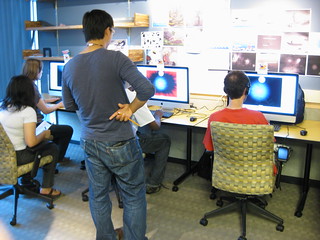
 Our 2011 game
  We got word that our game,


 The Princeton Review has released their latest annual rankings of



 Pierrec runs the excellent French game blog
  Congratulations to Jeff Orkin, Tynan Smith, and Team Dramatics!


 We're proud to announce our beta release of Monsters in My Backyard! Until June 25, you can





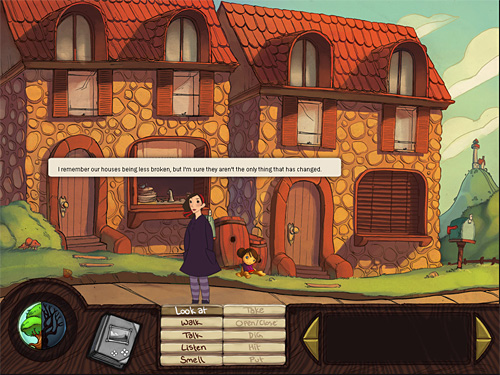
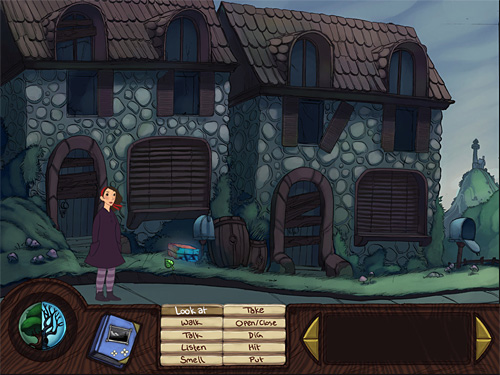
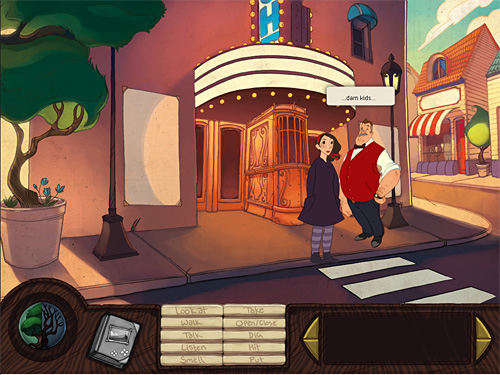


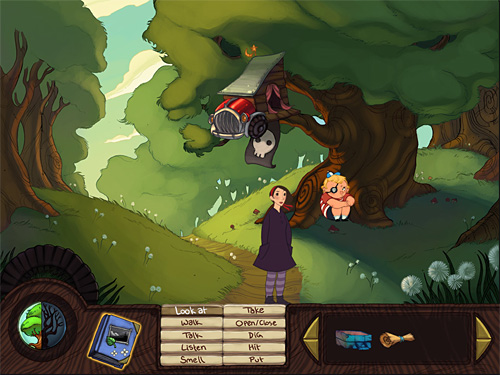
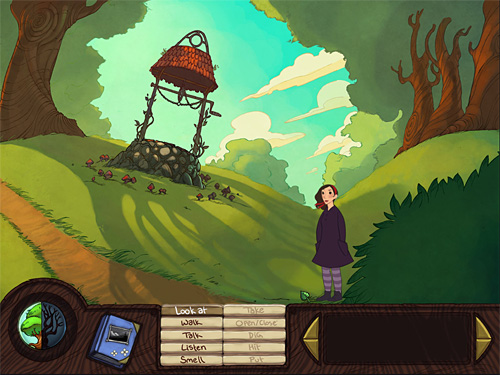




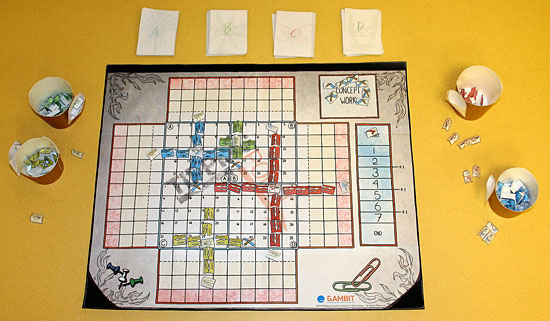
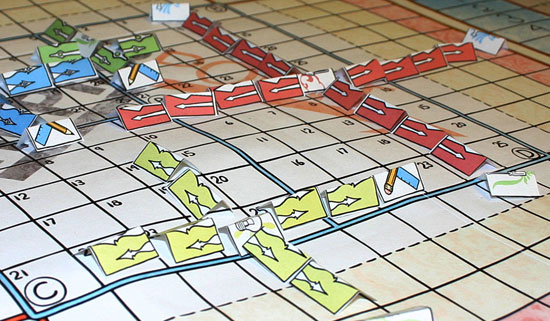
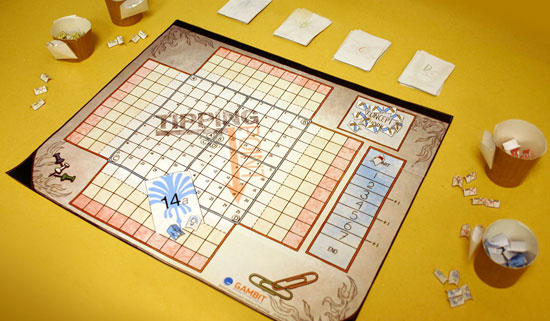


 In keeping with Ochos Locos's design aesthetic of accessibility and extensibility, the game includes the Locos Engine, the first playing card engine for the OLPC XO. This engine runs faster and requires less memory than similar engines developed with Python game development tools like pyGame, which is an important consideration for players running the game from their laptops in areas where electricity is a rare and precious resource.